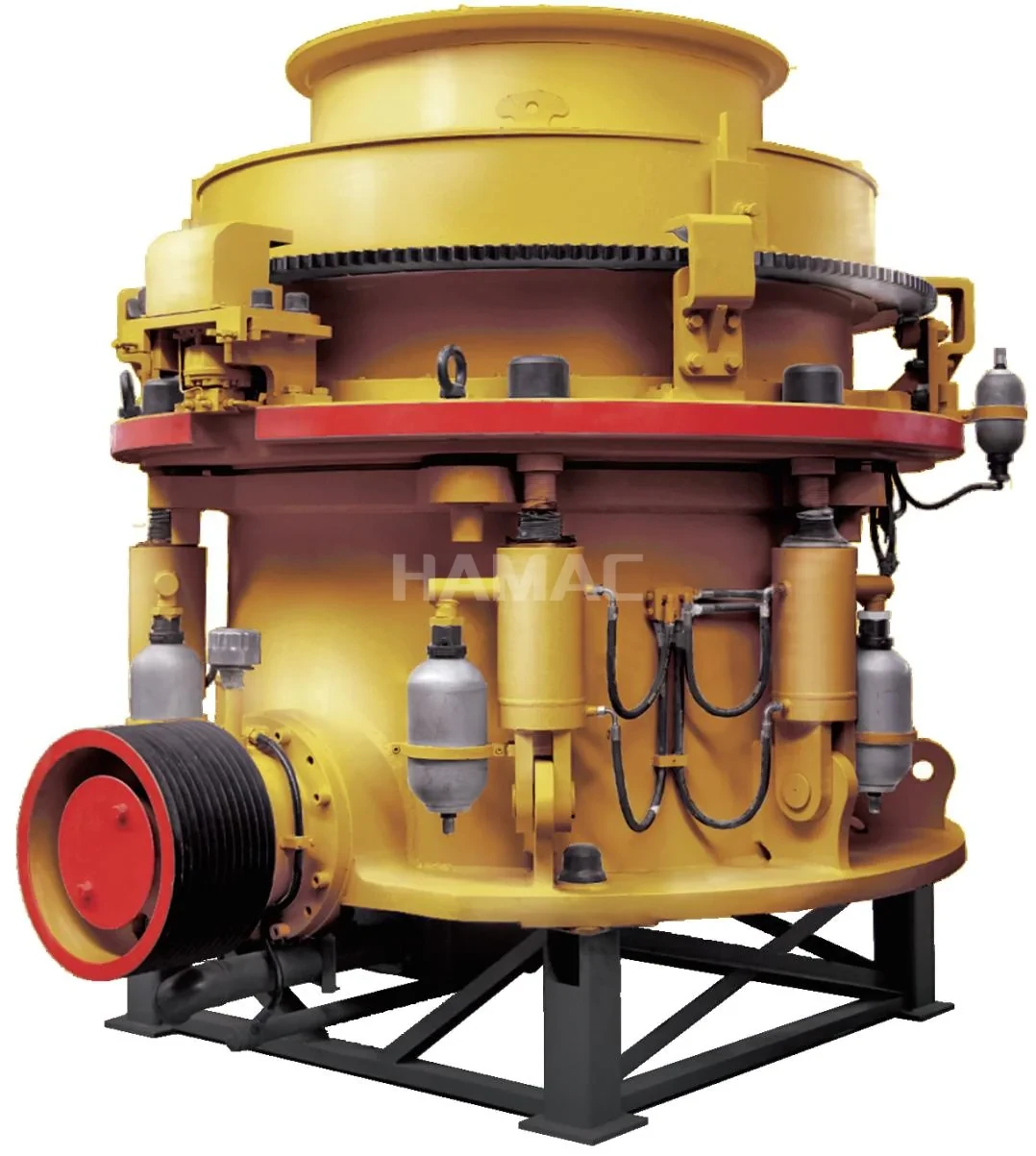
Overview
This page brings together the published HPT Multi-Cylinder Hydraulic Cone Crusher model data and the practical details of importing it into United States — power supply, standards, shipping and commissioning. Popular feed materials in the market include Granite, Basalt, Limestone.
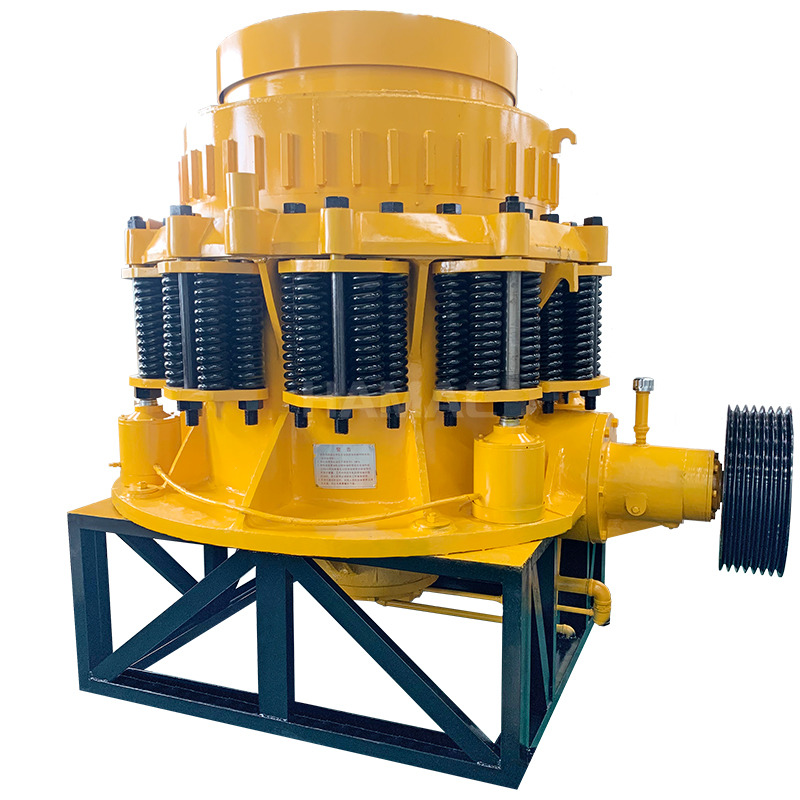
Published HPT Multi-Cylinder Hydraulic Cone Crusher data
| Published parameter | Nominal value |
|---|---|
| HPT100 | 90 45–140 |
| HPT200 | 160 90–250 |
| HPT300 | 220 110–440 |
| HPT400 / HPT500 | On request On request |
Local conditions in United States
- Destination port: Los Angeles / Houston.
- Site supply: 460V 60Hz.
- Standards: ASTM / OSHA.
- Common materials: Granite, Basalt, Limestone.
- Region: North America.
Delivery scope
HAMAC quotes FOB, CFR or CIF to Los Angeles / Houston, sets motors and starters to 460V 60Hz, and supplies the certificate set applicable to ASTM / OSHA. Workshop assembly, test, container loading plan and installation supervision are included in a turnkey scope.
Reference data for this configuration
| Parameter | Reference value |
|---|---|
| Destination port | Los Angeles / Houston |
| Site supply | 460V 60Hz |
| Local standards | ASTM / OSHA |
| Region | North America |
| Machine line | HPT Multi-Cylinder Hydraulic Cone Crusher |
| Category | Cone Crusher |
| Assumed duty | cement raw-meal preparation |
| Evaluation horizon | five-year view |
These values are the starting point for a written proposal on hpt multi-cylinder hydraulic cone crusher; they are nominal and should be confirmed against a sample test before manufacture.
Published HPT Multi-Cylinder Hydraulic Cone Crusher model data
| Model | Installed power (kW) | Capacity range (t/h) | Dimensions (mm) |
|---|---|---|---|
| HPT100 | 90 | 45–140 | 1705 × 1510 × 1583 |
| HPT200 | 160 | 90–250 | 2135 × 1750 × 1927 |
| HPT300 | 220 | 110–440 | 2725 × 2110 × 2871 |
| HPT400 / HPT500 | On request | On request | On request |
Hydraulic multi-cylinder cone crusher for secondary and tertiary crushing of limestone through basalt, with 5–15% higher efficiency and 35–60% higher output than spring cone crushers. Read the table column by column against cement raw-meal preparation: the model you pick is the one whose published range brackets your target tonnage, not simply the largest machine in the series. Availability, motor rating and shipping data are re-confirmed for a remote mine site in the written HAMAC proposal.
Project profile these notes assume
| Assumption | Value |
|---|---|
| Operating duty | cement raw-meal preparation |
| Primary objective | fast mobilisation |
| Evaluation horizon | five-year view |
| Site condition | a remote mine site |
| Operating team | a full-time plant team |
Change any one of these assumptions and the recommended configuration for hpt multi-cylinder hydraulic cone crusher may change. HAMAC re-runs the same checks against your own numbers once the enquiry data sheet is received.
From enquiry to the first saleable tonne
- Include dust suppression, guarding, emergency stops and lock-out points in the layout drawing.
- Review the crusher chamber profile with the liner supplier against the feed material.
- Survey the feed: the feed material; record top size, bulk density, moisture and clay content before fixing the flow sheet.
- Sequence delivery so foundations cure while the equipment is still in manufacture.
- Specify motors, starters and documentation for 460V 60Hz and ASTM / OSHA before manufacture.
- Book container or flat-rack space to Los Angeles / Houston and prepare the customs document set in advance.
- Verify the electrical single-line diagram, cable sizing and starter type with the local utility.
- Size the primary stage for your target tonnage with a 10–20% surge allowance — never on nameplate throughput alone.
- Confirm the haul-road and stockpile plan with a remote mine site in mind before fixing conveyor lengths.
Each step has an owner and a document: flow sheet, general arrangement, foundation reference, packing list and acceptance protocol.
What to verify before you sign
- Whether the quoted t/h is achieved at cement raw-meal preparation or under ideal laboratory feed.
- Control system language, telemetry and remote diagnostics availability.
- Written performance guarantee, sampling method and acceptance-test protocol.
- Ambient temperature, altitude and dust load derating for motors and hydraulics.
- Erection scope: supervision only, or full civil, mechanical and electrical installation.
- Decommissioning or relocation value at the end of a five-year horizon.
- Spare motor, gearbox and hydraulic pump lead times from the nearest HAMAC stock point.
- Product sampling points and the lab equipment needed for routine grading checks.
- Wear-part interchangeability across machines in the same circuit.
Ask each supplier to price the same list. Quotations for hpt multi-cylinder hydraulic cone crusher only become comparable when the scope is identical.
Where the money actually goes
| Cost line | Indicative share | What moves the number |
|---|---|---|
| Equipment & drive packages | 53% | Model size, number of stages and automation level |
| Ocean freight & insurance | 11% | Destination port, container count and out-of-gauge cargo |
| Civil works & foundations | 8% | Soil conditions, dynamic loads and site preparation |
| Erection, commissioning & training | 7% | Local labour, supervision scope and schedule |
| First-year wear parts | 14% | Rock abrasiveness, liner grade and operating hours |
| Power, lubricants & consumables | 7% | kWh per tonne, local tariff and dust suppression water |
Treat the percentages as a budgeting shape, not a quotation: HAMAC prices the equipment list in writing once the flow sheet is fixed.
Mistakes that cost more than the machine
- Buying fast mobilisation on price alone and losing it in availability.
- Assuming the manufacturer's warranty covers wear parts and consumables.
- Skipping the acceptance test, so no one has a baseline to measure degradation against.
- Using one liner profile for both secondary and tertiary stages.
- Skipping a geotechnical check and discovering settlement under the primary crusher at a remote mine site.
- Ignoring clay and moisture until the first wet season, when decks blind and chambers pack.
- Overlooking dust, noise and water permits in United States until erection has already started.
- Specifying motors for the wrong voltage or frequency and rewinding them on site.
Every item on this list has cost someone a commissioning date; none of them requires new technology to avoid.
Commissioning checklist
- Introduce feed in graded steps: 25%, 50%, 75%, then full load.
- Record the baseline grading curve for each product fraction.
- Confirm the direction and tension of every belt under no load.
- Agree the punch list, sign the hand-over protocol and file the as-built drawings.
- Calibrate the belt scale and any level probes against a known load.
- Check lubrication levels, grease lines and oil cooler operation.
- Sample each product fraction and compare with the specification.
- Record power draw, tonnage and chamber pressure at steady state.
The commissioning record becomes the reference for every liner change in the five-year plan.