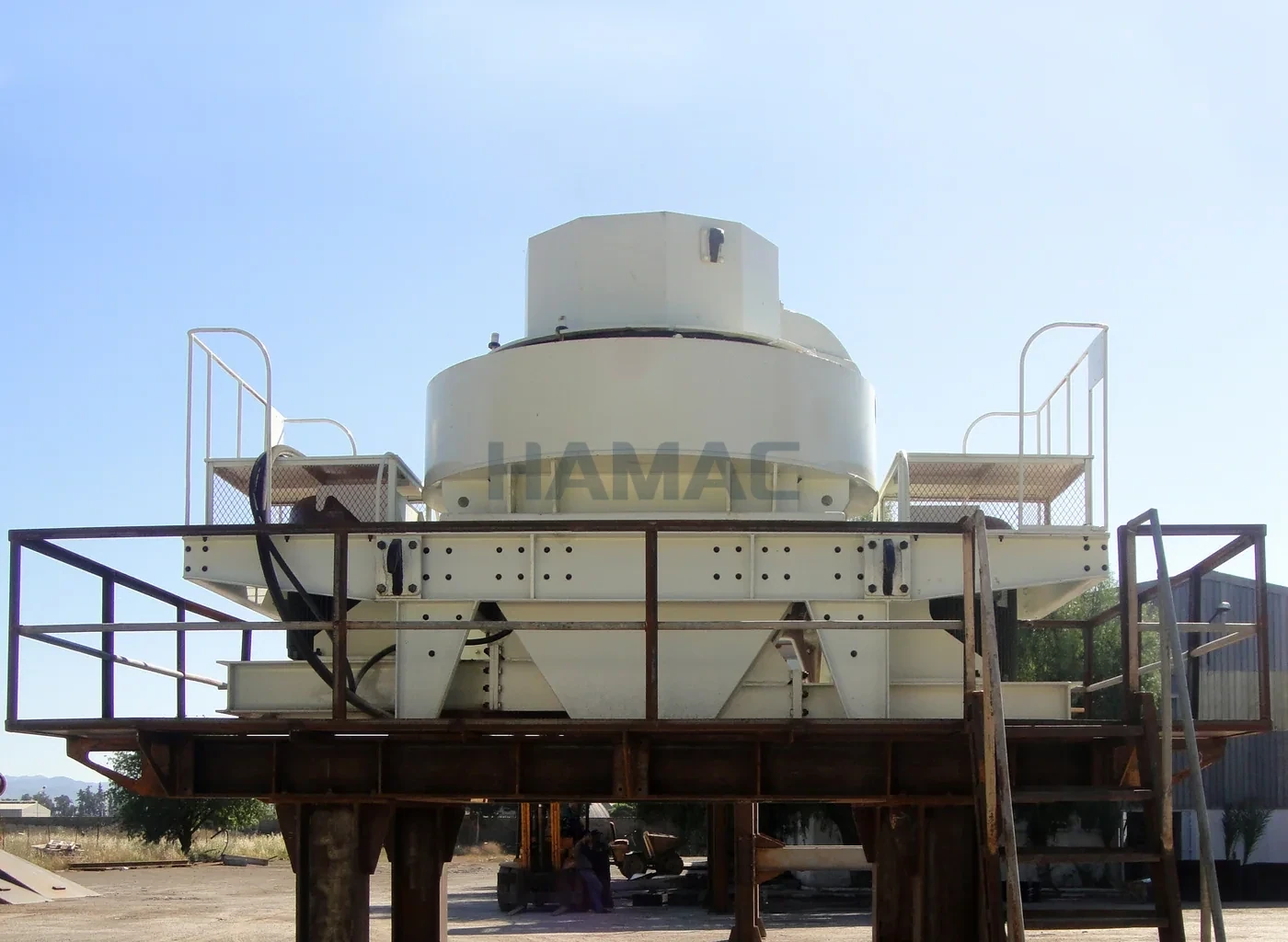
Overview
This page brings together the published VSI Vertical Shaft Impact Crusher (Sand Making Machine) model data and the practical details of importing it into Russia — power supply, standards, shipping and commissioning. Popular feed materials in the market include Granite, Coal, Basalt.
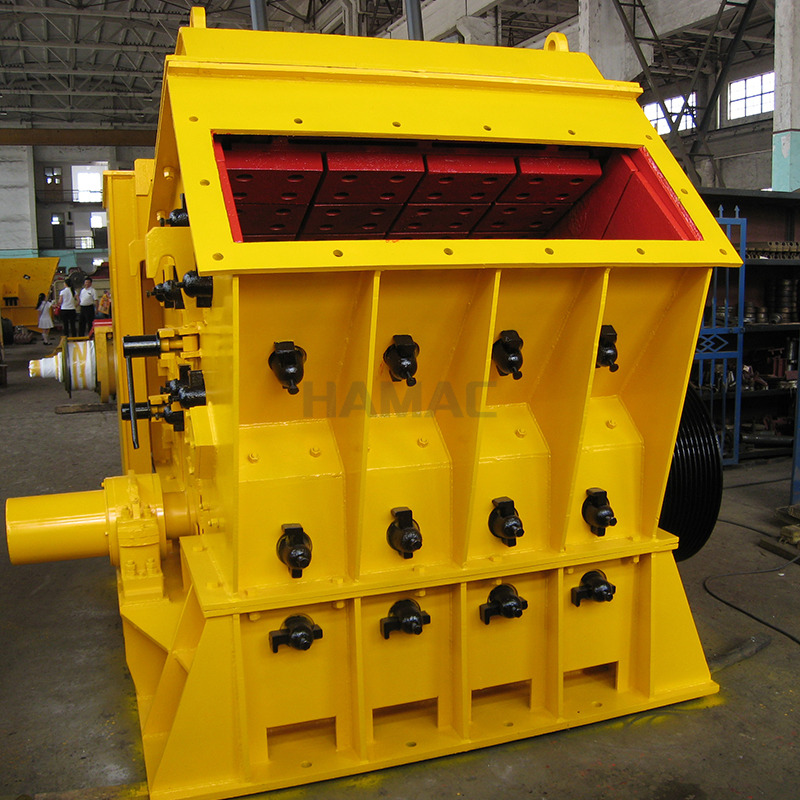
Published VSI Vertical Shaft Impact Crusher (Sand Making Machine) data
| Published parameter | Nominal value |
|---|---|
| VSI7611 | ≤35 60–90 |
| VSI7615 | ≤35 70–140 |
| VSI8518 | ≤40 100–130 |
| VSI8522 | ≤40 120–160 |
| VSI9526 | ≤45 150–190 |
| VSI9532 | ≤45 180–220 |
Local conditions in Russia
- Destination port: St Petersburg.
- Site supply: 380V 50Hz.
- Standards: GOST.
- Common materials: Granite, Coal, Basalt.
- Region: Europe/Asia.
Delivery scope
HAMAC quotes FOB, CFR or CIF to St Petersburg, sets motors and starters to 380V 50Hz, and supplies the certificate set applicable to GOST. Workshop assembly, test, container loading plan and installation supervision are included in a turnkey scope.
Reference data for this configuration
| Parameter | Reference value |
|---|---|
| Destination port | St Petersburg |
| Site supply | 380V 50Hz |
| Local standards | GOST |
| Region | Europe/Asia |
| Machine line | VSI Vertical Shaft Impact Crusher (Sand Making Machine) |
| Category | Sand Making & Washing |
| Assumed duty | high-tonnage aggregate supply |
| Evaluation horizon | seven-year view |
Use the table as a checklist when comparing quotations for vsi vertical shaft impact crusher (sand making machine) — a lower price often means one of these parameters was quietly reduced.
Published VSI Vertical Shaft Impact Crusher (Sand Making Machine) model data
| Model | Max. feeding size (mm) | Nominal through capacity (t/h) | Motor power (kW) |
|---|---|---|---|
| VSI7611 | ≤35 | 60–90 | 55×2 |
| VSI7615 | ≤35 | 70–140 | 75×2 |
| VSI8518 | ≤40 | 100–130 | 90×2 |
| VSI8522 | ≤40 | 120–160 | 110×2 |
| VSI9526 | ≤45 | 150–190 | 132×2 |
| VSI9532 | ≤45 | 180–220 | 160×2 |
| VSI1140 | ≤50 | 225–260 | 200×2 |
| VSI1145 | ≤50 | 250–300 | 220×2 |
VSI sand making machine, 60–500 t/h, for manufactured sand and aggregate shaping with rock-on-rock crushing and interchangeable wear parts. Read the table column by column against high-tonnage aggregate supply: the model you pick is the one whose published range brackets your target tonnage, not simply the largest machine in the series. Availability, motor rating and shipping data are re-confirmed for a greenfield site in the written HAMAC proposal.
Project profile these notes assume
| Assumption | Value |
|---|---|
| Operating duty | high-tonnage aggregate supply |
| Primary objective | maximum mechanical availability |
| Evaluation horizon | seven-year view |
| Site condition | a greenfield site |
| Operating team | a mixed local and expatriate team |
Change any one of these assumptions and the recommended configuration for vsi vertical shaft impact crusher (sand making machine) may change. HAMAC re-runs the same checks against your own numbers once the enquiry data sheet is received.
From enquiry to the first saleable tonne
- Book container or flat-rack space to St Petersburg and prepare the customs document set in advance.
- Verify the electrical single-line diagram, cable sizing and starter type with the local utility.
- Choose compression or impact reduction according to hardness, silica content and required particle shape.
- Specify motors, starters and documentation for 380V 50Hz and GOST before manufacture.
- Commission with graded load, sample the product grading, then train operators on liner change-out and daily checks.
- Set the maintenance stock list from the expected wear rate, not from a percentage of the equipment price.
- Budget for water, dust extraction and spillage handling as part of the plant, not as an afterthought.
- Sequence delivery so foundations cure while the equipment is still in manufacture.
- Set the closed-side setting or rotor speed against the required product fractions, then verify the expected reduction ratio.
A realistic programme reserves time for permits, foundation curing and shipping to Russia before any steel is cut.
What to verify before you sign
- Maximum feed lump and gradation — a chamber that cannot accept the top size will bridge on day one.
- Dust and noise control designed to the local emission limits for Russia.
- Local service partner, technician travel time and visa requirements for Russia.
- Access for liner change-out — crane radius, lifting points and clearance around the chamber.
- Whether the quoted t/h is achieved at high-tonnage aggregate supply or under ideal laboratory feed.
- Control system language, telemetry and remote diagnostics availability.
- Guaranteed power draw and the maximum mechanical availability trade-off it implies.
- Energy draw in kW and the expected kWh per tonne at the design duty.
- Choke-feed arrangement: surge bin, feeder control and level indication.
Score each supplier against the same ten items and keep the score sheet with the purchase file for the seven-year review.
Where the money actually goes
| Cost line | Indicative share | What moves the number |
|---|---|---|
| Equipment & drive packages | 53% | Model size, number of stages and automation level |
| Ocean freight & insurance | 11% | Destination port, container count and out-of-gauge cargo |
| Civil works & foundations | 8% | Soil conditions, dynamic loads and site preparation |
| Erection, commissioning & training | 7% | Local labour, supervision scope and schedule |
| First-year wear parts | 14% | Rock abrasiveness, liner grade and operating hours |
| Power, lubricants & consumables | 7% | kWh per tonne, local tariff and dust suppression water |
Model a low, base and high case for tonnes per liner set. The spread tells you more than a single optimistic estimate.
Mistakes that cost more than the machine
- Ignoring clay and moisture until the first wet season, when decks blind and chambers pack.
- Choosing screen apertures before the concrete or asphalt mix design is fixed.
- Assuming the manufacturer's warranty covers wear parts and consumables.
- Undersizing the screen, then blaming the crusher for a plant that never reaches your target tonnage.
- Buying on nameplate t/h without converting to saleable product at the specified fractions.
- Comparing quotations with different port terms and calling the lower number cheaper.
- Skipping the acceptance test, so no one has a baseline to measure degradation against.
- Specifying motors for the wrong voltage or frequency and rewinding them on site.
On a greenfield site, the civil and logistics items deserve as much attention as the crusher itself.
Commissioning checklist
- Verify rotation direction on every motor before coupling.
- Sample each product fraction and compare with the specification.
- Test emergency stops, pull wires and interlock trips in sequence.
- Introduce feed in graded steps: 25%, 50%, 75%, then full load.
- Confirm all guards, emergency stops and pull-wire switches function.
- Hand over the spare-parts list, manuals and maintenance schedule.
- Measure and log the as-new CSS / setting for future wear comparison.
- Record power draw, tonnage and chamber pressure at steady state.
The commissioning record becomes the reference for every liner change in the seven-year plan.