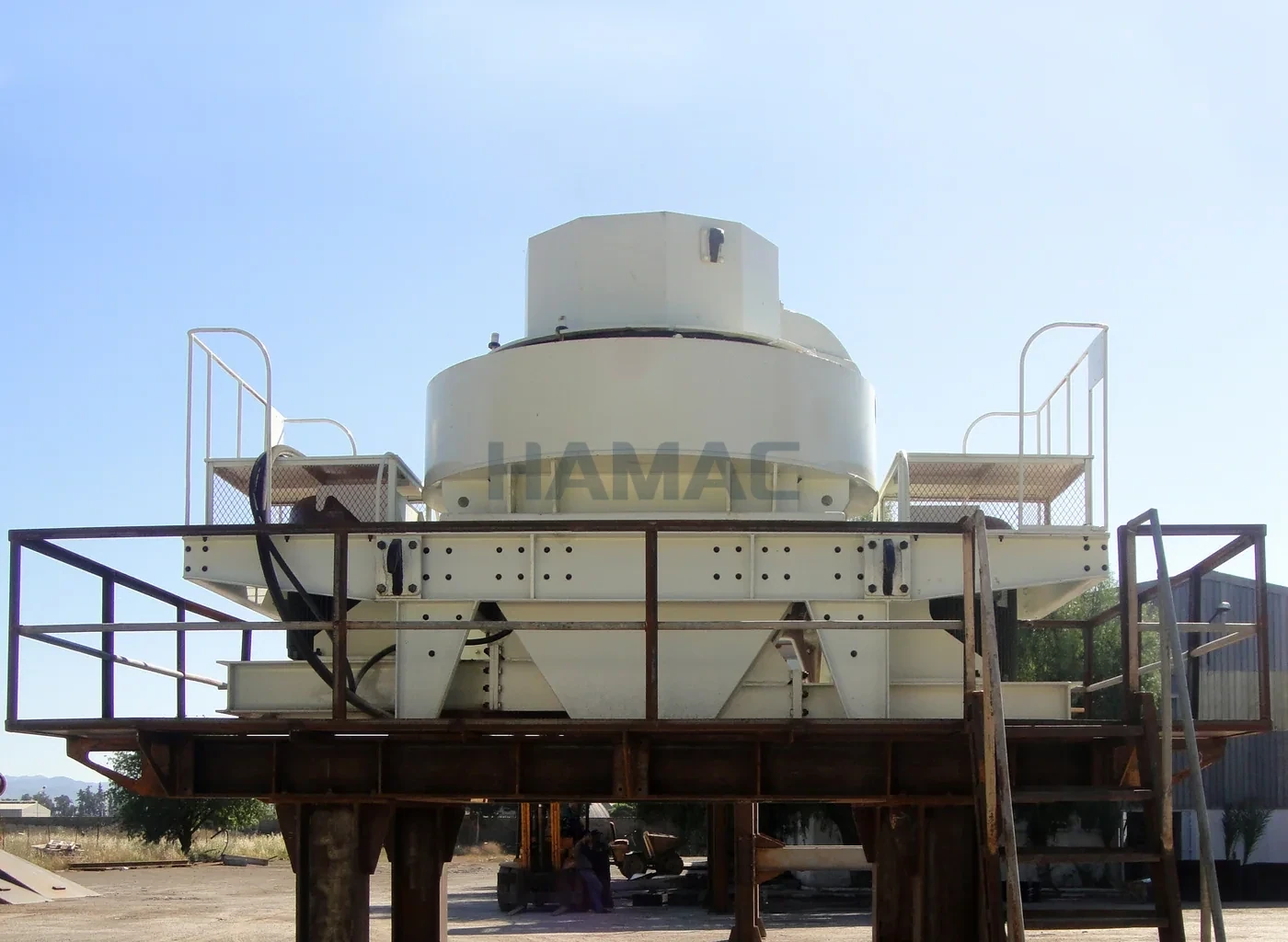
Overview
This page brings together the published VSI Vertical Shaft Impact Crusher (Sand Making Machine) model data and the practical details of importing it into Japan — power supply, standards, shipping and commissioning. Popular feed materials in the market include Granite, Limestone.
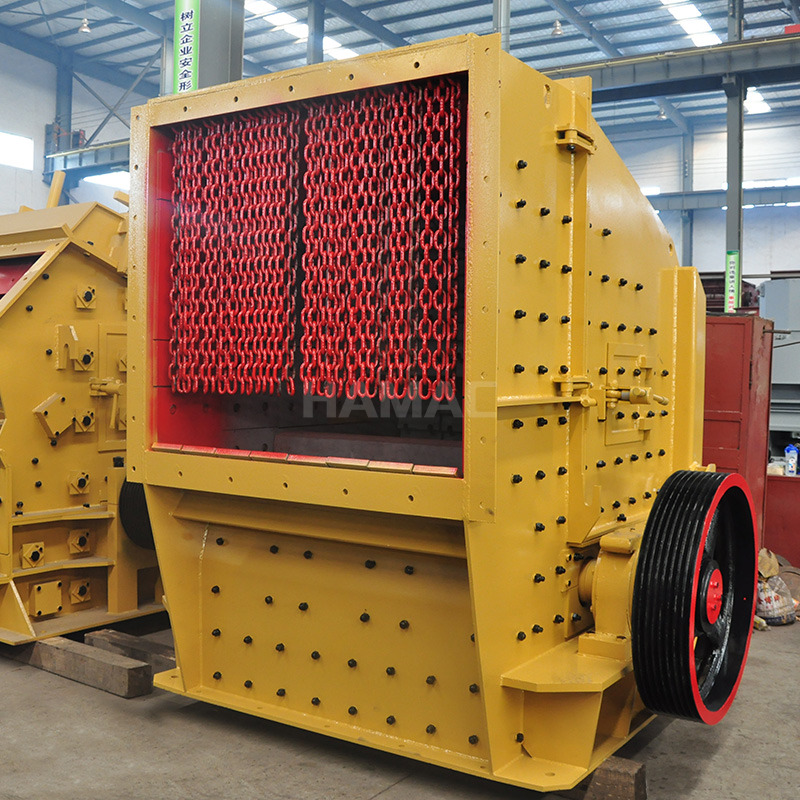
Published VSI Vertical Shaft Impact Crusher (Sand Making Machine) data
| Published parameter | Nominal value |
|---|---|
| VSI7611 | ≤35 60–90 |
| VSI7615 | ≤35 70–140 |
| VSI8518 | ≤40 100–130 |
| VSI8522 | ≤40 120–160 |
| VSI9526 | ≤45 150–190 |
| VSI9532 | ≤45 180–220 |
Local conditions in Japan
- Destination port: Yokohama.
- Site supply: 200V 50/60Hz.
- Standards: JIS.
- Common materials: Granite, Limestone.
- Region: Asia.
Delivery scope
HAMAC quotes FOB, CFR or CIF to Yokohama, sets motors and starters to 200V 50/60Hz, and supplies the certificate set applicable to JIS. Workshop assembly, test, container loading plan and installation supervision are included in a turnkey scope.
Reference data for this configuration
| Parameter | Reference value |
|---|---|
| Destination port | Yokohama |
| Site supply | 200V 50/60Hz |
| Local standards | JIS |
| Region | Asia |
| Machine line | VSI Vertical Shaft Impact Crusher (Sand Making Machine) |
| Category | Sand Making & Washing |
| Assumed duty | contract crushing on short-term sites |
| Evaluation horizon | single-project view |
Where a value is shown as nominal, the written proposal states the guaranteed figure for your material, feed grading and single-project operating plan.
Published VSI Vertical Shaft Impact Crusher (Sand Making Machine) model data
| Model | Max. feeding size (mm) | Nominal through capacity (t/h) | Motor power (kW) |
|---|---|---|---|
| VSI7611 | ≤35 | 60–90 | 55×2 |
| VSI7615 | ≤35 | 70–140 | 75×2 |
| VSI8518 | ≤40 | 100–130 | 90×2 |
| VSI8522 | ≤40 | 120–160 | 110×2 |
| VSI9526 | ≤45 | 150–190 | 132×2 |
| VSI9532 | ≤45 | 180–220 | 160×2 |
| VSI1140 | ≤50 | 225–260 | 200×2 |
| VSI1145 | ≤50 | 250–300 | 220×2 |
VSI sand making machine, 60–500 t/h, for manufactured sand and aggregate shaping with rock-on-rock crushing and interchangeable wear parts. Read the table column by column against contract crushing on short-term sites: the model you pick is the one whose published range brackets your target tonnage, not simply the largest machine in the series. Availability, motor rating and shipping data are re-confirmed for a confined urban yard in the written HAMAC proposal.
Project profile these notes assume
| Assumption | Value |
|---|---|
| Operating duty | contract crushing on short-term sites |
| Primary objective | simple operator maintenance |
| Evaluation horizon | single-project view |
| Site condition | a confined urban yard |
| Operating team | a full-time plant team |
Change any one of these assumptions and the recommended configuration for vsi vertical shaft impact crusher (sand making machine) may change. HAMAC re-runs the same checks against your own numbers once the enquiry data sheet is received.
From enquiry to the first saleable tonne
- Choose compression or impact reduction according to hardness, silica content and required particle shape.
- Log tonnes per liner set and kWh per tonne from day one so you have a real cost baseline within a quarter.
- Verify the electrical single-line diagram, cable sizing and starter type with the local utility.
- Plan training for a full-time plant team on CSS adjustment, liner change-out and lock-out / tag-out.
- Run a sieve analysis on a representative sample and attach the grading curve to the enquiry.
- Specify motors, starters and documentation for 200V 50/60Hz and JIS before manufacture.
- Review the crusher chamber profile with the liner supplier against the feed material.
- Include dust suppression, guarding, emergency stops and lock-out points in the layout drawing.
- Sequence delivery so foundations cure while the equipment is still in manufacture.
For a full-time plant team, the commissioning and training steps need more calendar time than the mechanical erection itself.
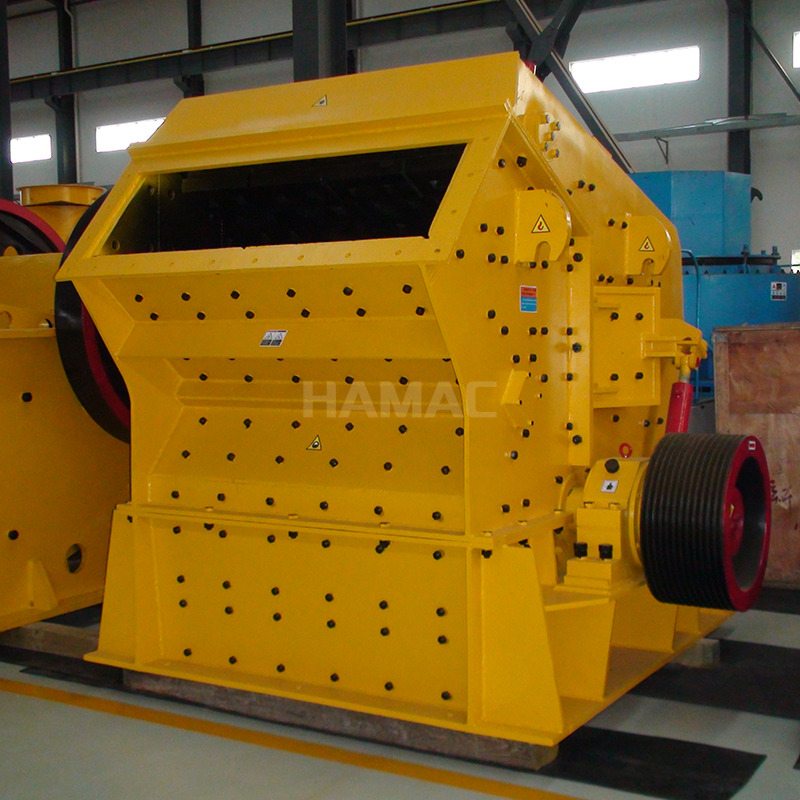
What to verify before you sign
- Ambient temperature, altitude and dust load derating for motors and hydraulics.
- Availability of a full-time plant team for liner changes and the lifting equipment on site.
- Wear-part interchangeability across machines in the same circuit.
- Energy draw in kW and the expected kWh per tonne at the design duty.
- Choke-feed arrangement: surge bin, feeder control and level indication.
- Nameplate data for 200V 50/60Hz and the JIS certificate set.
- Guaranteed power draw and the simple operator maintenance trade-off it implies.
- Spare motor, gearbox and hydraulic pump lead times from the nearest HAMAC stock point.
- After-sales response time, technician availability and the warranty exclusions in writing.
The cheapest offer usually wins on equipment and loses on one of the last six items — freight terms, spares or the acceptance test.
Where the money actually goes
| Cost line | Indicative share | What moves the number |
|---|---|---|
| Equipment & drive packages | 53% | Model size, number of stages and automation level |
| Ocean freight & insurance | 11% | Destination port, container count and out-of-gauge cargo |
| Civil works & foundations | 8% | Soil conditions, dynamic loads and site preparation |
| Erection, commissioning & training | 7% | Local labour, supervision scope and schedule |
| First-year wear parts | 14% | Rock abrasiveness, liner grade and operating hours |
| Power, lubricants & consumables | 7% | kWh per tonne, local tariff and dust suppression water |
The weighting shifts with hardness and scale — a hard feed pushes the wear line up, while a larger plant pushes equipment share up.
Mistakes that cost more than the machine
- Comparing quotations with different port terms and calling the lower number cheaper.
- Ignoring clay and moisture until the first wet season, when decks blind and chambers pack.
- Buying simple operator maintenance on price alone and losing it in availability.
- Assuming a mobile plant can match a stationary line on high-tonnage, multi-product duty.
- Buying on nameplate t/h without converting to saleable product at the specified fractions.
- Selecting the cheapest liner alloy for hard, high-silica rock and paying for it in change-outs.
- Choosing screen apertures before the concrete or asphalt mix design is fixed.
- Undersizing the screen, then blaming the crusher for a plant that never reaches your target tonnage.
Review the list with a full-time plant team before the order is placed — they will recognise most of them.
Commissioning checklist
- Verify chute liners, skirt rubber and impact bars after the first hour of feed.
- Check hydraulic pressure, accumulator pre-charge and tramp-release function.
- Agree the punch list, sign the hand-over protocol and file the as-built drawings.
- Verify rotation direction on every motor before coupling.
- Check lubrication levels, grease lines and oil cooler operation.
- Sample each product fraction and compare with the specification.
- Check belt tracking, chute build-up and transfer-point dust.
- Confirm the direction and tension of every belt under no load.
On a confined urban yard, allow extra time for the dust and noise measurements.