Overview
Construction aggregate is the largest crusher market; graded fractions must meet local road standards. In France the most frequently processed feed materials are Limestone, Granite, and equipment is normally delivered through Le Havre on 400V 50Hz supplies.
Materials in scope
- Granite — Mohs 6.5, ~180 MPa, high abrasion
- Limestone — Mohs 3, ~100 MPa, low abrasion
- Basalt — Mohs 6, ~200 MPa, high abrasion
Recommended machines
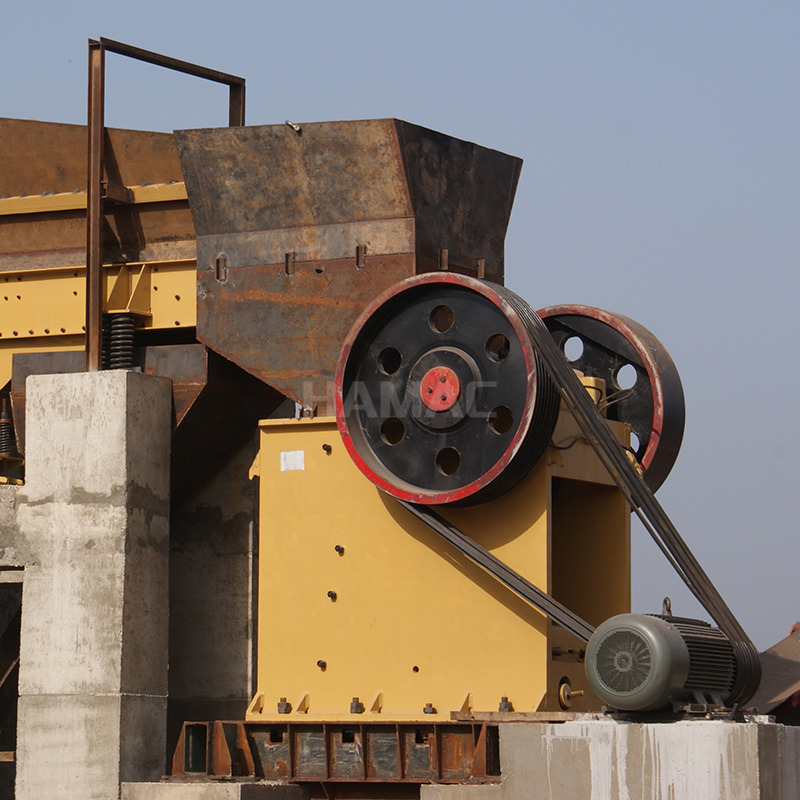
- PE Series Jaw Crusher
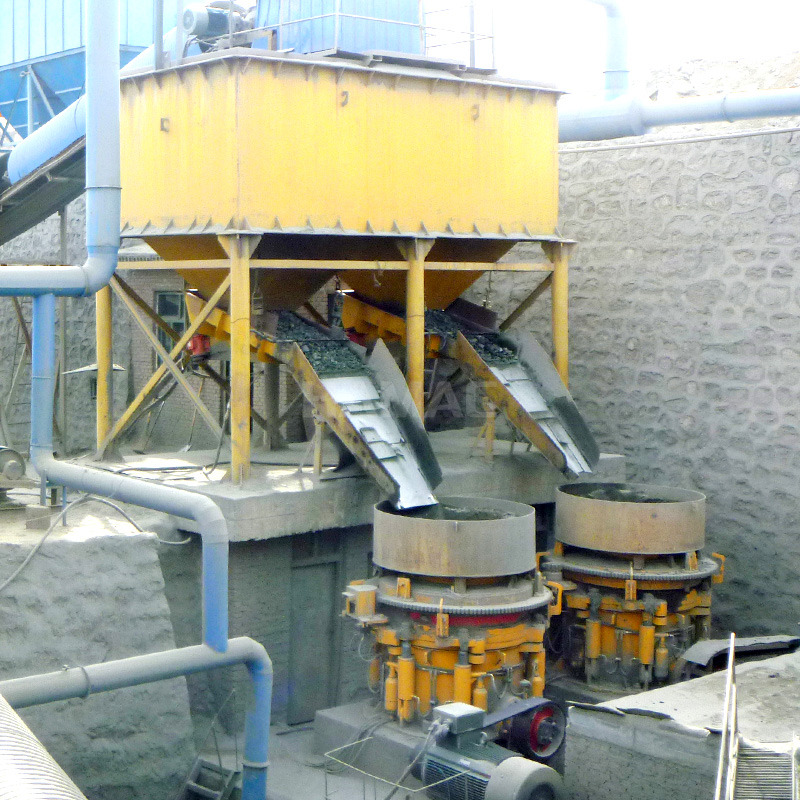
- HPT Multi-Cylinder Hydraulic Cone Crusher
- VSI Vertical Shaft Impact Crusher (Sand Making Machine)
- PF Impact Crusher
- Mobile Impact Crusher Plant
Engineering for France
| Item | Reference |
|---|---|
| Port | Le Havre |
| Power | 400V 50Hz |
| Standards | NF EN |
| Region | Europe |
Reference data for this configuration
| Parameter | Reference value |
|---|---|
| Destination port | Le Havre |
| Site supply | 400V 50Hz |
| Local standards | NF EN |
| Region | Europe |
| Application | Aggregates & Quarry |
| Typical feed | Granite, Limestone, Basalt |
| Assumed duty | cement raw-meal preparation |
| Evaluation horizon | five-year view |
HAMAC engineers fill in the same fields on the project data sheet, which is why two plants of similar tonnage can still require different machines.
Project profile these notes assume
| Assumption | Value |
|---|---|
| Operating duty | cement raw-meal preparation |
| Primary objective | maximum mechanical availability |
| Evaluation horizon | five-year view |
| Site condition | a confined urban yard |
| Operating team | a rotating shift crew |
Change any one of these assumptions and the recommended configuration for the crushing and screening plant may change. HAMAC re-runs the same checks against your own numbers once the enquiry data sheet is received.
From enquiry to the first saleable tonne
- Verify the electrical single-line diagram, cable sizing and starter type with the local utility.
- Size the primary stage for your target tonnage with a 10–20% surge allowance — never on nameplate throughput alone.
- Set the closed-side setting or rotor speed against the required product fractions, then verify the expected reduction ratio.
- Lay out conveyors, access ways, stockpile capacity and drainage before ordering steelwork.
- Choose compression or impact reduction according to hardness, silica content and required particle shape.
- Record the as-built settings and give the operator a written daily, weekly and monthly schedule.
- Review the crusher chamber profile with the liner supplier against the feed material.
- Set the maintenance stock list from the expected wear rate, not from a percentage of the equipment price.
- Book container or flat-rack space to Le Havre and prepare the customs document set in advance.
A HAMAC project manager stays with the order from the first data sheet through hand-over in France.
What to verify before you sign
- Saleable tonnes per hour at each product size, not gross crusher throughput, for your target tonnage.
- Liner alloy: Mn18 with ceramic inserts matched to the rock, not to the lowest purchase price.
- Decommissioning or relocation value at the end of a five-year horizon.
- Dust and noise control designed to the local emission limits for France.
- Written performance guarantee, sampling method and acceptance-test protocol.
- Delivery terms (FOB / CFR / CIF) with the destination port named explicitly.
- Guaranteed power draw and the maximum mechanical availability trade-off it implies.
- Ambient temperature, altitude and dust load derating for motors and hydraulics.
- Access for liner change-out — crane radius, lifting points and clearance around the chamber.
Share this list with a rotating shift crew as well as procurement; operators are the ones who live with the omissions.
Where the money actually goes
| Cost line | Indicative share | What moves the number |
|---|---|---|
| Equipment & drive packages | 53% | Model size, number of stages and automation level |
| Ocean freight & insurance | 11% | Destination port, container count and out-of-gauge cargo |
| Civil works & foundations | 8% | Soil conditions, dynamic loads and site preparation |
| Erection, commissioning & training | 7% | Local labour, supervision scope and schedule |
| First-year wear parts | 14% | Rock abrasiveness, liner grade and operating hours |
| Power, lubricants & consumables | 7% | kWh per tonne, local tariff and dust suppression water |
For the crushing and screening plant at your target tonnage, wear parts and energy usually outweigh the difference between two purchase prices within three to five years.
Mistakes that cost more than the machine
- Assuming a mobile plant can match a stationary line on high-tonnage, multi-product duty.
- Buying on nameplate t/h without converting to saleable product at the specified fractions.
- Assuming the manufacturer's warranty covers wear parts and consumables.
- Skipping the acceptance test, so no one has a baseline to measure degradation against.
- Undersizing the screen, then blaming the crusher for a plant that never reaches your target tonnage.
- Comparing quotations with different port terms and calling the lower number cheaper.
- Skipping a geotechnical check and discovering settlement under the primary crusher at a confined urban yard.
- Ordering no spares with the plant and waiting six weeks for the first liner set.
Every item on this list has cost someone a commissioning date; none of them requires new technology to avoid.
Commissioning checklist
- Record the baseline grading curve for each product fraction.
- Hand over the spare-parts list, manuals and maintenance schedule.
- Measure and log the as-new CSS / setting for future wear comparison.
- Check belt tracking, chute build-up and transfer-point dust.
- Record power draw, tonnage and chamber pressure at steady state.
- Measure noise and dust at the operator position against the local limit.
- Verify rotation direction on every motor before coupling.
- Sample each product fraction and compare with the specification.
On a confined urban yard, allow extra time for the dust and noise measurements.