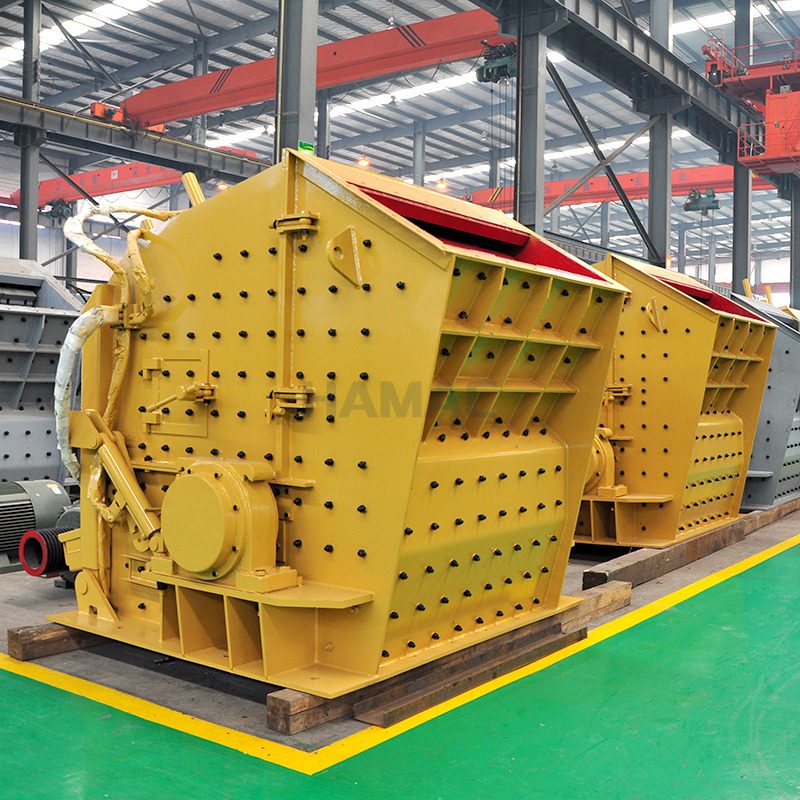
Overview
Selected HAMAC references relevant to road & railway ballast:
References
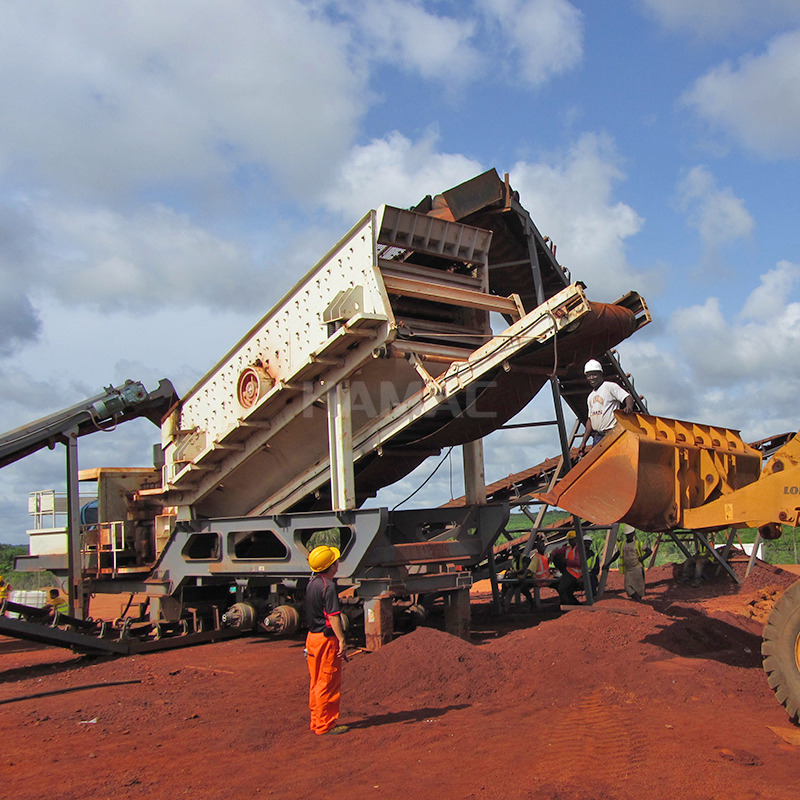
- 100-120tph mobile crushing and screening plant in Algeria
- 100-120tph mobile crushing and screening plant in Chile
- 1500t/d Gold Ore Processing Plant in Tanzania
- 150-180tph stationary crushing and screening plant in Jamaica
- 150tph stationary crushing and screening plant in Iraq
Reference data for this configuration
| Parameter | Reference value |
|---|---|
| Application | Road & Railway Ballast |
| Typical feed | Basalt, Granite, Andesite |
| Assumed duty | contract crushing on short-term sites |
| Evaluation horizon | single-project view |
The figures above are transcribed from published HAMAC data and from the material properties of the feed; site measurements take precedence.
Project profile these notes assume
| Assumption | Value |
|---|---|
| Operating duty | contract crushing on short-term sites |
| Primary objective | maximum mechanical availability |
| Evaluation horizon | single-project view |
| Site condition | an existing quarry bench |
| Operating team | a small contractor crew |
Change any one of these assumptions and the recommended configuration for the crushing and screening plant may change. HAMAC re-runs the same checks against your own numbers once the enquiry data sheet is received.
From enquiry to the first saleable tonne
- Run a sieve analysis on a representative sample and attach the grading curve to the enquiry.
- Choose compression or impact reduction according to hardness, silica content and required particle shape.
- Confirm the haul-road and stockpile plan with an existing quarry bench in mind before fixing conveyor lengths.
- Survey the feed: the feed material; record top size, bulk density, moisture and clay content before fixing the flow sheet.
- Record the as-built settings and give the operator a written daily, weekly and monthly schedule.
- Define the acceptance test: sampling points, test duration, moisture range and who signs the protocol.
- Review the crusher chamber profile with the liner supplier against the feed material.
- Allocate screen area per deck; blinding and pegging are the most common hidden bottlenecks in a new plant.
- Lay out conveyors, access ways, stockpile capacity and drainage before ordering steelwork.
A HAMAC project manager stays with the order from the first data sheet through hand-over in your market.
What to verify before you sign
- Product sampling points and the lab equipment needed for routine grading checks.
- Spare-parts consignment: one full liner or blow-bar set plus meshes, belts, bearings and seals.
- Tramp-iron protection — hydraulic release, magnet and metal detection on the feed belt.
- Dust and noise control designed to the local emission limits for your market.
- Local service partner, technician travel time and visa requirements for your market.
- Erection scope: supervision only, or full civil, mechanical and electrical installation.
- Energy draw in kW and the expected kWh per tonne at the design duty.
- Control system language, telemetry and remote diagnostics availability.
- Decommissioning or relocation value at the end of a single-project horizon.
The relative weight of each item changes with the project: wear parts dominate on abrasive rock, availability dominates on remote sites.
Where the money actually goes
| Cost line | Indicative share | What moves the number |
|---|---|---|
| Equipment & drive packages | 54% | Model size, number of stages and automation level |
| Ocean freight & insurance | 8% | Destination port, container count and out-of-gauge cargo |
| Civil works & foundations | 8% | Soil conditions, dynamic loads and site preparation |
| Erection, commissioning & training | 7% | Local labour, supervision scope and schedule |
| First-year wear parts | 15% | Rock abrasiveness, liner grade and operating hours |
| Power, lubricants & consumables | 8% | kWh per tonne, local tariff and dust suppression water |
Model a low, base and high case for tonnes per liner set. The spread tells you more than a single optimistic estimate.
Mistakes that cost more than the machine
- Assuming the manufacturer's warranty covers wear parts and consumables.
- Overlooking dust, noise and water permits in your market until erection has already started.
- Buying on nameplate t/h without converting to saleable product at the specified fractions.
- Specifying motors for the wrong voltage or frequency and rewinding them on site.
- Skipping a geotechnical check and discovering settlement under the primary crusher at an existing quarry bench.
- Selecting the cheapest liner alloy for hard, high-silica rock and paying for it in change-outs.
- Planning the crusher but not the conveyors, transfer chutes and stockpile capacity around it.
- Skipping the acceptance test, so no one has a baseline to measure degradation against.
Review the list with a small contractor crew before the order is placed — they will recognise most of them.
Commissioning checklist
- Calibrate the belt scale and any level probes against a known load.
- Dry-run the plant empty for the specified period and record vibration.
- Record the baseline grading curve for each product fraction.
- Check hydraulic pressure, accumulator pre-charge and tramp-release function.
- Confirm all guards, emergency stops and pull-wire switches function.
- Agree the punch list, sign the hand-over protocol and file the as-built drawings.
- Verify chute liners, skirt rubber and impact bars after the first hour of feed.
- Introduce feed in graded steps: 25%, 50%, 75%, then full load.
Keep the signed record; it is the only defensible baseline for later performance disputes.