Overview
Dolomite crushing plant cost scales with capacity, mobility and wear-package grade. The table below gives an indicative bracket by plant size.
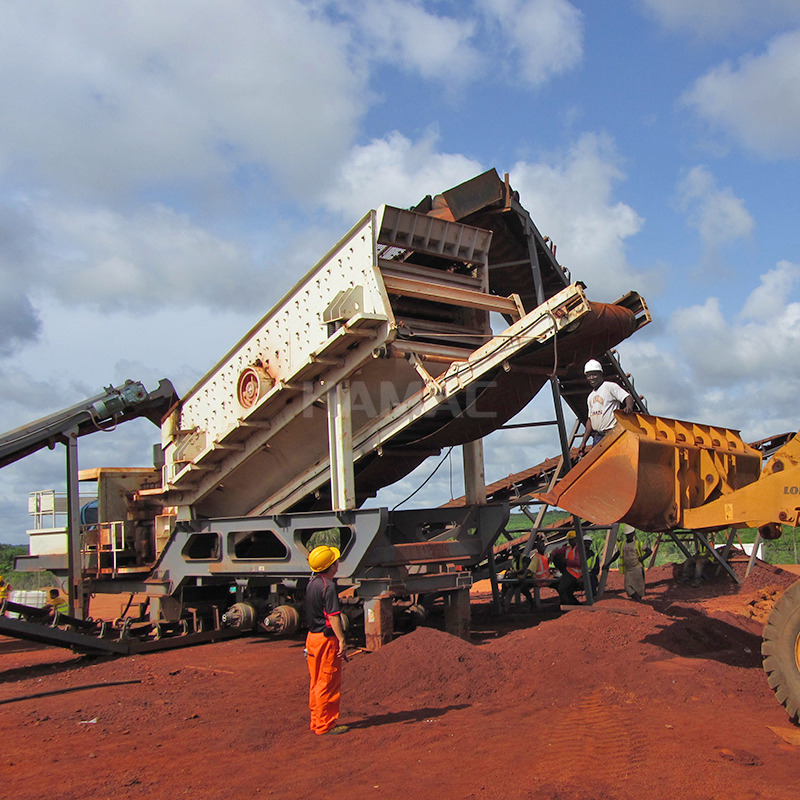
Indicative cost by capacity
| Plant size | Indicative scope | Cost driver |
|---|---|---|
| < 100 t/h | mobile jaw + screen | mobility & simplicity |
| 100–300 t/h | jaw + cone + screens | model size & liners |
| > 500 t/h | multi-stage stationary | throughput & automation |
What moves the price
- Capacity and number of crushing stages.
- Mobility (stationary < wheel < tracked).
- Wear-part grade and spare-parts package.
- Screen area, conveyors and dust control.
Get a budget
Send material, feed size, target t/h and products for a configured FOB / CIF budget within 24 hours.
Reference data for this configuration
| Parameter | Reference value |
|---|---|
| Feed material | Dolomite |
| Mohs hardness | 3.5 |
| Compressive strength | ~110 MPa |
| Abrasiveness | Low |
| Recommended circuit | jaw + impact |
| Assumed duty | demolition and recycling duties |
| Evaluation horizon | single-project view |
Ask for the same table from any competing supplier; without it, an offer for dolomite crushing cannot be compared on scope.
Project profile these notes assume
| Assumption | Value |
|---|---|
| Operating duty | demolition and recycling duties |
| Primary objective | lowest cost per tonne |
| Evaluation horizon | single-project view |
| Site condition | a brownfield extension |
| Operating team | a small contractor crew |
Change any one of these assumptions and the recommended configuration for dolomite crushing may change. HAMAC re-runs the same checks against your own numbers once the enquiry data sheet is received.
From enquiry to the first saleable tonne
- Set the closed-side setting or rotor speed against the required product fractions, then verify the expected reduction ratio.
- Budget for water, dust extraction and spillage handling as part of the plant, not as an afterthought.
- Verify the electrical single-line diagram, cable sizing and starter type with the local utility.
- Survey the feed: Dolomite (Mohs 3.5, ~110 MPa, low abrasion); record top size, bulk density, moisture and clay content before fixing the flow sheet.
- Size the primary stage for your target tonnage with a 10–20% surge allowance — never on nameplate throughput alone.
- Confirm the haul-road and stockpile plan with a brownfield extension in mind before fixing conveyor lengths.
- Run a sieve analysis on a representative sample and attach the grading curve to the enquiry.
- Allocate screen area per deck; blinding and pegging are the most common hidden bottlenecks in a new plant.
- Book shipping, prepare the packing list and confirm the container loading plan.
A realistic programme reserves time for permits, foundation curing and shipping to your market before any steel is cut.
What to verify before you sign
- Decommissioning or relocation value at the end of a single-project horizon.
- Saleable tonnes per hour at each product size, not gross crusher throughput, for your target tonnage.
- Choke-feed arrangement: surge bin, feeder control and level indication.
- Guaranteed power draw and the lowest cost per tonne trade-off it implies.
- Whether the quoted t/h is achieved at demolition and recycling duties or under ideal laboratory feed.
- Nameplate data for local voltage, frequency and the applicable conformity scheme.
- Wear-part interchangeability across machines in the same circuit.
- Energy draw in kW and the expected kWh per tonne at the design duty.
- Availability of a small contractor crew for liner changes and the lifting equipment on site.
Share this list with a small contractor crew as well as procurement; operators are the ones who live with the omissions.
Where the money actually goes
| Cost line | Indicative share | What moves the number |
|---|---|---|
| Equipment & drive packages | 53% | Model size, number of stages and automation level |
| Ocean freight & insurance | 8% | Destination port, container count and out-of-gauge cargo |
| Civil works & foundations | 8% | Soil conditions, dynamic loads and site preparation |
| Erection, commissioning & training | 7% | Local labour, supervision scope and schedule |
| First-year wear parts | 16% | Rock abrasiveness, liner grade and operating hours |
| Power, lubricants & consumables | 8% | kWh per tonne, local tariff and dust suppression water |
On demolition and recycling duties, the lowest cost per tonne objective changes which line deserves the most attention during value engineering.
Mistakes that cost more than the machine
- Skipping the acceptance test, so no one has a baseline to measure degradation against.
- Choosing screen apertures before the concrete or asphalt mix design is fixed.
- Skipping a geotechnical check and discovering settlement under the primary crusher at a brownfield extension.
- Undersizing the screen, then blaming the crusher for a plant that never reaches your target tonnage.
- Selecting the cheapest liner alloy for hard, high-silica rock and paying for it in change-outs.
- Overlooking dust, noise and water permits in your market until erection has already started.
- Comparing quotations with different port terms and calling the lower number cheaper.
- Planning the crusher but not the conveyors, transfer chutes and stockpile capacity around it.
On a brownfield extension, the civil and logistics items deserve as much attention as the crusher itself.
Commissioning checklist
- Sample each product fraction and compare with the specification.
- Measure and log the as-new CSS / setting for future wear comparison.
- Confirm all guards, emergency stops and pull-wire switches function.
- Check lubrication levels, grease lines and oil cooler operation.
- Confirm the direction and tension of every belt under no load.
- Record the baseline grading curve for each product fraction.
- Test emergency stops, pull wires and interlock trips in sequence.
- Calibrate the belt scale and any level probes against a known load.
For a small contractor crew, run through this list twice — once with the supervisor and once without.