Overview
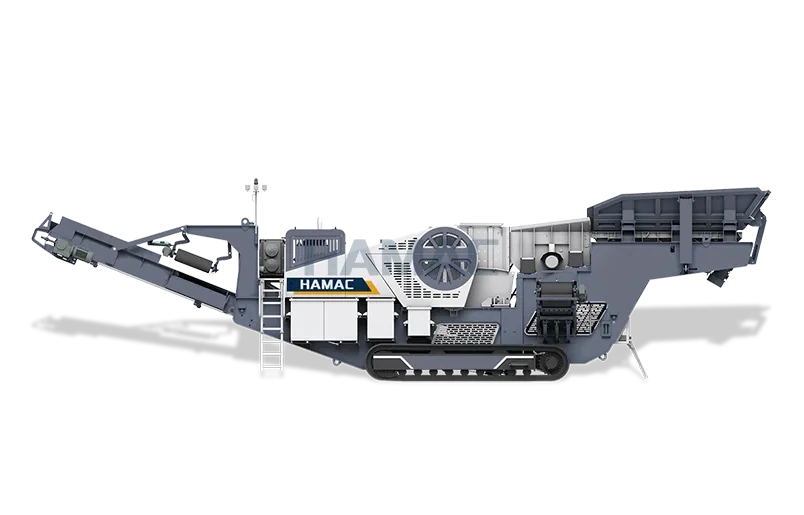
Choosing a Crawler (Tracked) Jaw Crusher TC Series starts with the rock and the target product, not a catalogue number. The steps below turn your project data into a defensible model choice.
1. Start with the material
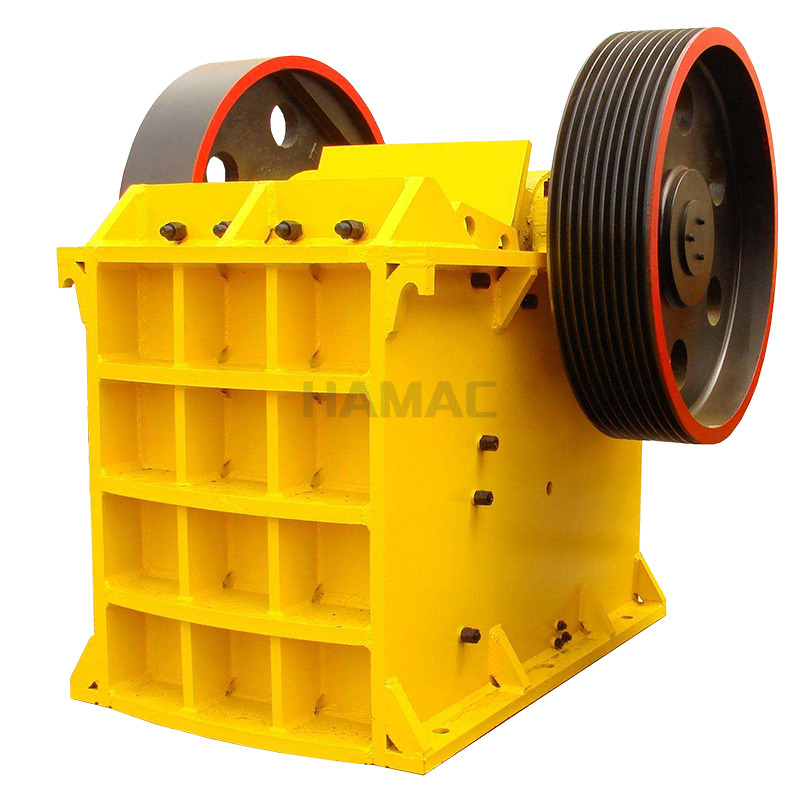
- Hard, abrasive rock (granite, basalt, quartz): compression crushing, premium Mn liners.
- Soft rock (limestone, marble, dolomite): impact crushing for shape at lower cost.
- High silica (river pebble, quartz): plan VSI + wear budget.
2. Size to saleable t/h
Add 10–20% surge to nameplate capacity; undersizing is a permanent bottleneck, oversizing wastes capital.
3. Match the product grading
Product size and shape (flakiness index) decide chamber and screen deck setup.
Pre-order checklist
- Feed size and max lump.
- Required t/h and product fractions.
- Site power (voltage / frequency) and mobility need.
- Local standards (CE, GOST, etc.).
Reference data for this configuration
| Parameter | Reference value |
|---|---|
| Machine line | Crawler (Tracked) Jaw Crusher TC Series |
| Category | Tracked Crushing Plants |
| Assumed duty | manufactured-sand production |
| Evaluation horizon | three-year view |
At manufactured-sand production, the ranking of these parameters changes: lowest cost per tonne usually becomes the deciding constraint rather than the headline tonnage.
Published Crawler (Tracked) Jaw Crusher TC Series model data
| Model | TC106 | TC116 | TC120 |
|---|---|---|---|
| Jaw crusher | C106 | C116 | C120 |
| Max. feeding size | 600 mm | 650 mm | 740 mm |
| Minimum outlet | 70–200 mm | 70–200 mm | 70–175 mm |
| Crusher motor | 110 kW | 132 kW | 160 kW |
| Main conveyor | B1000 × 12 m | B1000 × 12 m | B1000 × 12.9 m |
| Generator | 300 kW | 300 kW | 360 kW |
TC106 / TC116 / TC120 tracked jaw crushers with 600–740 mm max feed, 110–160 kW crusher power and on-board 300–360 kW generator. Read the table column by column against manufactured-sand production: the model you pick is the one whose published range brackets your target tonnage, not simply the largest machine in the series. Availability, motor rating and shipping data are re-confirmed for a confined urban yard in the written HAMAC proposal.
Project profile these notes assume
| Assumption | Value |
|---|---|
| Operating duty | manufactured-sand production |
| Primary objective | lowest cost per tonne |
| Evaluation horizon | three-year view |
| Site condition | a confined urban yard |
| Operating team | an owner-operator team |
Change any one of these assumptions and the recommended configuration for crawler (tracked) jaw crusher tc series may change. HAMAC re-runs the same checks against your own numbers once the enquiry data sheet is received.
From enquiry to the first saleable tonne
- Verify the electrical single-line diagram, cable sizing and starter type with the local utility.
- Set the maintenance stock list from the expected wear rate, not from a percentage of the equipment price.
- Lay out conveyors, access ways, stockpile capacity and drainage before ordering steelwork.
- Budget for water, dust extraction and spillage handling as part of the plant, not as an afterthought.
- Run a sieve analysis on a representative sample and attach the grading curve to the enquiry.
- Choose compression or impact reduction according to hardness, silica content and required particle shape.
- Define the acceptance test: sampling points, test duration, moisture range and who signs the protocol.
- Plan training for an owner-operator team on CSS adjustment, liner change-out and lock-out / tag-out.
- Log tonnes per liner set and kWh per tonne from day one so you have a real cost baseline within a quarter.
A realistic programme reserves time for permits, foundation curing and shipping to your market before any steel is cut.
What to verify before you sign
- Written performance guarantee, sampling method and acceptance-test protocol.
- Dust and noise control designed to the local emission limits for your market.
- Control system language, telemetry and remote diagnostics availability.
- Availability of an owner-operator team for liner changes and the lifting equipment on site.
- Screen deck count, aperture and area; ask for the efficiency calculation, not just the mesh size.
- Tramp-iron protection — hydraulic release, magnet and metal detection on the feed belt.
- Product sampling points and the lab equipment needed for routine grading checks.
- Ambient temperature, altitude and dust load derating for motors and hydraulics.
- Spare motor, gearbox and hydraulic pump lead times from the nearest HAMAC stock point.
Score each supplier against the same ten items and keep the score sheet with the purchase file for the three-year review.
Where the money actually goes
| Cost line | Indicative share | What moves the number |
|---|---|---|
| Equipment & drive packages | 54% | Model size, number of stages and automation level |
| Ocean freight & insurance | 8% | Destination port, container count and out-of-gauge cargo |
| Civil works & foundations | 8% | Soil conditions, dynamic loads and site preparation |
| Erection, commissioning & training | 7% | Local labour, supervision scope and schedule |
| First-year wear parts | 15% | Rock abrasiveness, liner grade and operating hours |
| Power, lubricants & consumables | 8% | kWh per tonne, local tariff and dust suppression water |
Model a low, base and high case for tonnes per liner set. The spread tells you more than a single optimistic estimate.
Mistakes that cost more than the machine
- Ordering no spares with the plant and waiting six weeks for the first liner set.
- Using one liner profile for both secondary and tertiary stages.
- Selecting the cheapest liner alloy for hard, high-silica rock and paying for it in change-outs.
- Skipping a geotechnical check and discovering settlement under the primary crusher at a confined urban yard.
- Undersizing the screen, then blaming the crusher for a plant that never reaches your target tonnage.
- Buying lowest cost per tonne on price alone and losing it in availability.
- Buying on nameplate t/h without converting to saleable product at the specified fractions.
- Assuming the manufacturer's warranty covers wear parts and consumables.
For manufactured-sand production, protect the lowest cost per tonne requirement explicitly in the contract documents.
Commissioning checklist
- Agree the punch list, sign the hand-over protocol and file the as-built drawings.
- Introduce feed in graded steps: 25%, 50%, 75%, then full load.
- Dry-run the plant empty for the specified period and record vibration.
- Verify rotation direction on every motor before coupling.
- Hand over the spare-parts list, manuals and maintenance schedule.
- Check hydraulic pressure, accumulator pre-charge and tramp-release function.
- Sample each product fraction and compare with the specification.
- Verify chute liners, skirt rubber and impact bars after the first hour of feed.
The commissioning record becomes the reference for every liner change in the three-year plan.