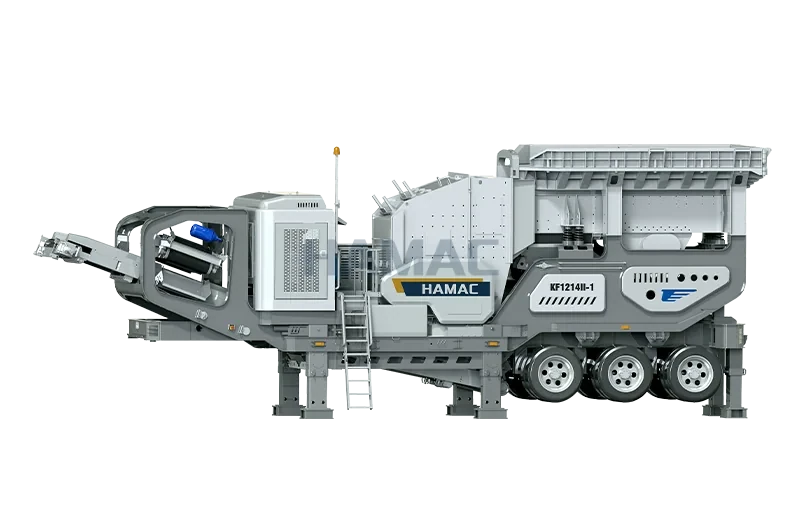
Overview
Buying a Mobile Impact Crusher Plant direct from HAMAC removes the trading margin and gives you engineering support from enquiry to commissioning.
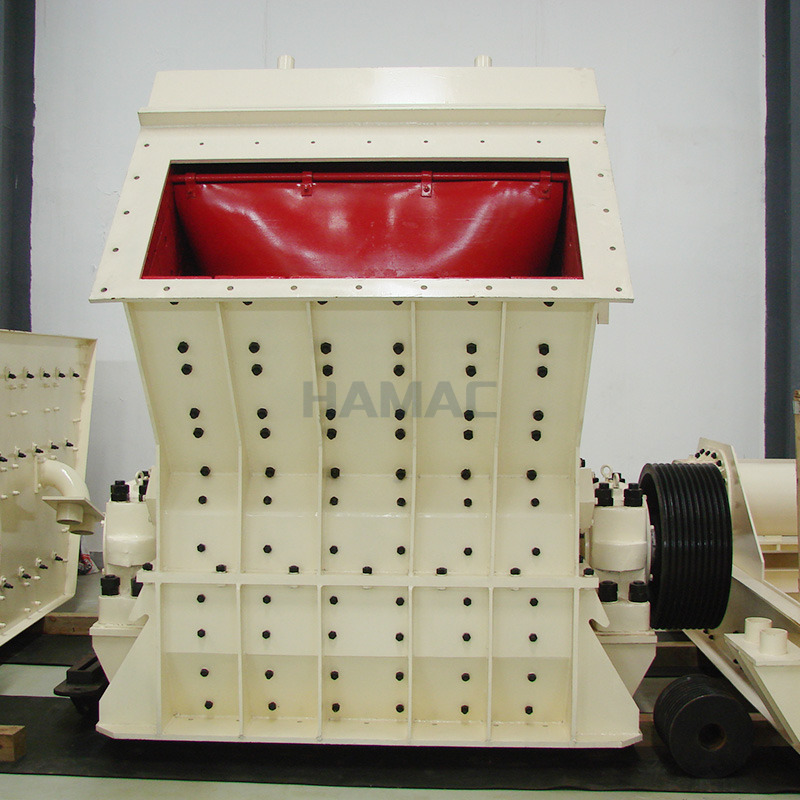
Why buy direct
- One project manager for the whole order.
- Workshop assembly, test and container loading plan.
- Flow-sheet design, layout and foundation reference.
- Installation supervision, training and 24h technical response.
Export & documentation
Quoted FOB / CFR / CIF. Documentation applicable to your market (CE where required), Spanish manuals for LatAm, motors set to local voltage.
How to order
Send project data → receive design + budget in 24h → refine drawings → manufacture → install.
Reference data for this configuration
| Parameter | Reference value |
|---|---|
| Machine line | Mobile Impact Crusher Plant |
| Category | Wheel Type Mobile Crushers |
| Assumed duty | contract crushing on short-term sites |
| Evaluation horizon | five-year view |
These values are the starting point for a written proposal on mobile impact crusher plant; they are nominal and should be confirmed against a sample test before manufacture.
Published Mobile Impact Crusher Plant model data
| Model | MHSI1210 | MHSI1214 | MHSI1315 |
|---|---|---|---|
| Weighing (kg) | 28800 | 31500 | 39600 |
| Impact crusher | |||
| Model | PF1210 | PF1214 | PF1315 |
| Feed opening (mm) | 400*1080 | 400*1430 | 860*1520 |
| Nominal capacity (t/h) | 70-130 | 100-180 | 130-250 |
| Vibrating feeder | |||
| Model | ZZG3895 | ZZG4211 | ZZG4911 |
| Belt conveyor |
Mobile impact crusher plant is a versatile, efficient, and easy-to-move crushing machine designed for rock and material size reduction in aggregates production, recycling, and mining. Read the table column by column against contract crushing on short-term sites: the model you pick is the one whose published range brackets your target tonnage, not simply the largest machine in the series. Availability, motor rating and shipping data are re-confirmed for a confined urban yard in the written HAMAC proposal.
Project profile these notes assume
| Assumption | Value |
|---|---|
| Operating duty | contract crushing on short-term sites |
| Primary objective | lowest energy per tonne |
| Evaluation horizon | five-year view |
| Site condition | a confined urban yard |
| Operating team | a rotating shift crew |
Change any one of these assumptions and the recommended configuration for mobile impact crusher plant may change. HAMAC re-runs the same checks against your own numbers once the enquiry data sheet is received.
From enquiry to the first saleable tonne
- Sequence delivery so foundations cure while the equipment is still in manufacture.
- Allocate screen area per deck; blinding and pegging are the most common hidden bottlenecks in a new plant.
- Confirm site voltage, frequency and applicable conformity standards before manufacture.
- Plan training for a rotating shift crew on CSS adjustment, liner change-out and lock-out / tag-out.
- Confirm the haul-road and stockpile plan with a confined urban yard in mind before fixing conveyor lengths.
- Include dust suppression, guarding, emergency stops and lock-out points in the layout drawing.
- Size the primary stage for your target tonnage with a 10–20% surge allowance — never on nameplate throughput alone.
- Survey the feed: the feed material; record top size, bulk density, moisture and clay content before fixing the flow sheet.
- Book shipping, prepare the packing list and confirm the container loading plan.
Shortening this sequence is possible on a confined urban yard, but only where the feed and product specification are already fully defined.
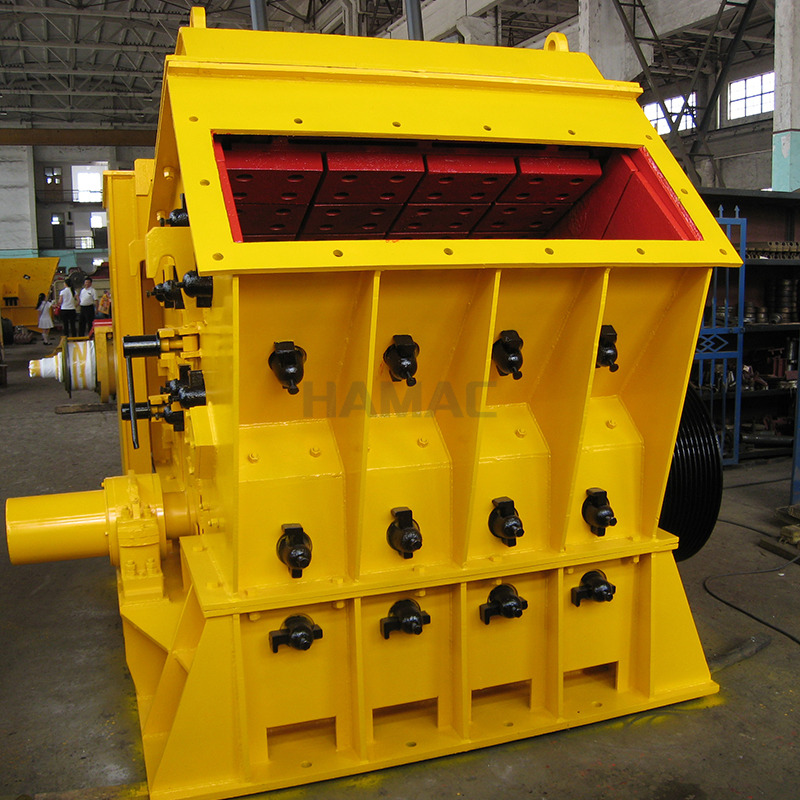
What to verify before you sign
- Availability of a rotating shift crew for liner changes and the lifting equipment on site.
- Screen deck count, aperture and area; ask for the efficiency calculation, not just the mesh size.
- Nameplate data for local voltage, frequency and the applicable conformity scheme.
- Delivery terms (FOB / CFR / CIF) with the destination port named explicitly.
- Local service partner, technician travel time and visa requirements for your market.
- Choke-feed arrangement: surge bin, feeder control and level indication.
- Whether the quoted t/h is achieved at contract crushing on short-term sites or under ideal laboratory feed.
- Spare motor, gearbox and hydraulic pump lead times from the nearest HAMAC stock point.
- Written performance guarantee, sampling method and acceptance-test protocol.
Score each supplier against the same ten items and keep the score sheet with the purchase file for the five-year review.
Where the money actually goes
| Cost line | Indicative share | What moves the number |
|---|---|---|
| Equipment & drive packages | 54% | Model size, number of stages and automation level |
| Ocean freight & insurance | 8% | Destination port, container count and out-of-gauge cargo |
| Civil works & foundations | 8% | Soil conditions, dynamic loads and site preparation |
| Erection, commissioning & training | 7% | Local labour, supervision scope and schedule |
| First-year wear parts | 15% | Rock abrasiveness, liner grade and operating hours |
| Power, lubricants & consumables | 8% | kWh per tonne, local tariff and dust suppression water |
Freight to your market is volatile; ask for the quotation to state validity and the port basis rather than a single delivered number.
Mistakes that cost more than the machine
- Buying on nameplate t/h without converting to saleable product at the specified fractions.
- Assuming the manufacturer's warranty covers wear parts and consumables.
- Assuming a mobile plant can match a stationary line on high-tonnage, multi-product duty.
- Leaving tramp-iron protection out of the scope to save a small percentage of capital.
- Skipping the acceptance test, so no one has a baseline to measure degradation against.
- Omitting a bypass chute, so a single screen fault stops the whole line.
- Letting the contract crushing on short-term sites duty be defined verbally instead of in the contract.
- Forgetting surge capacity — an intermittent loader starves the chamber and ruins particle shape.
For contract crushing on short-term sites, protect the lowest energy per tonne requirement explicitly in the contract documents.
Commissioning checklist
- Record the baseline grading curve for each product fraction.
- Dry-run the plant empty for the specified period and record vibration.
- Measure and log the as-new CSS / setting for future wear comparison.
- Confirm all guards, emergency stops and pull-wire switches function.
- Calibrate the belt scale and any level probes against a known load.
- Check hydraulic pressure, accumulator pre-charge and tramp-release function.
- Check lubrication levels, grease lines and oil cooler operation.
- Verify chute liners, skirt rubber and impact bars after the first hour of feed.
On a confined urban yard, allow extra time for the dust and noise measurements.