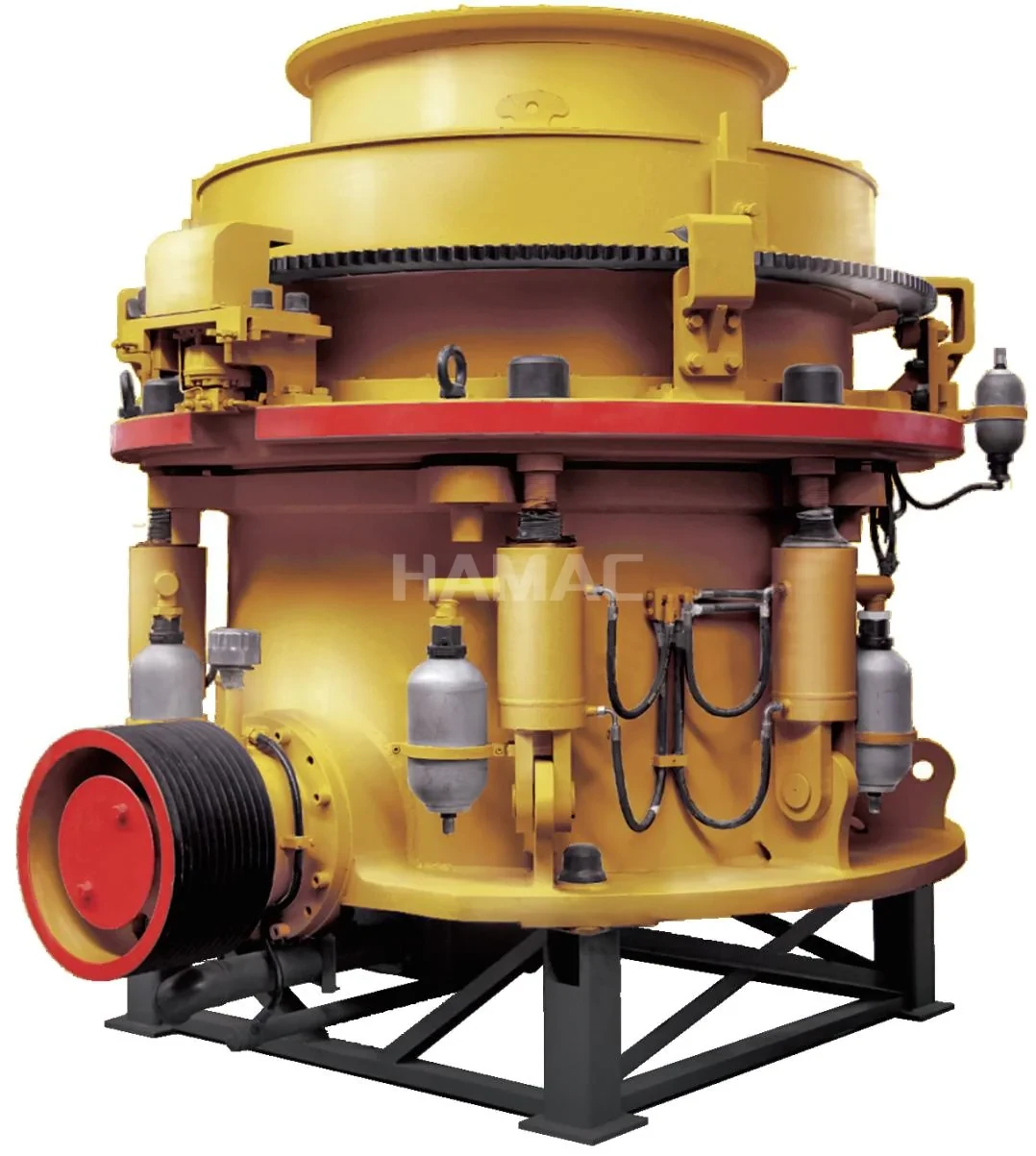
Overview
Buying a HPT Multi-Cylinder Hydraulic Cone Crusher direct from HAMAC removes the trading margin and gives you engineering support from enquiry to commissioning.
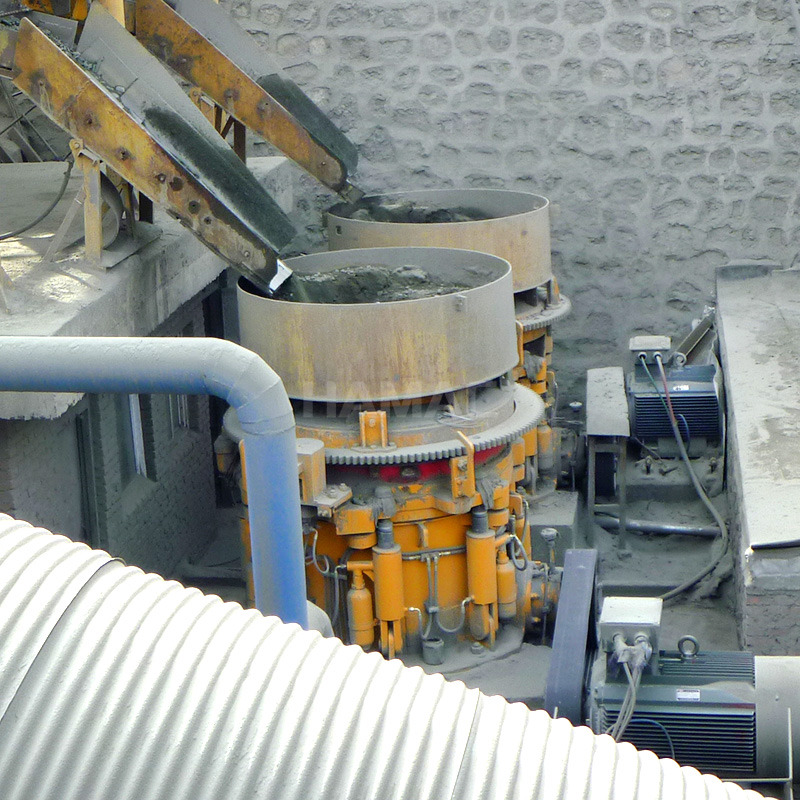
Why buy direct
- One project manager for the whole order.
- Workshop assembly, test and container loading plan.
- Flow-sheet design, layout and foundation reference.
- Installation supervision, training and 24h technical response.
Export & documentation
Quoted FOB / CFR / CIF. Documentation applicable to your market (CE where required), Spanish manuals for LatAm, motors set to local voltage.
How to order
Send project data → receive design + budget in 24h → refine drawings → manufacture → install.
Reference data for this configuration
| Parameter | Reference value |
|---|---|
| Machine line | HPT Multi-Cylinder Hydraulic Cone Crusher |
| Category | Cone Crusher |
| Assumed duty | continuous quarry production |
| Evaluation horizon | ten-year view |
Treat this as a living sheet. Every revision of the flow sheet for your market should update the same fields so the equipment list stays traceable.
Published HPT Multi-Cylinder Hydraulic Cone Crusher model data
| Model | Installed power (kW) | Capacity range (t/h) | Dimensions (mm) |
|---|---|---|---|
| HPT100 | 90 | 45–140 | 1705 × 1510 × 1583 |
| HPT200 | 160 | 90–250 | 2135 × 1750 × 1927 |
| HPT300 | 220 | 110–440 | 2725 × 2110 × 2871 |
| HPT400 / HPT500 | On request | On request | On request |
Hydraulic multi-cylinder cone crusher for secondary and tertiary crushing of limestone through basalt, with 5–15% higher efficiency and 35–60% higher output than spring cone crushers. Read the table column by column against continuous quarry production: the model you pick is the one whose published range brackets your target tonnage, not simply the largest machine in the series. Availability, motor rating and shipping data are re-confirmed for a greenfield site in the written HAMAC proposal.
Project profile these notes assume
| Assumption | Value |
|---|---|
| Operating duty | continuous quarry production |
| Primary objective | tight grading compliance |
| Evaluation horizon | ten-year view |
| Site condition | a greenfield site |
| Operating team | a mixed local and expatriate team |
Change any one of these assumptions and the recommended configuration for hpt multi-cylinder hydraulic cone crusher may change. HAMAC re-runs the same checks against your own numbers once the enquiry data sheet is received.
From enquiry to the first saleable tonne
- Plan training for a mixed local and expatriate team on CSS adjustment, liner change-out and lock-out / tag-out.
- Record the as-built settings and give the operator a written daily, weekly and monthly schedule.
- Lay out conveyors, access ways, stockpile capacity and drainage before ordering steelwork.
- Size the primary stage for your target tonnage with a 10–20% surge allowance — never on nameplate throughput alone.
- Check bearing and lubrication arrangements against the ambient temperature range at the site.
- Budget for water, dust extraction and spillage handling as part of the plant, not as an afterthought.
- Define the acceptance test: sampling points, test duration, moisture range and who signs the protocol.
- Set the closed-side setting or rotor speed against the required product fractions, then verify the expected reduction ratio.
- Survey the feed: the feed material; record top size, bulk density, moisture and clay content before fixing the flow sheet.
The sequence is deliberately front-loaded — decisions taken before manufacture are cheap, changes made on site are not.
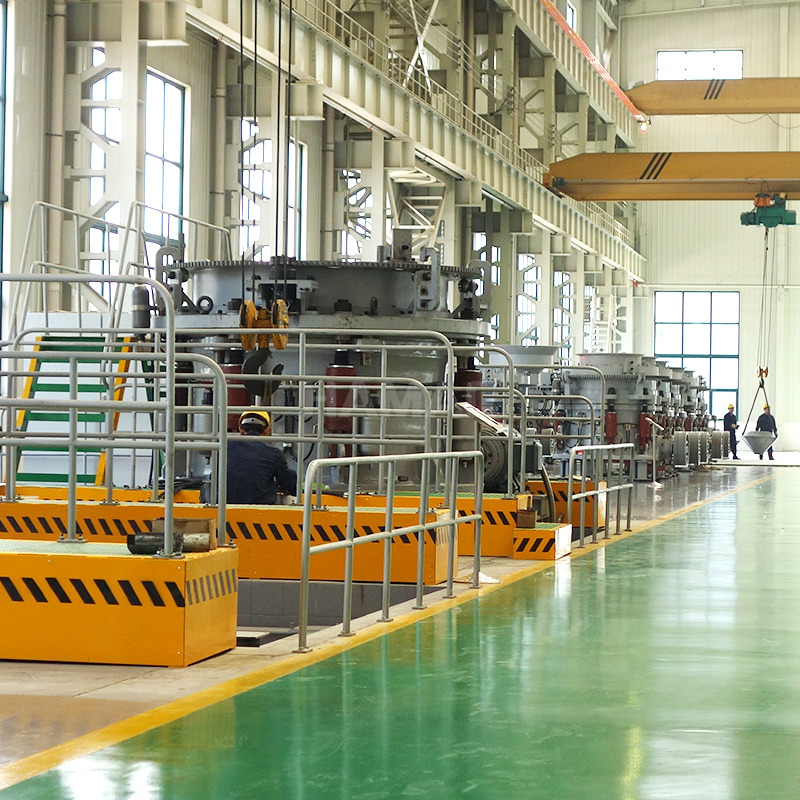
What to verify before you sign
- Wear-part interchangeability across machines in the same circuit.
- Decommissioning or relocation value at the end of a ten-year horizon.
- Closed-side setting range and whether automatic setting regulation is included.
- Spare-parts consignment: one full liner or blow-bar set plus meshes, belts, bearings and seals.
- Access for liner change-out — crane radius, lifting points and clearance around the chamber.
- Choke-feed arrangement: surge bin, feeder control and level indication.
- Availability of a mixed local and expatriate team for liner changes and the lifting equipment on site.
- After-sales response time, technician availability and the warranty exclusions in writing.
- Maximum feed lump and gradation — a chamber that cannot accept the top size will bridge on day one.
Share this list with a mixed local and expatriate team as well as procurement; operators are the ones who live with the omissions.
Where the money actually goes
| Cost line | Indicative share | What moves the number |
|---|---|---|
| Equipment & drive packages | 54% | Model size, number of stages and automation level |
| Ocean freight & insurance | 8% | Destination port, container count and out-of-gauge cargo |
| Civil works & foundations | 8% | Soil conditions, dynamic loads and site preparation |
| Erection, commissioning & training | 7% | Local labour, supervision scope and schedule |
| First-year wear parts | 15% | Rock abrasiveness, liner grade and operating hours |
| Power, lubricants & consumables | 8% | kWh per tonne, local tariff and dust suppression water |
On continuous quarry production, the tight grading compliance objective changes which line deserves the most attention during value engineering.
Mistakes that cost more than the machine
- Undersizing the screen, then blaming the crusher for a plant that never reaches your target tonnage.
- Skipping the acceptance test, so no one has a baseline to measure degradation against.
- Assuming the manufacturer's warranty covers wear parts and consumables.
- Choosing screen apertures before the concrete or asphalt mix design is fixed.
- Buying on nameplate t/h without converting to saleable product at the specified fractions.
- Using one liner profile for both secondary and tertiary stages.
- Planning the crusher but not the conveyors, transfer chutes and stockpile capacity around it.
- Selecting the cheapest liner alloy for hard, high-silica rock and paying for it in change-outs.
On a greenfield site, the civil and logistics items deserve as much attention as the crusher itself.
Commissioning checklist
- Check hydraulic pressure, accumulator pre-charge and tramp-release function.
- Test emergency stops, pull wires and interlock trips in sequence.
- Measure noise and dust at the operator position against the local limit.
- Calibrate the belt scale and any level probes against a known load.
- Record power draw, tonnage and chamber pressure at steady state.
- Agree the punch list, sign the hand-over protocol and file the as-built drawings.
- Check lubrication levels, grease lines and oil cooler operation.
- Hand over the spare-parts list, manuals and maintenance schedule.
Keep the signed record; it is the only defensible baseline for later performance disputes.