Overview
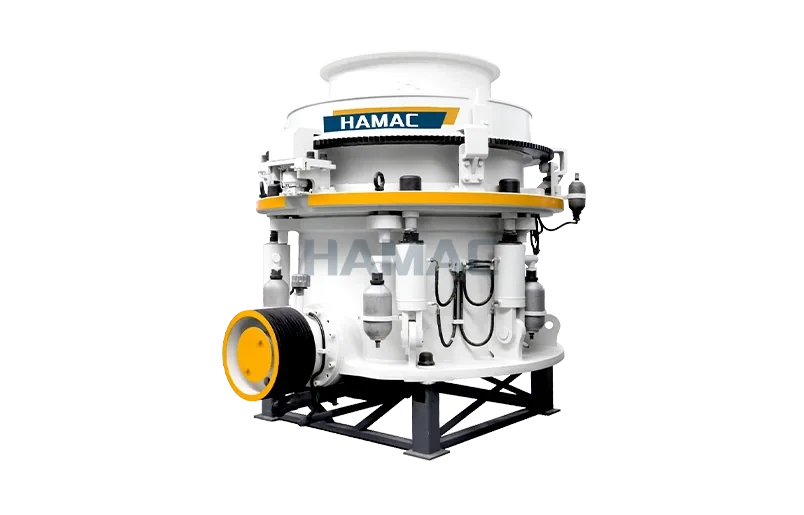
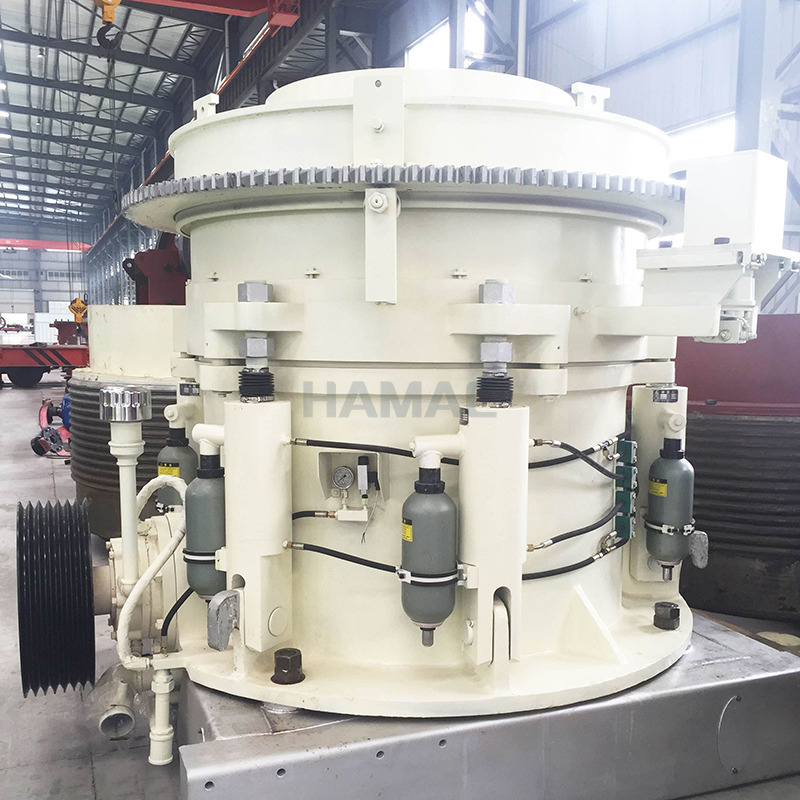
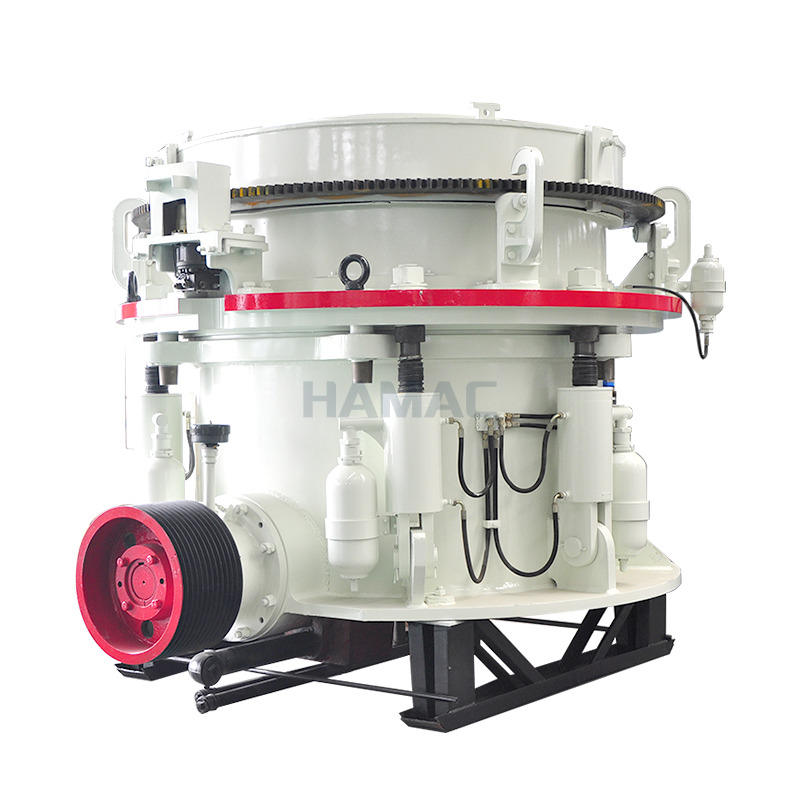
Buying a HP Hydraulic Cone Crusher direct from HAMAC removes the trading margin and gives you engineering support from enquiry to commissioning.
Why buy direct
- One project manager for the whole order.
- Workshop assembly, test and container loading plan.
- Flow-sheet design, layout and foundation reference.
- Installation supervision, training and 24h technical response.
Export & documentation
Quoted FOB / CFR / CIF. Documentation applicable to your market (CE where required), Spanish manuals for LatAm, motors set to local voltage.
How to order
Send project data → receive design + budget in 24h → refine drawings → manufacture → install.
Reference data for this configuration
| Parameter | Reference value |
|---|---|
| Machine line | HP Hydraulic Cone Crusher |
| Category | Cone Crusher |
| Assumed duty | cement raw-meal preparation |
| Evaluation horizon | ten-year view |
Treat this as a living sheet. Every revision of the flow sheet for your market should update the same fields so the equipment list stays traceable.
Published HP Hydraulic Cone Crusher model data
| Model | Crushing Chamber | Standard type | Short head type | Power | Capacity |
|---|---|---|---|---|---|
| Feeding opening | Min. Discharge opening | Feeding opening | Min. Discharge opening | ||
| HPT200 | Extra Coarse(EC) | ||||
| Coarse(C) | 185 mm | 19 mm | 76 mm | 10 mm | |
| Medium(M) | 125 mm | 17 mm | 54 mm | 6 mm | |
| Fine(F) | 95 mm | 13 mm | 23 mm | 6 mm | |
| Extra fine(EF) | 10 mm | 5 mm | |||
| HPT300 | Extra Coarse(EC) | 230 mm | 25 mm | ||
| Coarse(C) | 210 mm | 20 mm | 10 mm |
HP Series of highly efficient Hydraulic Cone Crusher is a world-level cone crusher introduced with the up-to-the-minute technology of Germany. Read the table column by column against cement raw-meal preparation: the model you pick is the one whose published range brackets your target tonnage, not simply the largest machine in the series. Availability, motor rating and shipping data are re-confirmed for a confined urban yard in the written HAMAC proposal.
Project profile these notes assume
| Assumption | Value |
|---|---|
| Operating duty | cement raw-meal preparation |
| Primary objective | minimal civil works |
| Evaluation horizon | ten-year view |
| Site condition | a confined urban yard |
| Operating team | a rotating shift crew |
Change any one of these assumptions and the recommended configuration for hp hydraulic cone crusher may change. HAMAC re-runs the same checks against your own numbers once the enquiry data sheet is received.
From enquiry to the first saleable tonne
- Book shipping, prepare the packing list and confirm the container loading plan.
- Confirm site voltage, frequency and applicable conformity standards before manufacture.
- Commission with graded load, sample the product grading, then train operators on liner change-out and daily checks.
- Define the acceptance test: sampling points, test duration, moisture range and who signs the protocol.
- Lay out conveyors, access ways, stockpile capacity and drainage before ordering steelwork.
- Review the crusher chamber profile with the liner supplier against the feed material.
- Verify the electrical single-line diagram, cable sizing and starter type with the local utility.
- Choose compression or impact reduction according to hardness, silica content and required particle shape.
- Run a sieve analysis on a representative sample and attach the grading curve to the enquiry.
The sequence is deliberately front-loaded — decisions taken before manufacture are cheap, changes made on site are not.
What to verify before you sign
- After-sales response time, technician availability and the warranty exclusions in writing.
- Guaranteed power draw and the minimal civil works trade-off it implies.
- Wear-part interchangeability across machines in the same circuit.
- Spare-parts consignment: one full liner or blow-bar set plus meshes, belts, bearings and seals.
- Product sampling points and the lab equipment needed for routine grading checks.
- Written performance guarantee, sampling method and acceptance-test protocol.
- Tramp-iron protection — hydraulic release, magnet and metal detection on the feed belt.
- Whether the quoted t/h is achieved at cement raw-meal preparation or under ideal laboratory feed.
- Ambient temperature, altitude and dust load derating for motors and hydraulics.
Ask each supplier to price the same list. Quotations for hp hydraulic cone crusher only become comparable when the scope is identical.
Where the money actually goes
| Cost line | Indicative share | What moves the number |
|---|---|---|
| Equipment & drive packages | 54% | Model size, number of stages and automation level |
| Ocean freight & insurance | 8% | Destination port, container count and out-of-gauge cargo |
| Civil works & foundations | 8% | Soil conditions, dynamic loads and site preparation |
| Erection, commissioning & training | 7% | Local labour, supervision scope and schedule |
| First-year wear parts | 15% | Rock abrasiveness, liner grade and operating hours |
| Power, lubricants & consumables | 8% | kWh per tonne, local tariff and dust suppression water |
On cement raw-meal preparation, the minimal civil works objective changes which line deserves the most attention during value engineering.
Mistakes that cost more than the machine
- Selecting the cheapest liner alloy for hard, high-silica rock and paying for it in change-outs.
- Ordering no spares with the plant and waiting six weeks for the first liner set.
- Undersizing the screen, then blaming the crusher for a plant that never reaches your target tonnage.
- Choosing screen apertures before the concrete or asphalt mix design is fixed.
- Using one liner profile for both secondary and tertiary stages.
- Omitting a bypass chute, so a single screen fault stops the whole line.
- Forgetting surge capacity — an intermittent loader starves the chamber and ruins particle shape.
- Buying minimal civil works on price alone and losing it in availability.
For cement raw-meal preparation, protect the minimal civil works requirement explicitly in the contract documents.
Commissioning checklist
- Check lubrication levels, grease lines and oil cooler operation.
- Dry-run the plant empty for the specified period and record vibration.
- Test emergency stops, pull wires and interlock trips in sequence.
- Agree the punch list, sign the hand-over protocol and file the as-built drawings.
- Record power draw, tonnage and chamber pressure at steady state.
- Measure noise and dust at the operator position against the local limit.
- Confirm the direction and tension of every belt under no load.
- Introduce feed in graded steps: 25%, 50%, 75%, then full load.
For a rotating shift crew, run through this list twice — once with the supervisor and once without.