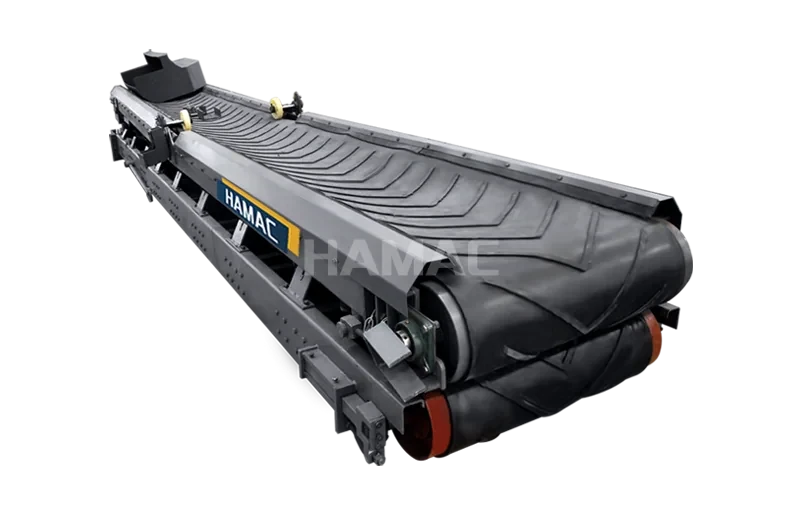
Overview
Buying a Belt Conveyor direct from HAMAC removes the trading margin and gives you engineering support from enquiry to commissioning.
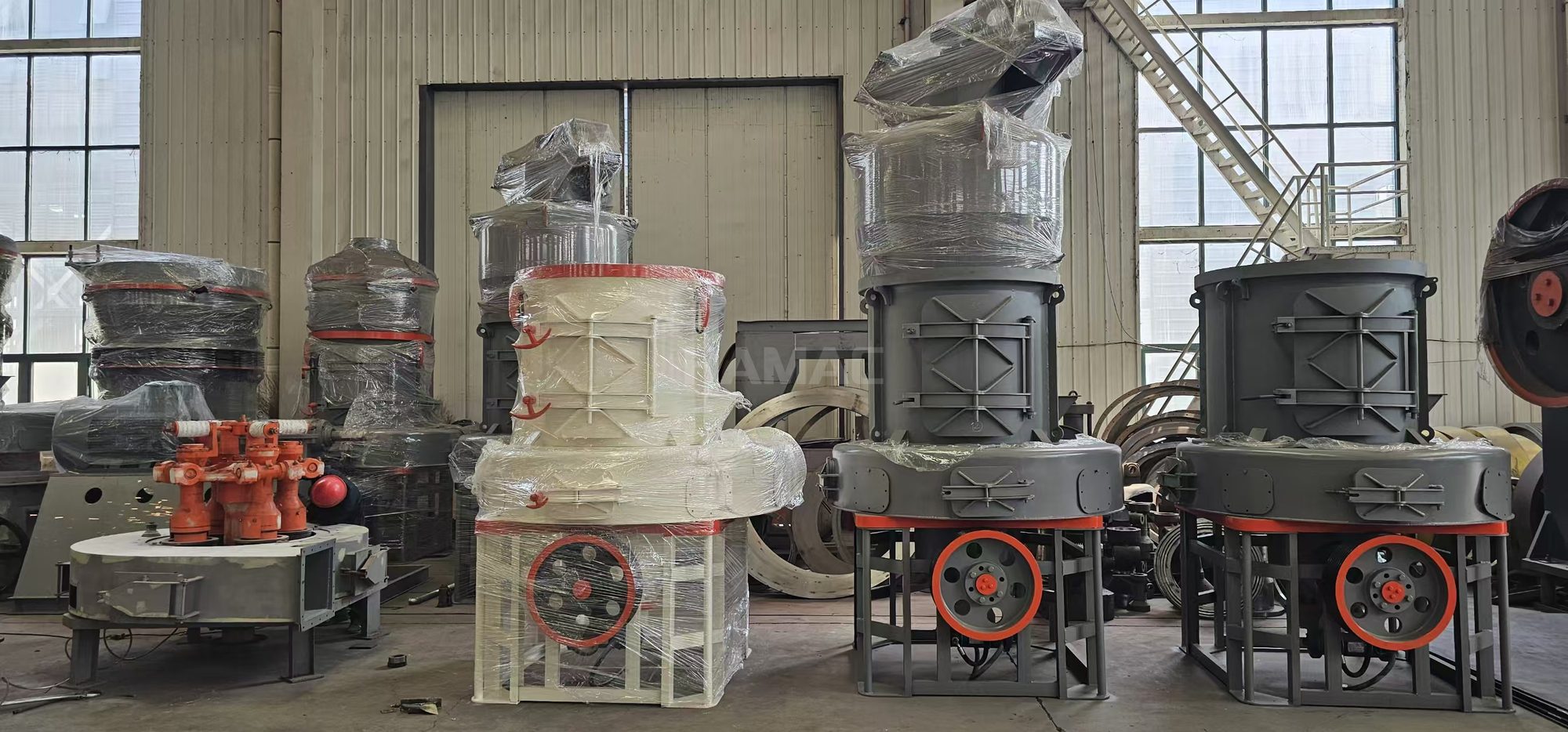
Why buy direct
- One project manager for the whole order.
- Workshop assembly, test and container loading plan.
- Flow-sheet design, layout and foundation reference.
- Installation supervision, training and 24h technical response.
Export & documentation
Quoted FOB / CFR / CIF. Documentation applicable to your market (CE where required), Spanish manuals for LatAm, motors set to local voltage.
How to order
Send project data → receive design + budget in 24h → refine drawings → manufacture → install.
Reference data for this configuration
| Parameter | Reference value |
|---|---|
| Machine line | Belt Conveyor |
| Category | Supporting Equipments |
| Assumed duty | continuous quarry production |
| Evaluation horizon | ten-year view |
Where a value is shown as nominal, the written proposal states the guaranteed figure for your material, feed grading and ten-year operating plan.
Published Belt Conveyor model data
| Section Form | Belt speed (m/s) | Widtd of belt |
|---|---|---|
| 500 | 650 | 800 |
| U type | 0.8 | 78 |
| 1 | 97 | 169 |
| 1.25 | 122 | 206 |
| 1.6 | 156 | 264 |
| 2 | 191 | 323 |
| 2.5 | 232 | 391 |
| 3.15 |
HAMAC offers high-performance Mining Equipment Conveyor Belt Systems, ideal for transporting aggregate, sand, and other bulk materials. Read the table column by column against continuous quarry production: the model you pick is the one whose published range brackets your target tonnage, not simply the largest machine in the series. Availability, motor rating and shipping data are re-confirmed for a greenfield site in the written HAMAC proposal.
Project profile these notes assume
| Assumption | Value |
|---|---|
| Operating duty | continuous quarry production |
| Primary objective | maximum mechanical availability |
| Evaluation horizon | ten-year view |
| Site condition | a greenfield site |
| Operating team | a small contractor crew |
Change any one of these assumptions and the recommended configuration for belt conveyor may change. HAMAC re-runs the same checks against your own numbers once the enquiry data sheet is received.
From enquiry to the first saleable tonne
- Allocate screen area per deck; blinding and pegging are the most common hidden bottlenecks in a new plant.
- Run a sieve analysis on a representative sample and attach the grading curve to the enquiry.
- Define the acceptance test: sampling points, test duration, moisture range and who signs the protocol.
- Book shipping, prepare the packing list and confirm the container loading plan.
- Review the crusher chamber profile with the liner supplier against the feed material.
- Set the closed-side setting or rotor speed against the required product fractions, then verify the expected reduction ratio.
- Lay out conveyors, access ways, stockpile capacity and drainage before ordering steelwork.
- Size the primary stage for your target tonnage with a 10–20% surge allowance — never on nameplate throughput alone.
- Check bearing and lubrication arrangements against the ambient temperature range at the site.
Shortening this sequence is possible on a greenfield site, but only where the feed and product specification are already fully defined.
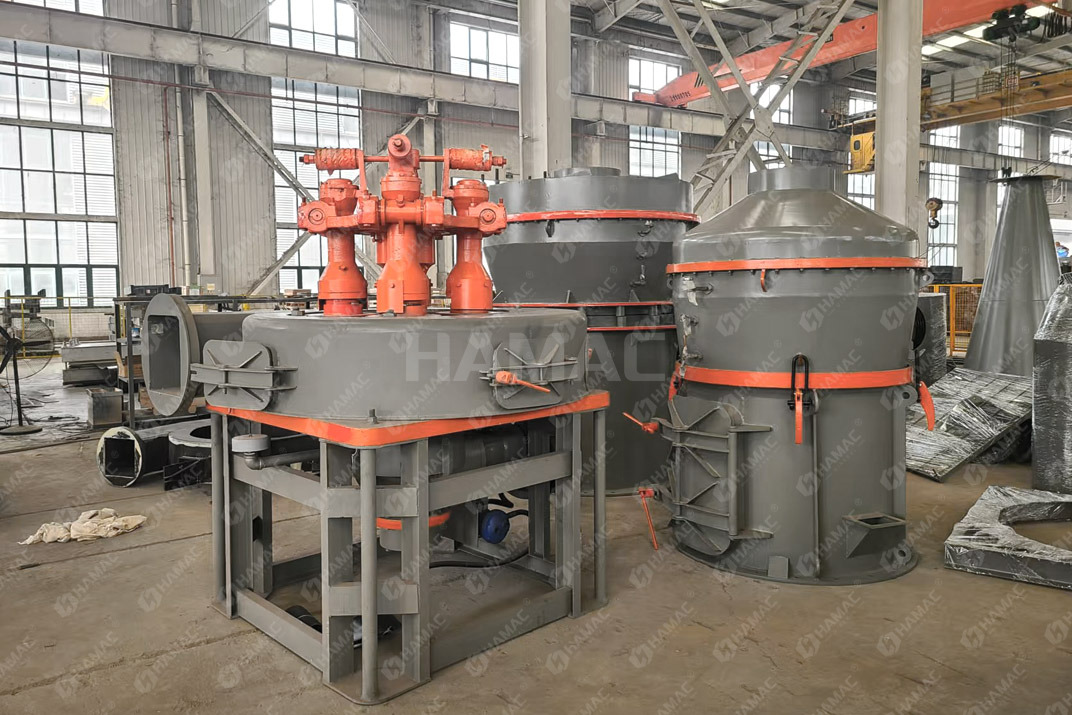
What to verify before you sign
- After-sales response time, technician availability and the warranty exclusions in writing.
- Energy draw in kW and the expected kWh per tonne at the design duty.
- Control system language, telemetry and remote diagnostics availability.
- Liner alloy: Mn22 matched to the rock, not to the lowest purchase price.
- Erection scope: supervision only, or full civil, mechanical and electrical installation.
- Choke-feed arrangement: surge bin, feeder control and level indication.
- Saleable tonnes per hour at each product size, not gross crusher throughput, for your target tonnage.
- Ambient temperature, altitude and dust load derating for motors and hydraulics.
- Wear-part interchangeability across machines in the same circuit.
Ask each supplier to price the same list. Quotations for belt conveyor only become comparable when the scope is identical.
Where the money actually goes
| Cost line | Indicative share | What moves the number |
|---|---|---|
| Equipment & drive packages | 54% | Model size, number of stages and automation level |
| Ocean freight & insurance | 8% | Destination port, container count and out-of-gauge cargo |
| Civil works & foundations | 8% | Soil conditions, dynamic loads and site preparation |
| Erection, commissioning & training | 7% | Local labour, supervision scope and schedule |
| First-year wear parts | 15% | Rock abrasiveness, liner grade and operating hours |
| Power, lubricants & consumables | 8% | kWh per tonne, local tariff and dust suppression water |
Model a low, base and high case for tonnes per liner set. The spread tells you more than a single optimistic estimate.
Mistakes that cost more than the machine
- Letting the continuous quarry production duty be defined verbally instead of in the contract.
- Omitting a bypass chute, so a single screen fault stops the whole line.
- Undersizing the screen, then blaming the crusher for a plant that never reaches your target tonnage.
- Assuming the manufacturer's warranty covers wear parts and consumables.
- Forgetting surge capacity — an intermittent loader starves the chamber and ruins particle shape.
- Choosing screen apertures before the concrete or asphalt mix design is fixed.
- Using one liner profile for both secondary and tertiary stages.
- Skipping a geotechnical check and discovering settlement under the primary crusher at a greenfield site.
On a greenfield site, the civil and logistics items deserve as much attention as the crusher itself.
Commissioning checklist
- Record the baseline grading curve for each product fraction.
- Agree the punch list, sign the hand-over protocol and file the as-built drawings.
- Verify rotation direction on every motor before coupling.
- Record power draw, tonnage and chamber pressure at steady state.
- Sample each product fraction and compare with the specification.
- Hand over the spare-parts list, manuals and maintenance schedule.
- Check lubrication levels, grease lines and oil cooler operation.
- Verify chute liners, skirt rubber and impact bars after the first hour of feed.
Keep the signed record; it is the only defensible baseline for later performance disputes.