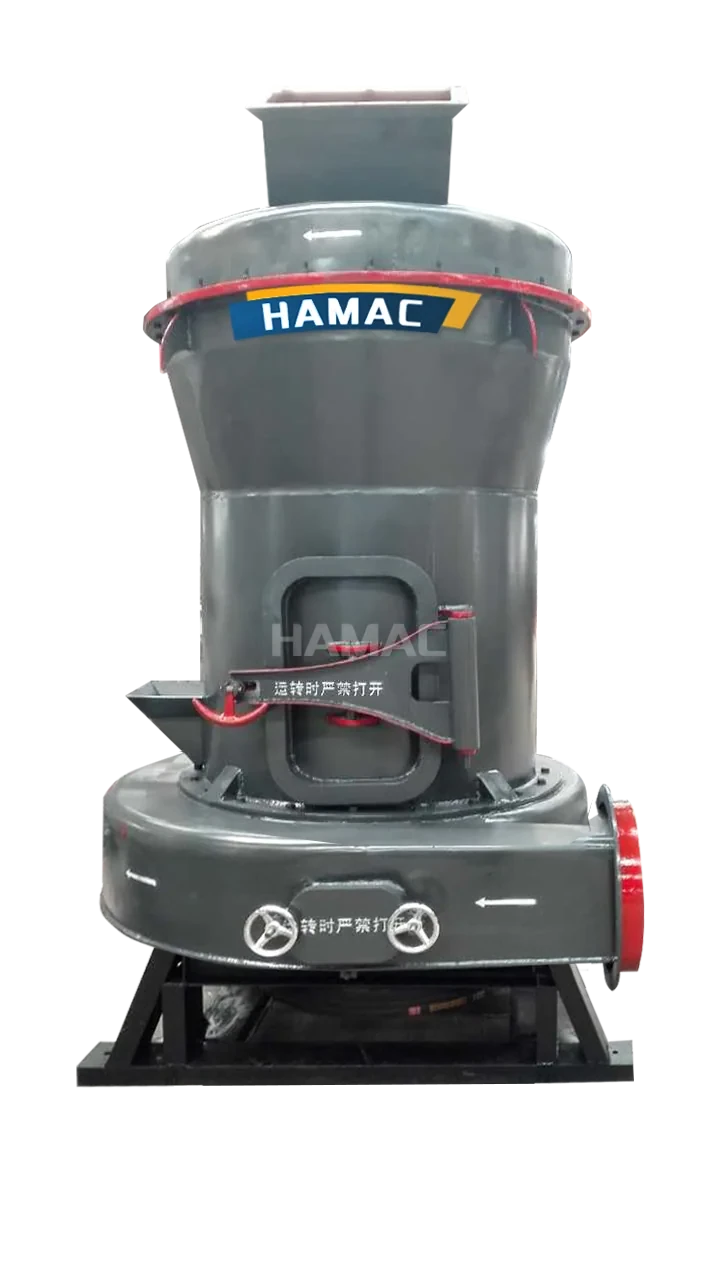
Overview
Published YGM High Pressure Grinding Mill specifications below are nominal values transcribed from HAMAC data. Actual performance depends on feed gradation, moisture, setting and screening efficiency.
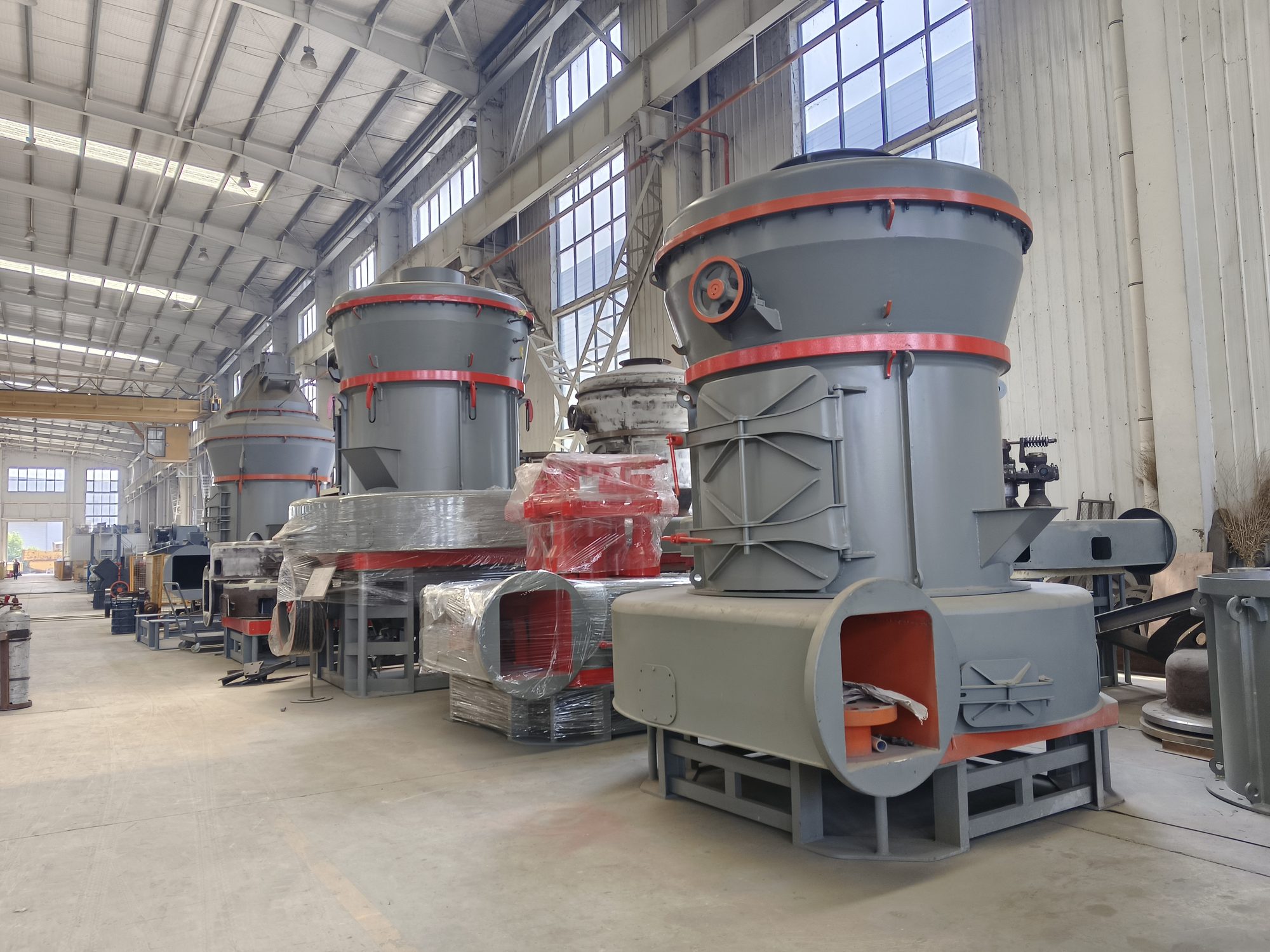
Specification table
| Parameter | Value |
|---|---|
| YGM65 | 3 210×150 mm |
| YGM75 | 3 260×150 mm |
| YGM85 | 3 270×140 mm |
| YGM95B | 3-4 300×160 mm |
| YGM95 | 4 310×170 mm |
| YGM130 | 4 410×210 mm |
| YGM1500 | 4 420×280 mm |
How to read the data
- Rated capacity is at a specified CSS / setting and material — treat it as saleable product, not crusher throughput.
- Feed size limit protects the chamber; oversize feed causes bridging.
- Motor power scales with rotor / chamber size, not linearly with capacity.
Selecting the right model
Match the model to your target t/h at the required product size, then confirm with a HAMAC engineer before order.
Reference data for this configuration
| Parameter | Reference value |
|---|---|
| Machine line | YGM High Pressure Grinding Mill |
| Category | Grinding Mills |
| Assumed duty | continuous quarry production |
| Evaluation horizon | single-project view |
Use the table as a checklist when comparing quotations for ygm high pressure grinding mill — a lower price often means one of these parameters was quietly reduced.
Published YGM High Pressure Grinding Mill model data
| Model | Roller Qty | Roller Size | Ring Size | Feed Size | Product Size | Output | Speed | Power |
|---|---|---|---|---|---|---|---|---|
| YGM65 | 3 | 210×150 mm | 650×150 mm | < 15 mm | 0.613-0.033 mm | 0.4-1.8 t | 160 rpm | 15 kw |
| YGM75 | 3 | 260×150 mm | 780×150 mm | < 15 mm | 0.613-0.033 mm | 1-3 t | 160 rpm | 18.5 kw |
| YGM85 | 3 | 270×140 mm | 830×140 mm | < 20 mm | 0.613-0.033 mm | 1.2-4.6 t | 150 rpm | 22 kw |
| YGM95B | 3-4 | 300×160 mm | 900×160 mm | < 25 mm | 0.613-0.033 mm | 1.5-4.8 t | 150 rpm | 30 kw |
| YGM95 | 4 | 310×170 mm | 950×170 mm | < 25 mm | 0.613-0.033 mm | 2.1-5.6 t | 130 rpm | 37 kw |
| YGM130 | 4 | 410×210 mm | 1280×210 mm | < 30 mm | 0.95-0.033 mm | 3-9.5 t | 103 rpm | 75 kw |
| YGM1500 | 4 | 420×280 mm | 1510×280 mm | < 30 mm | 0.95-0.033 mm | 5-15 t | 103 rpm | 90 kw |
| YGM160 | 5 | 440×270 mm | 1600×270 mm | < 35 mm | 1.9-0.045 mm | 8-16 t | 82 rpm | 132 kw |
Raymond Mill is an important industrial grinding equipment widely used in various industries. Read the table column by column against continuous quarry production: the model you pick is the one whose published range brackets your target tonnage, not simply the largest machine in the series. Availability, motor rating and shipping data are re-confirmed for an existing quarry bench in the written HAMAC proposal.
Project profile these notes assume
| Assumption | Value |
|---|---|
| Operating duty | continuous quarry production |
| Primary objective | lowest energy per tonne |
| Evaluation horizon | single-project view |
| Site condition | an existing quarry bench |
| Operating team | a rotating shift crew |
Change any one of these assumptions and the recommended configuration for ygm high pressure grinding mill may change. HAMAC re-runs the same checks against your own numbers once the enquiry data sheet is received.
From enquiry to the first saleable tonne
- Commission with graded load, sample the product grading, then train operators on liner change-out and daily checks.
- Sequence delivery so foundations cure while the equipment is still in manufacture.
- Define the acceptance test: sampling points, test duration, moisture range and who signs the protocol.
- Run a sieve analysis on a representative sample and attach the grading curve to the enquiry.
- Lay out conveyors, access ways, stockpile capacity and drainage before ordering steelwork.
- Confirm the haul-road and stockpile plan with an existing quarry bench in mind before fixing conveyor lengths.
- Book shipping, prepare the packing list and confirm the container loading plan.
- Choose compression or impact reduction according to hardness, silica content and required particle shape.
- Record the as-built settings and give the operator a written daily, weekly and monthly schedule.
Most delays at this stage come from missing feed data rather than from manufacturing capacity.
What to verify before you sign
- Spare-parts consignment: one full liner or blow-bar set plus meshes, belts, bearings and seals.
- Control system language, telemetry and remote diagnostics availability.
- Whether the quoted t/h is achieved at continuous quarry production or under ideal laboratory feed.
- Spare motor, gearbox and hydraulic pump lead times from the nearest HAMAC stock point.
- Guaranteed power draw and the lowest energy per tonne trade-off it implies.
- Saleable tonnes per hour at each product size, not gross crusher throughput, for your target tonnage.
- Product sampling points and the lab equipment needed for routine grading checks.
- Maximum feed lump and gradation — a chamber that cannot accept the top size will bridge on day one.
- Screen deck count, aperture and area; ask for the efficiency calculation, not just the mesh size.
For continuous quarry production, give the lowest energy per tonne line extra weight; a generic checklist will not rank the offers correctly.
Where the money actually goes
| Cost line | Indicative share | What moves the number |
|---|---|---|
| Equipment & drive packages | 54% | Model size, number of stages and automation level |
| Ocean freight & insurance | 8% | Destination port, container count and out-of-gauge cargo |
| Civil works & foundations | 8% | Soil conditions, dynamic loads and site preparation |
| Erection, commissioning & training | 7% | Local labour, supervision scope and schedule |
| First-year wear parts | 15% | Rock abrasiveness, liner grade and operating hours |
| Power, lubricants & consumables | 8% | kWh per tonne, local tariff and dust suppression water |
Treat the percentages as a budgeting shape, not a quotation: HAMAC prices the equipment list in writing once the flow sheet is fixed.
Mistakes that cost more than the machine
- Ignoring clay and moisture until the first wet season, when decks blind and chambers pack.
- Specifying motors for the wrong voltage or frequency and rewinding them on site.
- Planning the crusher but not the conveyors, transfer chutes and stockpile capacity around it.
- Skipping the acceptance test, so no one has a baseline to measure degradation against.
- Buying on nameplate t/h without converting to saleable product at the specified fractions.
- Ordering no spares with the plant and waiting six weeks for the first liner set.
- Selecting the cheapest liner alloy for hard, high-silica rock and paying for it in change-outs.
- Assuming a mobile plant can match a stationary line on high-tonnage, multi-product duty.
Every item on this list has cost someone a commissioning date; none of them requires new technology to avoid.
Commissioning checklist
- Dry-run the plant empty for the specified period and record vibration.
- Hand over the spare-parts list, manuals and maintenance schedule.
- Sample each product fraction and compare with the specification.
- Check lubrication levels, grease lines and oil cooler operation.
- Verify chute liners, skirt rubber and impact bars after the first hour of feed.
- Record power draw, tonnage and chamber pressure at steady state.
- Confirm all guards, emergency stops and pull-wire switches function.
- Test emergency stops, pull wires and interlock trips in sequence.
The commissioning record becomes the reference for every liner change in the single-project plan.