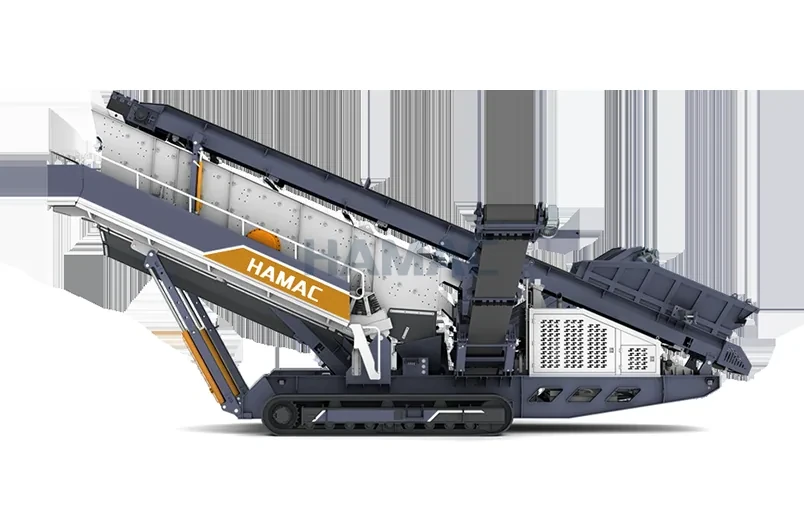
Overview
A simple, disciplined maintenance routine is the cheapest insurance against unplanned downtime on a Tracked Vibrating Screening Plant.
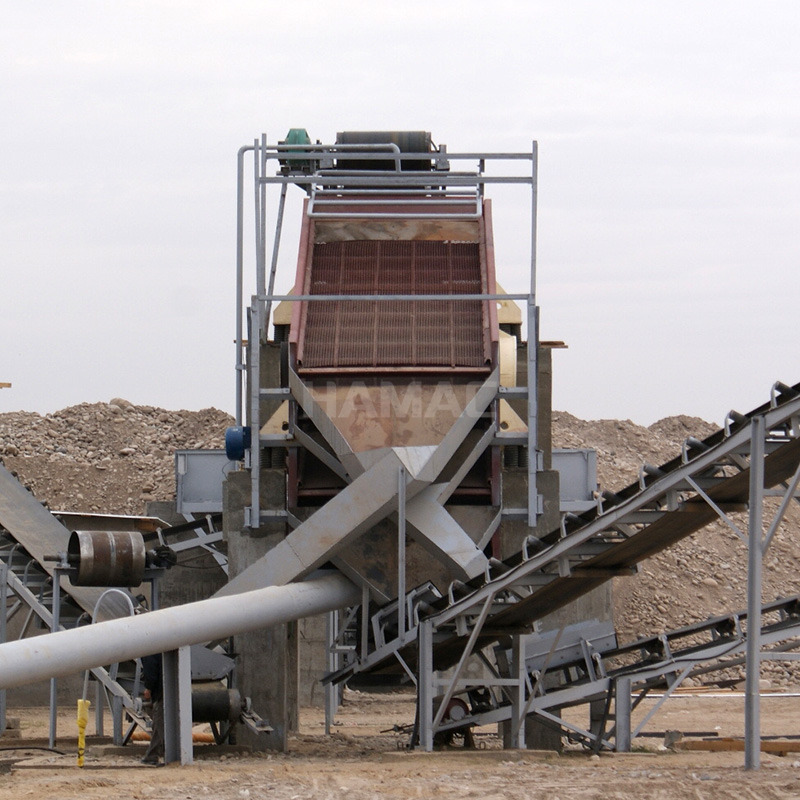
Daily
- Check lubrication levels and look for leaks.
- Inspect liners / blow bars for uneven wear.
- Listen for abnormal vibration or noise.
- Verify belt tension and guard position.
Weekly
- Grease bearings per the schedule.
- Check fasteners and hydraulic pressure.
- Clean screens and check mesh wear.
Monthly
- Measure liner wear and plan change-out.
- Inspect drives, couplings and motor.
- Review wear-part stock against lead time.
Safety
Lock-out / tag-out before any entry; never clear bridging under a running crusher; follow local standards and HAMAC manuals.
Reference data for this configuration
| Parameter | Reference value |
|---|---|
| Machine line | Tracked Vibrating Screening Plant |
| Category | Tracked Crushing Plants |
| Assumed duty | mine pre-beneficiation feed |
| Evaluation horizon | three-year view |
The figures above are transcribed from published HAMAC data and from the material properties of the feed; site measurements take precedence.
Published Tracked Vibrating Screening Plant model data
| Model | MS-3618E |
|---|---|
| Feeder | |
| Volume | 2.8 m³ |
| Feeding height | 2288 mm |
| Maximum feed size | 200 mm |
| Feeding capacity | 350 t/h |
| Screening | |
| Vibrating screen length×width | 1800 x 6000 mm |
| Number of layers | 3 |
Maximize productivity with the HMC series Tracked Vibrating Screening Plant. Read the table column by column against mine pre-beneficiation feed: the model you pick is the one whose published range brackets your target tonnage, not simply the largest machine in the series. Availability, motor rating and shipping data are re-confirmed for an existing quarry bench in the written HAMAC proposal.
Project profile these notes assume
| Assumption | Value |
|---|---|
| Operating duty | mine pre-beneficiation feed |
| Primary objective | fast mobilisation |
| Evaluation horizon | three-year view |
| Site condition | an existing quarry bench |
| Operating team | a mixed local and expatriate team |
Change any one of these assumptions and the recommended configuration for tracked vibrating screening plant may change. HAMAC re-runs the same checks against your own numbers once the enquiry data sheet is received.
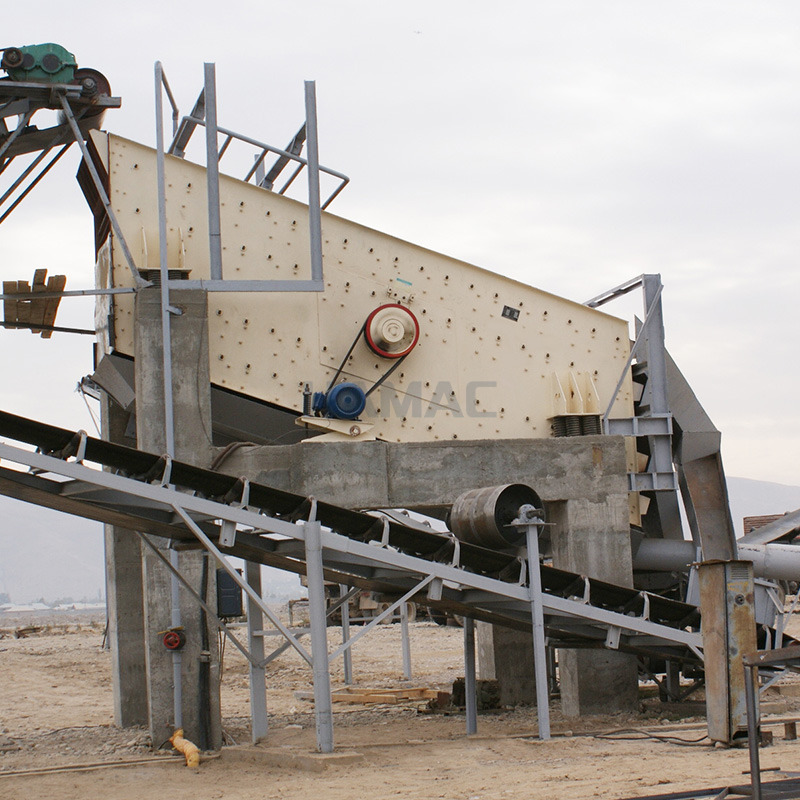
From enquiry to the first saleable tonne
- Survey the feed: the feed material; record top size, bulk density, moisture and clay content before fixing the flow sheet.
- Book shipping, prepare the packing list and confirm the container loading plan.
- Confirm site voltage, frequency and applicable conformity standards before manufacture.
- Check bearing and lubrication arrangements against the ambient temperature range at the site.
- Set the maintenance stock list from the expected wear rate, not from a percentage of the equipment price.
- Record the as-built settings and give the operator a written daily, weekly and monthly schedule.
- Commission with graded load, sample the product grading, then train operators on liner change-out and daily checks.
- Choose compression or impact reduction according to hardness, silica content and required particle shape.
- Verify the electrical single-line diagram, cable sizing and starter type with the local utility.
The sequence is deliberately front-loaded — decisions taken before manufacture are cheap, changes made on site are not.
What to verify before you sign
- Spare-parts consignment: one full liner or blow-bar set plus meshes, belts, bearings and seals.
- Ambient temperature, altitude and dust load derating for motors and hydraulics.
- Maximum feed lump and gradation — a chamber that cannot accept the top size will bridge on day one.
- Local service partner, technician travel time and visa requirements for your market.
- Screen deck count, aperture and area; ask for the efficiency calculation, not just the mesh size.
- Wear-part interchangeability across machines in the same circuit.
- Decommissioning or relocation value at the end of a three-year horizon.
- Control system language, telemetry and remote diagnostics availability.
- Liner alloy: Mn13 matched to the rock, not to the lowest purchase price.
For mine pre-beneficiation feed, give the fast mobilisation line extra weight; a generic checklist will not rank the offers correctly.
Where the money actually goes
| Cost line | Indicative share | What moves the number |
|---|---|---|
| Equipment & drive packages | 54% | Model size, number of stages and automation level |
| Ocean freight & insurance | 8% | Destination port, container count and out-of-gauge cargo |
| Civil works & foundations | 8% | Soil conditions, dynamic loads and site preparation |
| Erection, commissioning & training | 7% | Local labour, supervision scope and schedule |
| First-year wear parts | 15% | Rock abrasiveness, liner grade and operating hours |
| Power, lubricants & consumables | 8% | kWh per tonne, local tariff and dust suppression water |
A three-year view normally reverses the ranking of two otherwise similar offers once wear and energy are included.
Mistakes that cost more than the machine
- Choosing screen apertures before the concrete or asphalt mix design is fixed.
- Selecting the cheapest liner alloy for hard, high-silica rock and paying for it in change-outs.
- Assuming the manufacturer's warranty covers wear parts and consumables.
- Ignoring clay and moisture until the first wet season, when decks blind and chambers pack.
- Assuming a mobile plant can match a stationary line on high-tonnage, multi-product duty.
- Ordering no spares with the plant and waiting six weeks for the first liner set.
- Planning the crusher but not the conveyors, transfer chutes and stockpile capacity around it.
- Buying fast mobilisation on price alone and losing it in availability.
For mine pre-beneficiation feed, protect the fast mobilisation requirement explicitly in the contract documents.
Commissioning checklist
- Test emergency stops, pull wires and interlock trips in sequence.
- Verify rotation direction on every motor before coupling.
- Check hydraulic pressure, accumulator pre-charge and tramp-release function.
- Measure and log the as-new CSS / setting for future wear comparison.
- Confirm the direction and tension of every belt under no load.
- Measure noise and dust at the operator position against the local limit.
- Record power draw, tonnage and chamber pressure at steady state.
- Check belt tracking, chute build-up and transfer-point dust.
Keep the signed record; it is the only defensible baseline for later performance disputes.