Overview
A simple, disciplined maintenance routine is the cheapest insurance against unplanned downtime on a European Tech. Jaw Crusher.
Daily
- Check lubrication levels and look for leaks.
- Inspect liners / blow bars for uneven wear.
- Listen for abnormal vibration or noise.
- Verify belt tension and guard position.
Weekly
- Grease bearings per the schedule.
- Check fasteners and hydraulic pressure.
- Clean screens and check mesh wear.
Monthly
- Measure liner wear and plan change-out.
- Inspect drives, couplings and motor.
- Review wear-part stock against lead time.
Safety
Lock-out / tag-out before any entry; never clear bridging under a running crusher; follow local standards and HAMAC manuals.
Reference data for this configuration
| Parameter | Reference value |
|---|---|
| Machine line | European Tech. Jaw Crusher |
| Category | Jaw Crusher |
| Assumed duty | high-tonnage aggregate supply |
| Evaluation horizon | single-project view |
HAMAC engineers fill in the same fields on the project data sheet, which is why two plants of similar tonnage can still require different machines.
Published European Tech. Jaw Crusher model data
| Model | Feed opening | Motor Power | Rotation speed | Jaw plate length | Max single part weight | Total weight |
|---|---|---|---|---|---|---|
| 6CX80 | 800×510 mm | 75 kW | 350 rpm | 1100 mm | 2870 kg | 7520 kg |
| 6CX96 | 930×580 mm | 75(90) kW | 300 rpm | 1380 mm | 4500 kg | 12000 kg |
| 6CX106 | 1060×700 mm | 110 kW | 280 rpm | 1450 mm | 7800 kg | 19000 kg |
| 6CX110 | 1100×850 mm | 132(160) kW | 230 rpm | 1800 mm | 9000 kg | 25060 kg |
| 6CX125 | 1250×950 mm | 160(132) kW | 220 rpm | 2000 mm | 12960 kg | 36700 kg |
| 6CX140 | 1400×1070 mm | 200(160) kW | 220 rpm | 2100 mm | 15950 kg | 45300 kg |
| 6CX145 | 1400×1100 mm | 200 kW | 220 rpm | 2300 mm | 18600 kg | 53800 kg |
| 6CX160 | 1600×1200 mm | 250(200) kW | 220 rpm | 2500 mm | 21380 kg | 68600 kg |
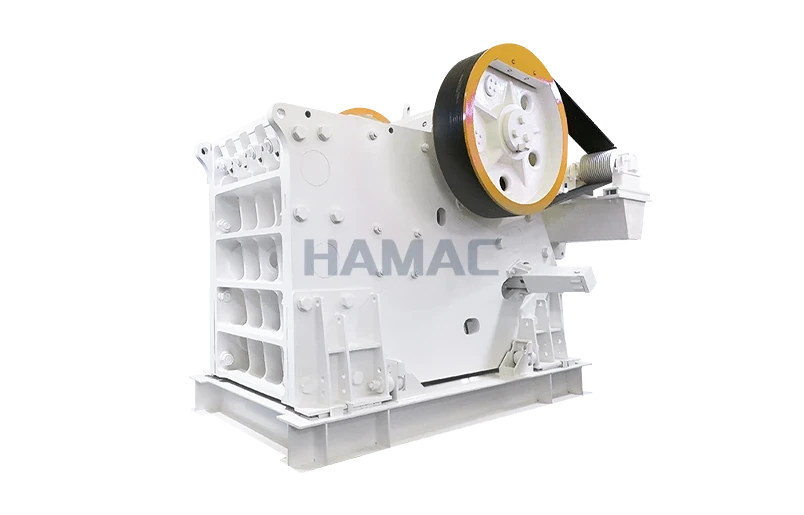
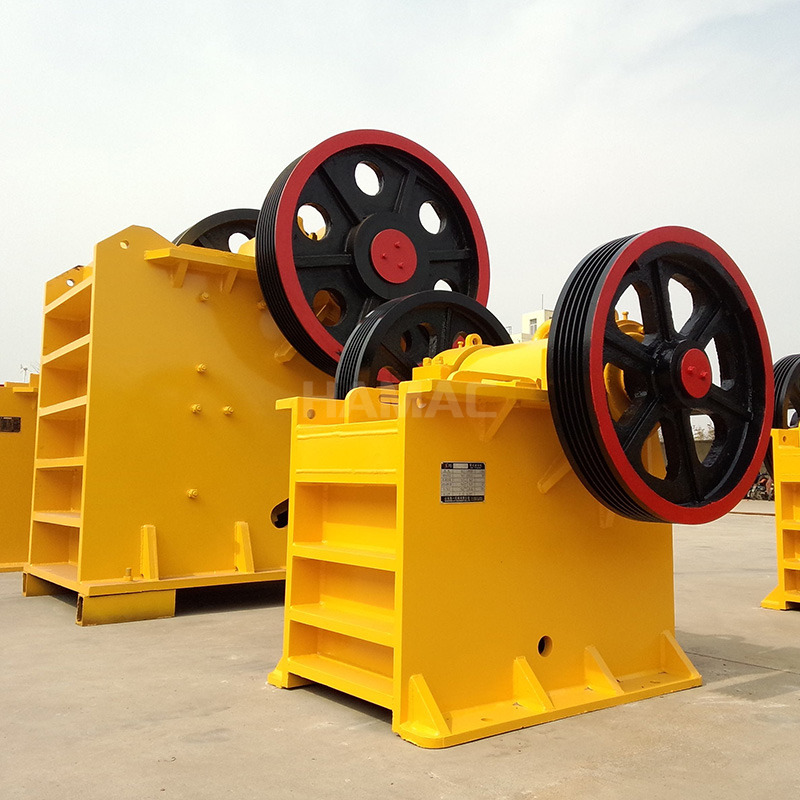
The European Tech. jaw crusher, developed using advanced international crushing technology, is designed for high-efficiency crushing of hard, abrasive materials. Read the table column by column against high-tonnage aggregate supply: the model you pick is the one whose published range brackets your target tonnage, not simply the largest machine in the series. Availability, motor rating and shipping data are re-confirmed for a brownfield extension in the written HAMAC proposal.
Project profile these notes assume
| Assumption | Value |
|---|---|
| Operating duty | high-tonnage aggregate supply |
| Primary objective | minimal civil works |
| Evaluation horizon | single-project view |
| Site condition | a brownfield extension |
| Operating team | a small contractor crew |
Change any one of these assumptions and the recommended configuration for european tech. jaw crusher may change. HAMAC re-runs the same checks against your own numbers once the enquiry data sheet is received.
From enquiry to the first saleable tonne
- Check bearing and lubrication arrangements against the ambient temperature range at the site.
- Review the crusher chamber profile with the liner supplier against the feed material.
- Survey the feed: the feed material; record top size, bulk density, moisture and clay content before fixing the flow sheet.
- Size the primary stage for your target tonnage with a 10–20% surge allowance — never on nameplate throughput alone.
- Confirm the haul-road and stockpile plan with a brownfield extension in mind before fixing conveyor lengths.
- Set the closed-side setting or rotor speed against the required product fractions, then verify the expected reduction ratio.
- Set the maintenance stock list from the expected wear rate, not from a percentage of the equipment price.
- Plan training for a small contractor crew on CSS adjustment, liner change-out and lock-out / tag-out.
- Include dust suppression, guarding, emergency stops and lock-out points in the layout drawing.
The sequence is deliberately front-loaded — decisions taken before manufacture are cheap, changes made on site are not.
What to verify before you sign
- Choke-feed arrangement: surge bin, feeder control and level indication.
- Delivery terms (FOB / CFR / CIF) with the destination port named explicitly.
- Product sampling points and the lab equipment needed for routine grading checks.
- Whether the quoted t/h is achieved at high-tonnage aggregate supply or under ideal laboratory feed.
- Screen deck count, aperture and area; ask for the efficiency calculation, not just the mesh size.
- Closed-side setting range and whether automatic setting regulation is included.
- Control system language, telemetry and remote diagnostics availability.
- Spare motor, gearbox and hydraulic pump lead times from the nearest HAMAC stock point.
- Saleable tonnes per hour at each product size, not gross crusher throughput, for your target tonnage.
Score each supplier against the same ten items and keep the score sheet with the purchase file for the single-project review.
Where the money actually goes
| Cost line | Indicative share | What moves the number |
|---|---|---|
| Equipment & drive packages | 54% | Model size, number of stages and automation level |
| Ocean freight & insurance | 8% | Destination port, container count and out-of-gauge cargo |
| Civil works & foundations | 8% | Soil conditions, dynamic loads and site preparation |
| Erection, commissioning & training | 7% | Local labour, supervision scope and schedule |
| First-year wear parts | 15% | Rock abrasiveness, liner grade and operating hours |
| Power, lubricants & consumables | 8% | kWh per tonne, local tariff and dust suppression water |
Include downtime in the model. An unplanned liner change on a remote site costs far more than the casting itself.
Mistakes that cost more than the machine
- Omitting a bypass chute, so a single screen fault stops the whole line.
- Specifying motors for the wrong voltage or frequency and rewinding them on site.
- Undersizing the screen, then blaming the crusher for a plant that never reaches your target tonnage.
- Buying on nameplate t/h without converting to saleable product at the specified fractions.
- Letting the high-tonnage aggregate supply duty be defined verbally instead of in the contract.
- Using one liner profile for both secondary and tertiary stages.
- Assuming a mobile plant can match a stationary line on high-tonnage, multi-product duty.
- Overlooking dust, noise and water permits in your market until erection has already started.
Review the list with a small contractor crew before the order is placed — they will recognise most of them.
Commissioning checklist
- Check belt tracking, chute build-up and transfer-point dust.
- Record the baseline grading curve for each product fraction.
- Dry-run the plant empty for the specified period and record vibration.
- Record power draw, tonnage and chamber pressure at steady state.
- Verify chute liners, skirt rubber and impact bars after the first hour of feed.
- Agree the punch list, sign the hand-over protocol and file the as-built drawings.
- Measure and log the as-new CSS / setting for future wear comparison.
- Sample each product fraction and compare with the specification.
For a small contractor crew, run through this list twice — once with the supervisor and once without.