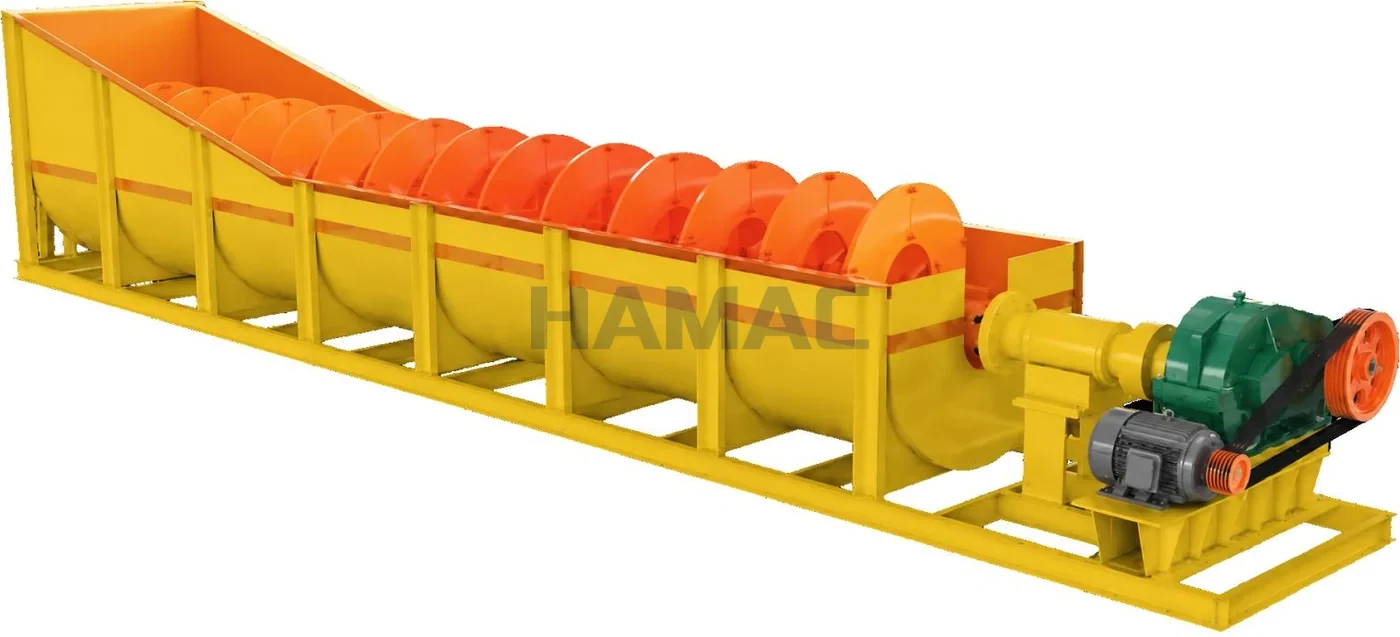
Overview
The Spiral (Screw) Sand Washer is applied across aggregates, mining, beneficiation and recycling. The material properties decide whether it is the right machine.
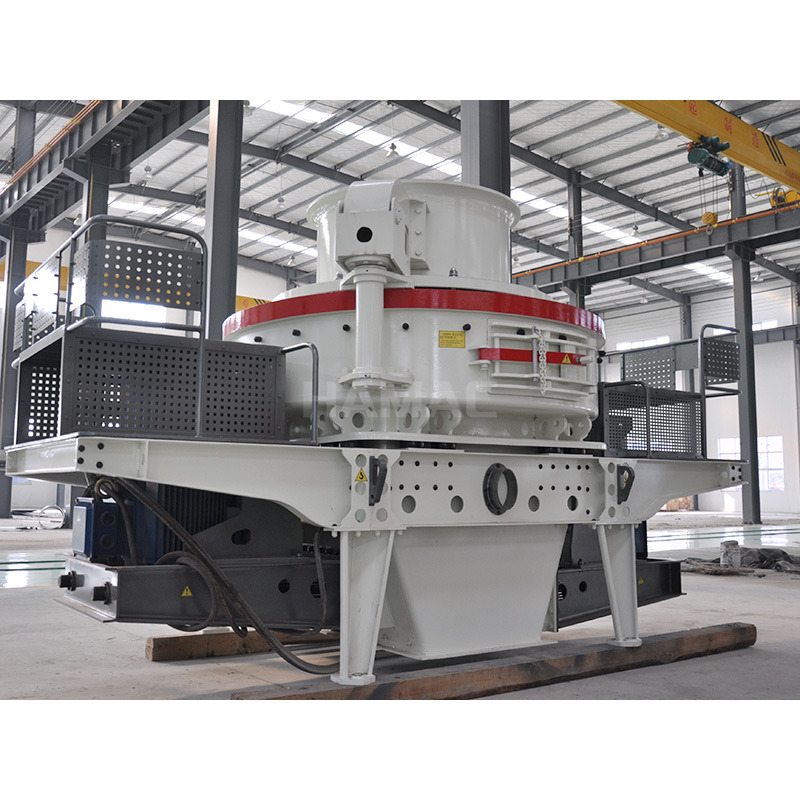
Materials it handles
- Hard rock: granite, basalt, andesite, gabbro.
- Soft rock: limestone, marble, dolomite.
- Ores: iron, copper, gold, manganese.
- Recycling: concrete, asphalt, C&D waste.
Industries
- Quarrying and construction aggregates.
- Metal ore crushing and beneficiation.
- Manufactured sand and road base.
- Cement raw meal and industrial minerals.
Typical configuration
Usually combined with a feeder, screen and conveyors into a complete circuit, or as a module in a mobile plant.
Reference data for this configuration
| Parameter | Reference value |
|---|---|
| Machine line | Spiral (Screw) Sand Washer |
| Category | Sand Making & Washing |
| Assumed duty | demolition and recycling duties |
| Evaluation horizon | five-year view |
Use the table as a checklist when comparing quotations for spiral (screw) sand washer — a lower price often means one of these parameters was quietly reduced.
Published Spiral (Screw) Sand Washer model data
| Model | Screw diameter (mm) | Sink length (mm) | Feeding size (mm) | Capacity (t/h) | Power (kW) |
|---|---|---|---|---|---|
| XL515 | 515 | 7615 | ≤10 | 5–15 | 5.5 |
| XL765 | 765 | 7620 | ≤10 | 20–60 | 11 |
| XL920 | 920 | 7585 | ≤10 | 40–110 | 11 |
| 2XL920 | 920 | 7585 | ≤10 | 80–220 | 2×11 |
| XL1120 | 1120 | 9750 | ≤10 | 50–130 | 18.5 |
| 2XL1120 | 1120 | 9750 | ≤10 | 100–260 | 2×18.5 |
XL / 2XL screw sand washers, 5–260 t/h, remove clay and fines from manufactured sand with low water consumption. Read the table column by column against demolition and recycling duties: the model you pick is the one whose published range brackets your target tonnage, not simply the largest machine in the series. Availability, motor rating and shipping data are re-confirmed for a confined urban yard in the written HAMAC proposal.
Project profile these notes assume
| Assumption | Value |
|---|---|
| Operating duty | demolition and recycling duties |
| Primary objective | strict product cubicity |
| Evaluation horizon | five-year view |
| Site condition | a confined urban yard |
| Operating team | a small contractor crew |
Change any one of these assumptions and the recommended configuration for spiral (screw) sand washer may change. HAMAC re-runs the same checks against your own numbers once the enquiry data sheet is received.
From enquiry to the first saleable tonne
- Define the acceptance test: sampling points, test duration, moisture range and who signs the protocol.
- Record the as-built settings and give the operator a written daily, weekly and monthly schedule.
- Budget for water, dust extraction and spillage handling as part of the plant, not as an afterthought.
- Include dust suppression, guarding, emergency stops and lock-out points in the layout drawing.
- Run a sieve analysis on a representative sample and attach the grading curve to the enquiry.
- Confirm site voltage, frequency and applicable conformity standards before manufacture.
- Set the closed-side setting or rotor speed against the required product fractions, then verify the expected reduction ratio.
- Survey the feed: the feed material; record top size, bulk density, moisture and clay content before fixing the flow sheet.
- Confirm the haul-road and stockpile plan with a confined urban yard in mind before fixing conveyor lengths.
A HAMAC project manager stays with the order from the first data sheet through hand-over in your market.
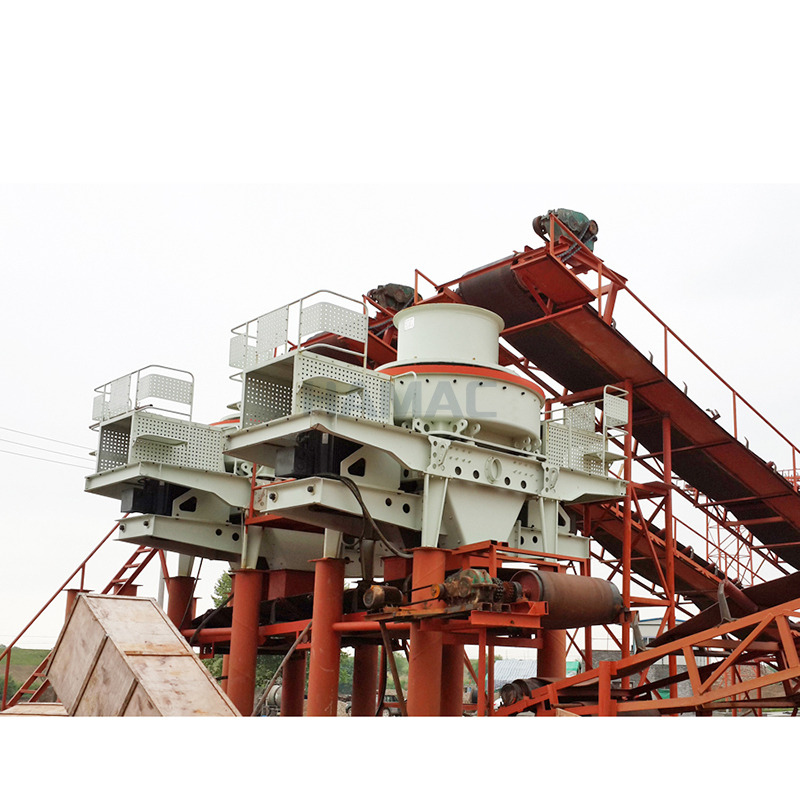
What to verify before you sign
- Guaranteed power draw and the strict product cubicity trade-off it implies.
- Local service partner, technician travel time and visa requirements for your market.
- Ambient temperature, altitude and dust load derating for motors and hydraulics.
- Access for liner change-out — crane radius, lifting points and clearance around the chamber.
- Decommissioning or relocation value at the end of a five-year horizon.
- Delivery terms (FOB / CFR / CIF) with the destination port named explicitly.
- Tramp-iron protection — hydraulic release, magnet and metal detection on the feed belt.
- Choke-feed arrangement: surge bin, feeder control and level indication.
- Spare motor, gearbox and hydraulic pump lead times from the nearest HAMAC stock point.
These are the items HAMAC puts in the technical proposal; if another offer is silent on them, ask why.
Where the money actually goes
| Cost line | Indicative share | What moves the number |
|---|---|---|
| Equipment & drive packages | 54% | Model size, number of stages and automation level |
| Ocean freight & insurance | 8% | Destination port, container count and out-of-gauge cargo |
| Civil works & foundations | 8% | Soil conditions, dynamic loads and site preparation |
| Erection, commissioning & training | 7% | Local labour, supervision scope and schedule |
| First-year wear parts | 15% | Rock abrasiveness, liner grade and operating hours |
| Power, lubricants & consumables | 8% | kWh per tonne, local tariff and dust suppression water |
Include downtime in the model. An unplanned liner change on a remote site costs far more than the casting itself.
Mistakes that cost more than the machine
- Buying strict product cubicity on price alone and losing it in availability.
- Ordering no spares with the plant and waiting six weeks for the first liner set.
- Comparing quotations with different port terms and calling the lower number cheaper.
- Forgetting surge capacity — an intermittent loader starves the chamber and ruins particle shape.
- Leaving tramp-iron protection out of the scope to save a small percentage of capital.
- Assuming a mobile plant can match a stationary line on high-tonnage, multi-product duty.
- Overlooking dust, noise and water permits in your market until erection has already started.
- Choosing screen apertures before the concrete or asphalt mix design is fixed.
Review the list with a small contractor crew before the order is placed — they will recognise most of them.
Commissioning checklist
- Measure noise and dust at the operator position against the local limit.
- Confirm all guards, emergency stops and pull-wire switches function.
- Dry-run the plant empty for the specified period and record vibration.
- Check hydraulic pressure, accumulator pre-charge and tramp-release function.
- Test emergency stops, pull wires and interlock trips in sequence.
- Introduce feed in graded steps: 25%, 50%, 75%, then full load.
- Record the baseline grading curve for each product fraction.
- Agree the punch list, sign the hand-over protocol and file the as-built drawings.
On a confined urban yard, allow extra time for the dust and noise measurements.