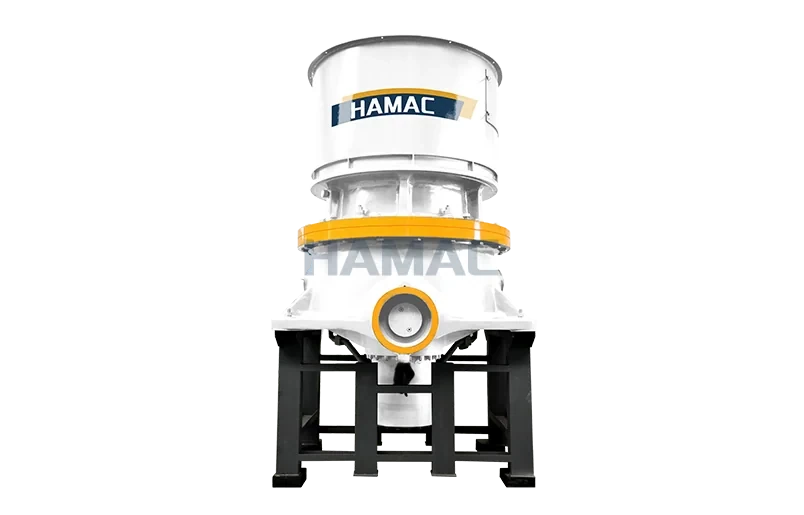
Overview
The HCS Hydraulic Cone Crusher is applied across aggregates, mining, beneficiation and recycling. The material properties decide whether it is the right machine.
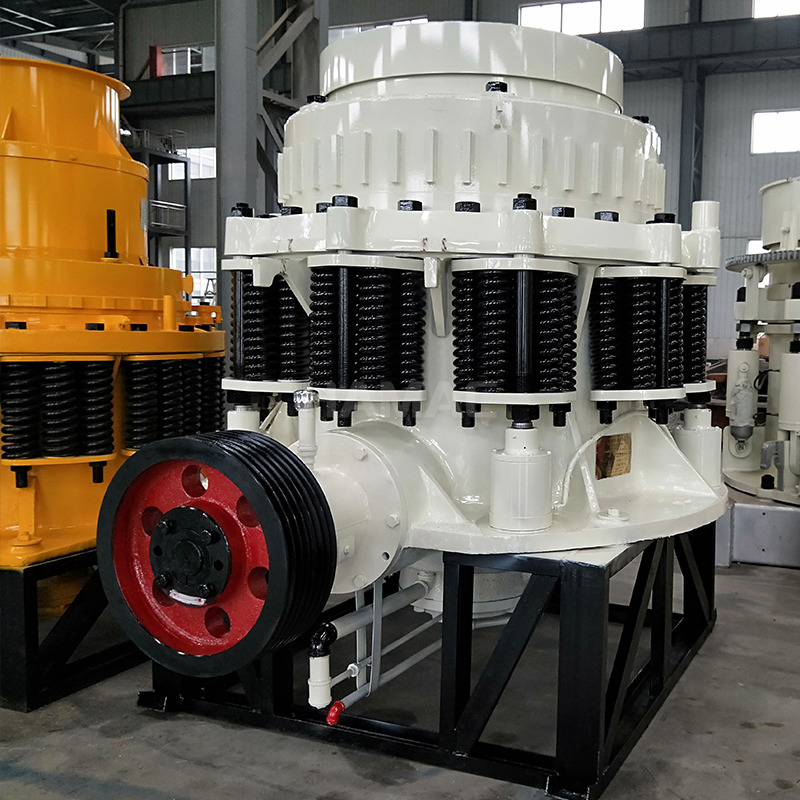
Materials it handles
- Hard rock: granite, basalt, andesite, gabbro.
- Soft rock: limestone, marble, dolomite.
- Ores: iron, copper, gold, manganese.
- Recycling: concrete, asphalt, C&D waste.
Industries
- Quarrying and construction aggregates.
- Metal ore crushing and beneficiation.
- Manufactured sand and road base.
- Cement raw meal and industrial minerals.
Typical configuration
Usually combined with a feeder, screen and conveyors into a complete circuit, or as a module in a mobile plant.
Reference data for this configuration
| Parameter | Reference value |
|---|---|
| Machine line | HCS Hydraulic Cone Crusher |
| Category | Cone Crusher |
| Assumed duty | cement raw-meal preparation |
| Evaluation horizon | five-year view |
HAMAC engineers fill in the same fields on the project data sheet, which is why two plants of similar tonnage can still require different machines.
Published HCS Hydraulic Cone Crusher model data
| Model | Cavity | Feed opening | Min opening | Capacity | Maximum Power |
|---|---|---|---|---|---|
| HST100 | S1(EC) | 240 mm | 22 mm | 85-170 t/h | 90 kW |
| S2(MC) | 200 mm | 19 mm | 70-130 t/h | ||
| H1(F) | 135 mm | 10 mm | 45-115 t/h | ||
| H2(MF) | 65 mm | 8 mm | 35-80 t/h | ||
| H3(UF) | 35 mm | 4 mm | 27-60 t/h | ||
| HST160 | S1(EC) | 360 mm | 25 mm | 120-345 t/h | 160 kW |
| S2(MC) | 300 mm | 22 mm | 105-305 t/h | ||
| S3(C) | 235 mm | 19 mm | 90-275 t/h |
HST single cylinder hydraulic cone crusher integrates mechanical, hydraulic, electrical, automation, intelligent control and other technologies, and can be widely used in medium, fine and. Read the table column by column against cement raw-meal preparation: the model you pick is the one whose published range brackets your target tonnage, not simply the largest machine in the series. Availability, motor rating and shipping data are re-confirmed for a confined urban yard in the written HAMAC proposal.
Project profile these notes assume
| Assumption | Value |
|---|---|
| Operating duty | cement raw-meal preparation |
| Primary objective | lowest energy per tonne |
| Evaluation horizon | five-year view |
| Site condition | a confined urban yard |
| Operating team | a mixed local and expatriate team |
Change any one of these assumptions and the recommended configuration for hcs hydraulic cone crusher may change. HAMAC re-runs the same checks against your own numbers once the enquiry data sheet is received.
From enquiry to the first saleable tonne
- Lay out conveyors, access ways, stockpile capacity and drainage before ordering steelwork.
- Log tonnes per liner set and kWh per tonne from day one so you have a real cost baseline within a quarter.
- Budget for water, dust extraction and spillage handling as part of the plant, not as an afterthought.
- Set the maintenance stock list from the expected wear rate, not from a percentage of the equipment price.
- Confirm the haul-road and stockpile plan with a confined urban yard in mind before fixing conveyor lengths.
- Define the acceptance test: sampling points, test duration, moisture range and who signs the protocol.
- Sequence delivery so foundations cure while the equipment is still in manufacture.
- Plan training for a mixed local and expatriate team on CSS adjustment, liner change-out and lock-out / tag-out.
- Survey the feed: the feed material; record top size, bulk density, moisture and clay content before fixing the flow sheet.
For a mixed local and expatriate team, the commissioning and training steps need more calendar time than the mechanical erection itself.
What to verify before you sign
- Liner alloy: Mn18 matched to the rock, not to the lowest purchase price.
- Guaranteed power draw and the lowest energy per tonne trade-off it implies.
- Closed-side setting range and whether automatic setting regulation is included.
- Nameplate data for local voltage, frequency and the applicable conformity scheme.
- Dust and noise control designed to the local emission limits for your market.
- Wear-part interchangeability across machines in the same circuit.
- Access for liner change-out — crane radius, lifting points and clearance around the chamber.
- Saleable tonnes per hour at each product size, not gross crusher throughput, for your target tonnage.
- Spare-parts consignment: one full liner or blow-bar set plus meshes, belts, bearings and seals.
These are the items HAMAC puts in the technical proposal; if another offer is silent on them, ask why.
Where the money actually goes
| Cost line | Indicative share | What moves the number |
|---|---|---|
| Equipment & drive packages | 54% | Model size, number of stages and automation level |
| Ocean freight & insurance | 8% | Destination port, container count and out-of-gauge cargo |
| Civil works & foundations | 8% | Soil conditions, dynamic loads and site preparation |
| Erection, commissioning & training | 7% | Local labour, supervision scope and schedule |
| First-year wear parts | 15% | Rock abrasiveness, liner grade and operating hours |
| Power, lubricants & consumables | 8% | kWh per tonne, local tariff and dust suppression water |
Model a low, base and high case for tonnes per liner set. The spread tells you more than a single optimistic estimate.
Mistakes that cost more than the machine
- Leaving tramp-iron protection out of the scope to save a small percentage of capital.
- Comparing quotations with different port terms and calling the lower number cheaper.
- Assuming the manufacturer's warranty covers wear parts and consumables.
- Undersizing the screen, then blaming the crusher for a plant that never reaches your target tonnage.
- Omitting a bypass chute, so a single screen fault stops the whole line.
- Planning the crusher but not the conveyors, transfer chutes and stockpile capacity around it.
- Forgetting surge capacity — an intermittent loader starves the chamber and ruins particle shape.
- Assuming a mobile plant can match a stationary line on high-tonnage, multi-product duty.
For cement raw-meal preparation, protect the lowest energy per tonne requirement explicitly in the contract documents.
Commissioning checklist
- Record the baseline grading curve for each product fraction.
- Check lubrication levels, grease lines and oil cooler operation.
- Confirm all guards, emergency stops and pull-wire switches function.
- Check hydraulic pressure, accumulator pre-charge and tramp-release function.
- Sample each product fraction and compare with the specification.
- Confirm the direction and tension of every belt under no load.
- Measure and log the as-new CSS / setting for future wear comparison.
- Agree the punch list, sign the hand-over protocol and file the as-built drawings.
On a confined urban yard, allow extra time for the dust and noise measurements.