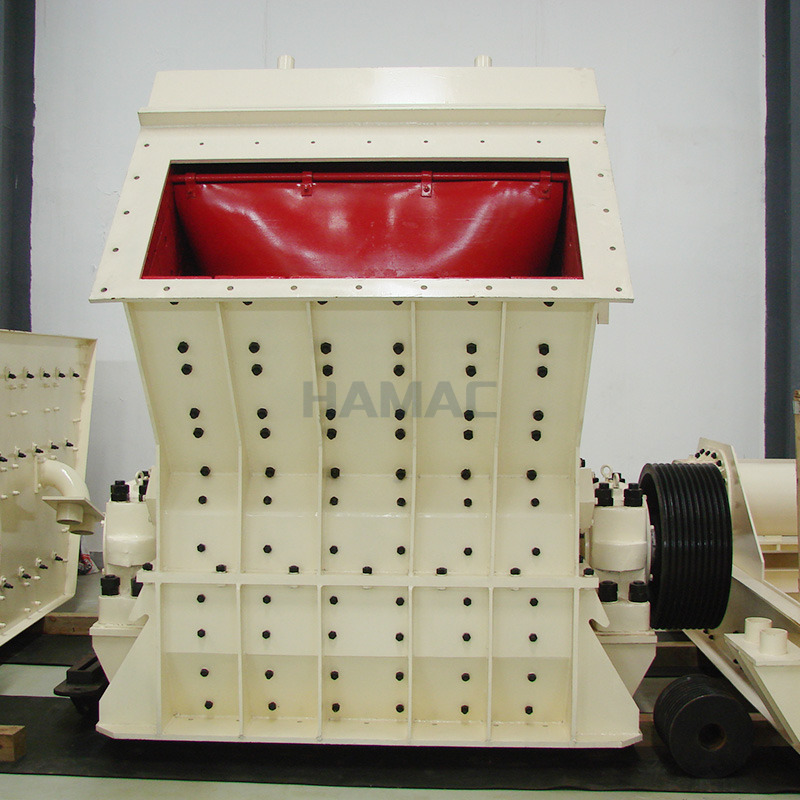
Overview
The ratio of feed top size to product top size in a single crushing stage.
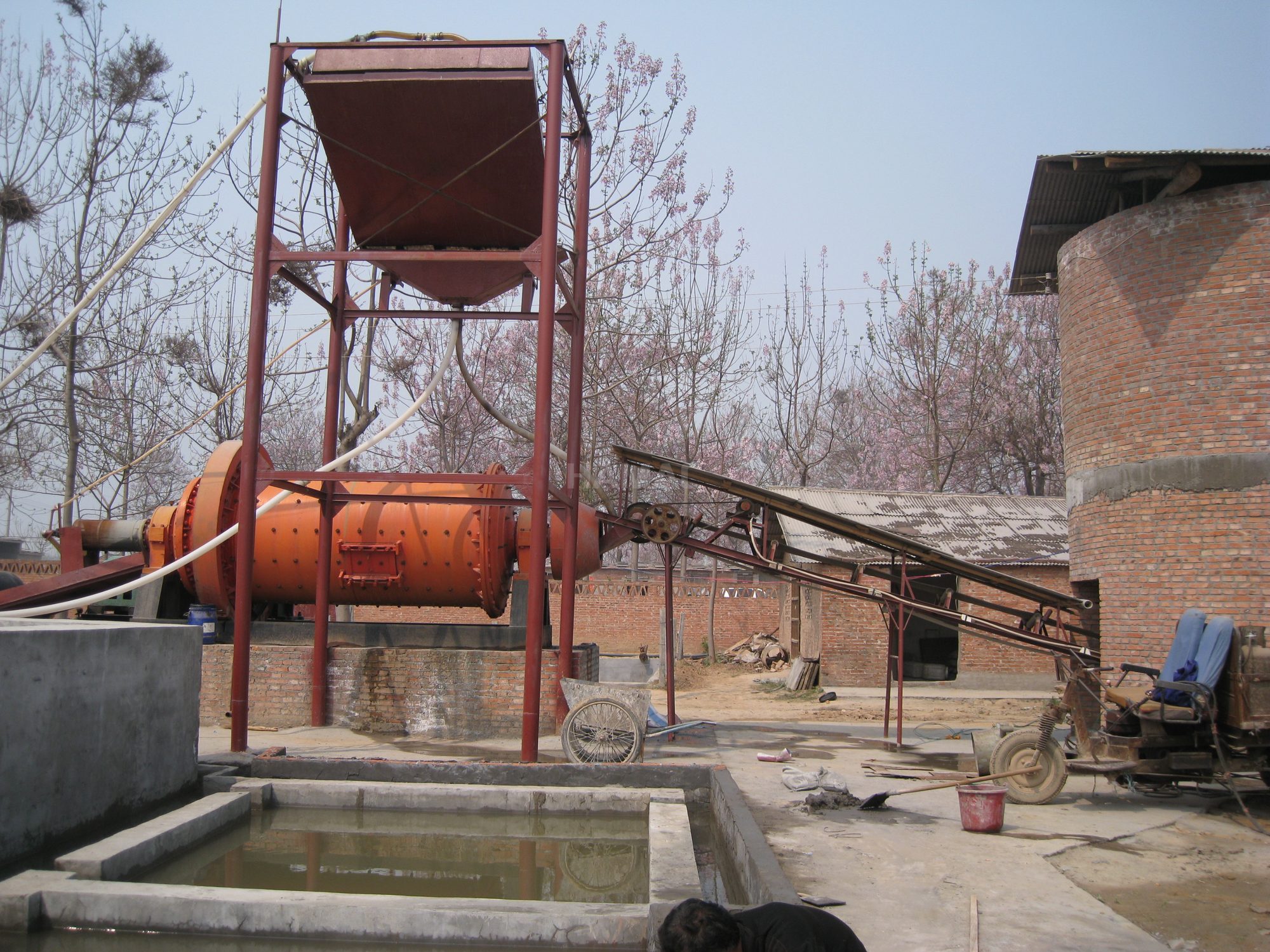
Why it matters in practice
- Jaw crushers typically 4:1 to 6:1
- Cone crushers 3:1 to 5:1
- VSI up to 10:1 in some duties
- Excessive ratio accelerates wear and packing
Applying it to plant selection
Engineers use reduction ratio together with feed gradation, moisture content and target tonnage when fixing the flow sheet. HAMAC records the value in the project data sheet so the equipment list, liner grade and motor rating can be checked against the written performance guarantee.
Reference data for this configuration
| Parameter | Reference value |
|---|---|
| Assumed duty | contract crushing on short-term sites |
| Evaluation horizon | seven-year view |
Use the table as a checklist when comparing quotations for the crushing and screening plant — a lower price often means one of these parameters was quietly reduced.
Project profile these notes assume
| Assumption | Value |
|---|---|
| Operating duty | contract crushing on short-term sites |
| Primary objective | minimal civil works |
| Evaluation horizon | seven-year view |
| Site condition | a remote mine site |
| Operating team | a rotating shift crew |
Change any one of these assumptions and the recommended configuration for the crushing and screening plant may change. HAMAC re-runs the same checks against your own numbers once the enquiry data sheet is received.
From enquiry to the first saleable tonne
- Confirm site voltage, frequency and applicable conformity standards before manufacture.
- Plan training for a rotating shift crew on CSS adjustment, liner change-out and lock-out / tag-out.
- Include dust suppression, guarding, emergency stops and lock-out points in the layout drawing.
- Size the primary stage for your target tonnage with a 10–20% surge allowance — never on nameplate throughput alone.
- Book shipping, prepare the packing list and confirm the container loading plan.
- Choose compression or impact reduction according to hardness, silica content and required particle shape.
- Set the closed-side setting or rotor speed against the required product fractions, then verify the expected reduction ratio.
- Survey the feed: the feed material; record top size, bulk density, moisture and clay content before fixing the flow sheet.
- Lay out conveyors, access ways, stockpile capacity and drainage before ordering steelwork.
Most delays at this stage come from missing feed data rather than from manufacturing capacity.
What to verify before you sign
- Decommissioning or relocation value at the end of a seven-year horizon.
- Spare motor, gearbox and hydraulic pump lead times from the nearest HAMAC stock point.
- Wear-part interchangeability across machines in the same circuit.
- Saleable tonnes per hour at each product size, not gross crusher throughput, for your target tonnage.
- Maximum feed lump and gradation — a chamber that cannot accept the top size will bridge on day one.
- Control system language, telemetry and remote diagnostics availability.
- Nameplate data for local voltage, frequency and the applicable conformity scheme.
- Energy draw in kW and the expected kWh per tonne at the design duty.
- Screen deck count, aperture and area; ask for the efficiency calculation, not just the mesh size.
Bring this list to the design review — it is cheaper to resolve an omission on paper than during commissioning.
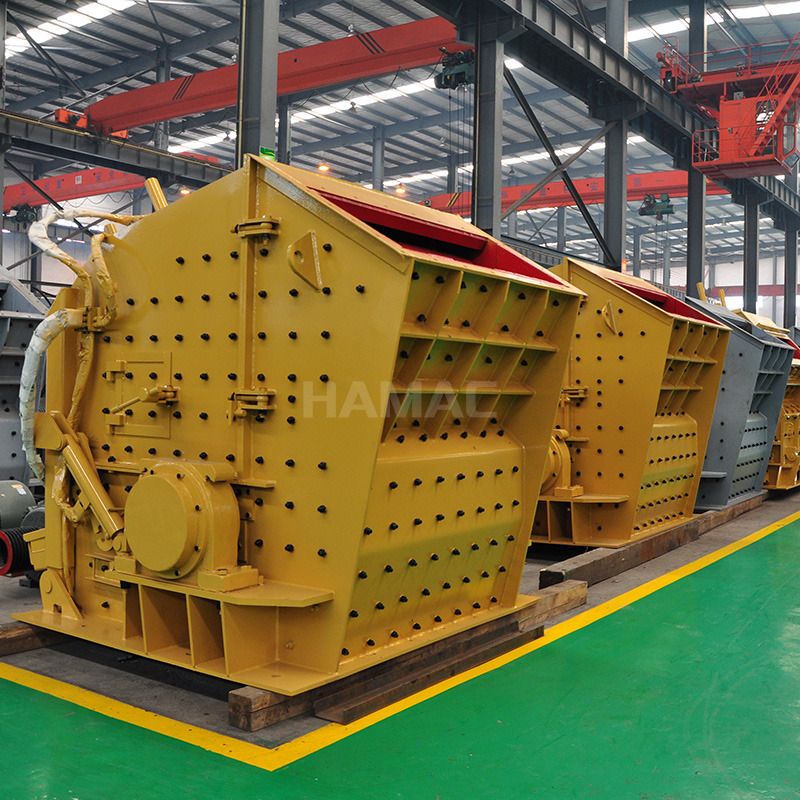
Where the money actually goes
| Cost line | Indicative share | What moves the number |
|---|---|---|
| Equipment & drive packages | 54% | Model size, number of stages and automation level |
| Ocean freight & insurance | 8% | Destination port, container count and out-of-gauge cargo |
| Civil works & foundations | 8% | Soil conditions, dynamic loads and site preparation |
| Erection, commissioning & training | 7% | Local labour, supervision scope and schedule |
| First-year wear parts | 15% | Rock abrasiveness, liner grade and operating hours |
| Power, lubricants & consumables | 8% | kWh per tonne, local tariff and dust suppression water |
The weighting shifts with hardness and scale — a hard feed pushes the wear line up, while a larger plant pushes equipment share up.
Mistakes that cost more than the machine
- Skipping the acceptance test, so no one has a baseline to measure degradation against.
- Specifying motors for the wrong voltage or frequency and rewinding them on site.
- Buying minimal civil works on price alone and losing it in availability.
- Forgetting surge capacity — an intermittent loader starves the chamber and ruins particle shape.
- Ordering no spares with the plant and waiting six weeks for the first liner set.
- Comparing quotations with different port terms and calling the lower number cheaper.
- Undersizing the screen, then blaming the crusher for a plant that never reaches your target tonnage.
- Ignoring clay and moisture until the first wet season, when decks blind and chambers pack.
Every item on this list has cost someone a commissioning date; none of them requires new technology to avoid.
Commissioning checklist
- Test emergency stops, pull wires and interlock trips in sequence.
- Record the baseline grading curve for each product fraction.
- Confirm all guards, emergency stops and pull-wire switches function.
- Measure and log the as-new CSS / setting for future wear comparison.
- Introduce feed in graded steps: 25%, 50%, 75%, then full load.
- Verify chute liners, skirt rubber and impact bars after the first hour of feed.
- Check lubrication levels, grease lines and oil cooler operation.
- Record power draw, tonnage and chamber pressure at steady state.
The commissioning record becomes the reference for every liner change in the seven-year plan.