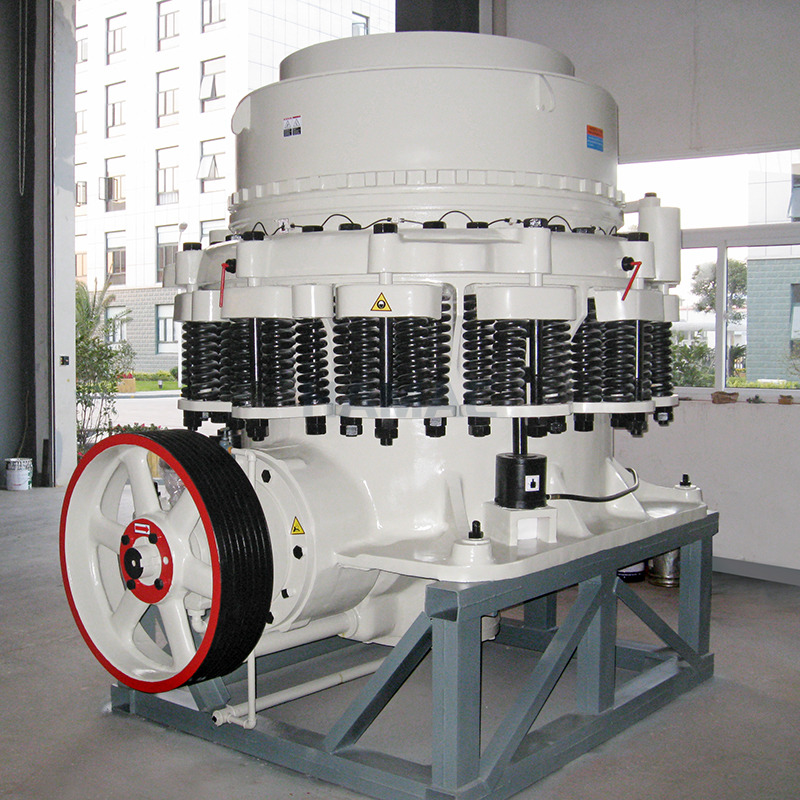
Overview
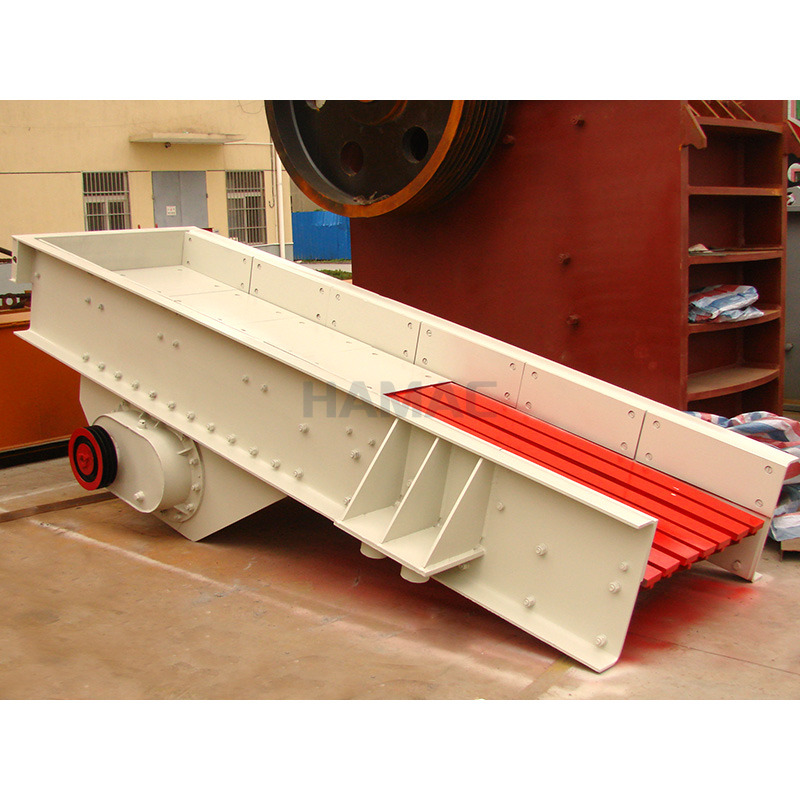
A vibrating feeder with parallel bars that both meters material and bypasses fines.
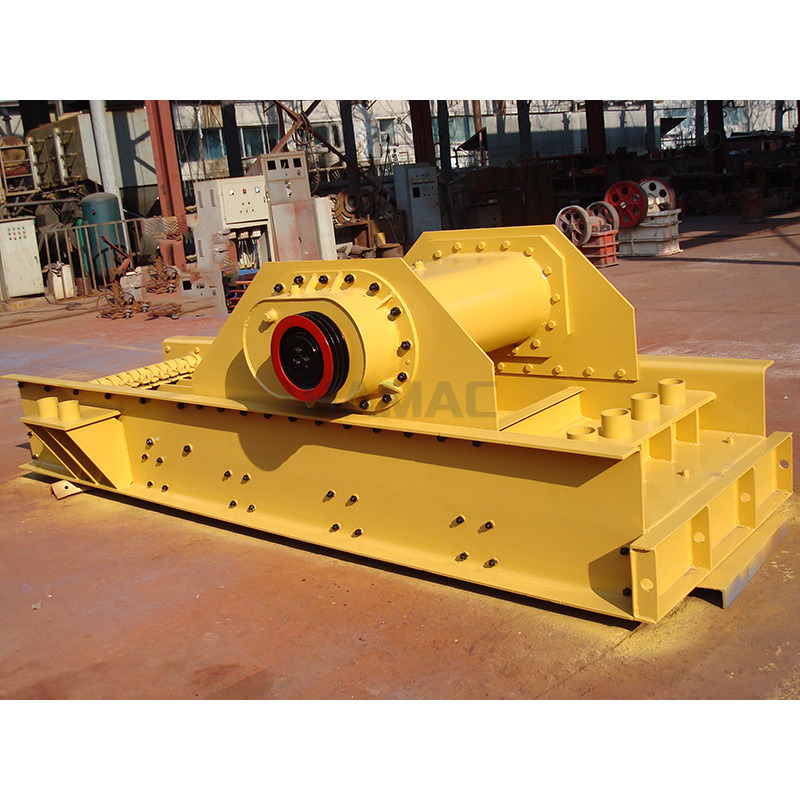
Why it matters in practice
- Prevents starved or choke-fed chambers
- Bar spacing sets the bypass size
- Essential for consistent product
Applying it to plant selection
Engineers use grizzly feeder together with feed gradation, moisture content and target tonnage when fixing the flow sheet. HAMAC records the value in the project data sheet so the equipment list, liner grade and motor rating can be checked against the written performance guarantee.
Reference data for this configuration
| Parameter | Reference value |
|---|---|
| Assumed duty | contract crushing on short-term sites |
| Evaluation horizon | seven-year view |
Use the table as a checklist when comparing quotations for the crushing and screening plant — a lower price often means one of these parameters was quietly reduced.
Project profile these notes assume
| Assumption | Value |
|---|---|
| Operating duty | contract crushing on short-term sites |
| Primary objective | maximum mechanical availability |
| Evaluation horizon | seven-year view |
| Site condition | an existing quarry bench |
| Operating team | a mixed local and expatriate team |
Change any one of these assumptions and the recommended configuration for the crushing and screening plant may change. HAMAC re-runs the same checks against your own numbers once the enquiry data sheet is received.
From enquiry to the first saleable tonne
- Commission with graded load, sample the product grading, then train operators on liner change-out and daily checks.
- Review the crusher chamber profile with the liner supplier against the feed material.
- Lay out conveyors, access ways, stockpile capacity and drainage before ordering steelwork.
- Book shipping, prepare the packing list and confirm the container loading plan.
- Set the closed-side setting or rotor speed against the required product fractions, then verify the expected reduction ratio.
- Budget for water, dust extraction and spillage handling as part of the plant, not as an afterthought.
- Survey the feed: the feed material; record top size, bulk density, moisture and clay content before fixing the flow sheet.
- Allocate screen area per deck; blinding and pegging are the most common hidden bottlenecks in a new plant.
- Plan training for a mixed local and expatriate team on CSS adjustment, liner change-out and lock-out / tag-out.
For a mixed local and expatriate team, the commissioning and training steps need more calendar time than the mechanical erection itself.
What to verify before you sign
- Guaranteed power draw and the maximum mechanical availability trade-off it implies.
- Erection scope: supervision only, or full civil, mechanical and electrical installation.
- Liner alloy: Mn18 with ceramic inserts matched to the rock, not to the lowest purchase price.
- Control system language, telemetry and remote diagnostics availability.
- Dust and noise control designed to the local emission limits for your market.
- Closed-side setting range and whether automatic setting regulation is included.
- Product sampling points and the lab equipment needed for routine grading checks.
- Local service partner, technician travel time and visa requirements for your market.
- Ambient temperature, altitude and dust load derating for motors and hydraulics.
The relative weight of each item changes with the project: wear parts dominate on abrasive rock, availability dominates on remote sites.
Where the money actually goes
| Cost line | Indicative share | What moves the number |
|---|---|---|
| Equipment & drive packages | 54% | Model size, number of stages and automation level |
| Ocean freight & insurance | 8% | Destination port, container count and out-of-gauge cargo |
| Civil works & foundations | 8% | Soil conditions, dynamic loads and site preparation |
| Erection, commissioning & training | 7% | Local labour, supervision scope and schedule |
| First-year wear parts | 15% | Rock abrasiveness, liner grade and operating hours |
| Power, lubricants & consumables | 8% | kWh per tonne, local tariff and dust suppression water |
Treat the percentages as a budgeting shape, not a quotation: HAMAC prices the equipment list in writing once the flow sheet is fixed.
Mistakes that cost more than the machine
- Leaving tramp-iron protection out of the scope to save a small percentage of capital.
- Undersizing the screen, then blaming the crusher for a plant that never reaches your target tonnage.
- Buying maximum mechanical availability on price alone and losing it in availability.
- Overlooking dust, noise and water permits in your market until erection has already started.
- Forgetting surge capacity — an intermittent loader starves the chamber and ruins particle shape.
- Using one liner profile for both secondary and tertiary stages.
- Skipping a geotechnical check and discovering settlement under the primary crusher at an existing quarry bench.
- Planning the crusher but not the conveyors, transfer chutes and stockpile capacity around it.
Review the list with a mixed local and expatriate team before the order is placed — they will recognise most of them.
Commissioning checklist
- Check hydraulic pressure, accumulator pre-charge and tramp-release function.
- Measure noise and dust at the operator position against the local limit.
- Dry-run the plant empty for the specified period and record vibration.
- Measure and log the as-new CSS / setting for future wear comparison.
- Introduce feed in graded steps: 25%, 50%, 75%, then full load.
- Verify rotation direction on every motor before coupling.
- Confirm all guards, emergency stops and pull-wire switches function.
- Record the baseline grading curve for each product fraction.
On an existing quarry bench, allow extra time for the dust and noise measurements.