Overview
Copper ore (Mohs 4, ~120 MPa, medium abrasion): processing steps, equipment and cost notes for plant buyers.
Processing steps
- Primary crushing — jaw.
- Secondary / tertiary — jaw + cone.
- Screening for graded products.
- Dewatering / handling.
Recommended equipment
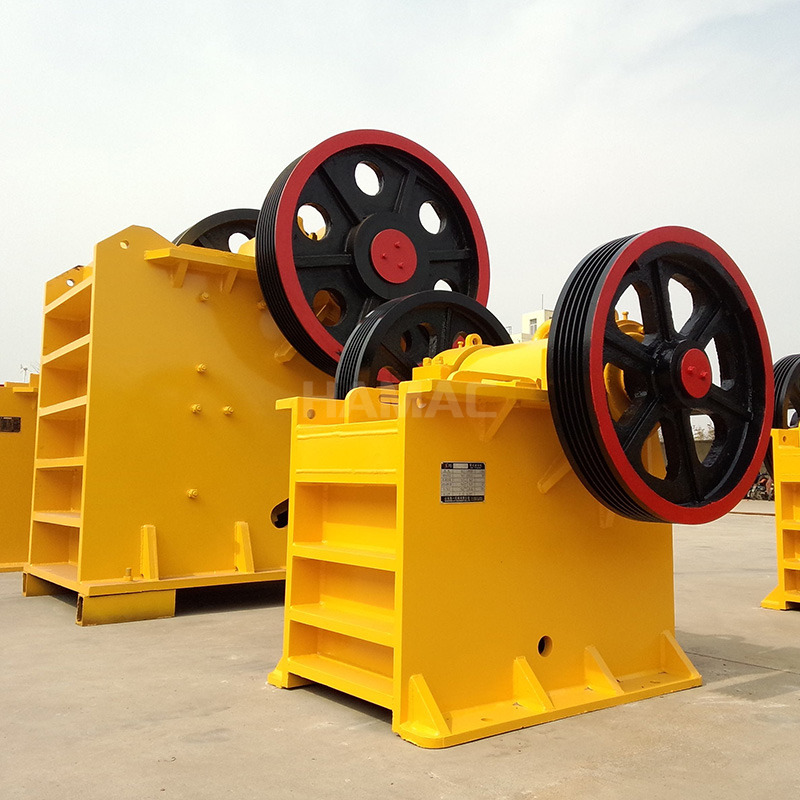
- PE Series Jaw Crusher
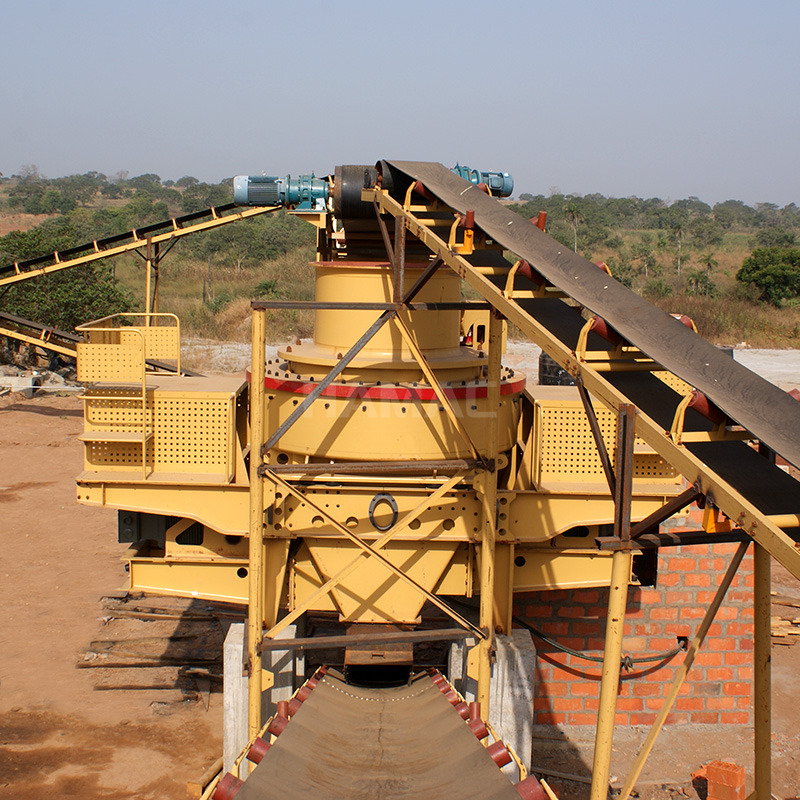
- HPT Multi-Cylinder Hydraulic Cone Crusher
Cost notes
Operating cost is dominated by wear parts on medium-abrasion material; choose liner grade by rock, not price.
Reference data for this configuration
| Parameter | Reference value |
|---|---|
| Feed material | Copper ore |
| Mohs hardness | 4 |
| Compressive strength | ~120 MPa |
| Abrasiveness | Medium |
| Recommended circuit | jaw + cone |
| Assumed duty | cement raw-meal preparation |
| Evaluation horizon | three-year view |
Use the table as a checklist when comparing quotations for copper ore crushing — a lower price often means one of these parameters was quietly reduced.
Project profile these notes assume
| Assumption | Value |
|---|---|
| Operating duty | cement raw-meal preparation |
| Primary objective | tight grading compliance |
| Evaluation horizon | three-year view |
| Site condition | a greenfield site |
| Operating team | an owner-operator team |
Change any one of these assumptions and the recommended configuration for copper ore crushing may change. HAMAC re-runs the same checks against your own numbers once the enquiry data sheet is received.
From enquiry to the first saleable tonne
- Size the primary stage for your target tonnage with a 10–20% surge allowance — never on nameplate throughput alone.
- Define the acceptance test: sampling points, test duration, moisture range and who signs the protocol.
- Book shipping, prepare the packing list and confirm the container loading plan.
- Confirm site voltage, frequency and applicable conformity standards before manufacture.
- Set the closed-side setting or rotor speed against the required product fractions, then verify the expected reduction ratio.
- Sequence delivery so foundations cure while the equipment is still in manufacture.
- Run a sieve analysis on a representative sample and attach the grading curve to the enquiry.
- Set the maintenance stock list from the expected wear rate, not from a percentage of the equipment price.
- Allocate screen area per deck; blinding and pegging are the most common hidden bottlenecks in a new plant.
Most delays at this stage come from missing feed data rather than from manufacturing capacity.
What to verify before you sign
- Written performance guarantee, sampling method and acceptance-test protocol.
- Whether the quoted t/h is achieved at cement raw-meal preparation or under ideal laboratory feed.
- Delivery terms (FOB / CFR / CIF) with the destination port named explicitly.
- Decommissioning or relocation value at the end of a three-year horizon.
- Closed-side setting range and whether automatic setting regulation is included.
- Wear-part interchangeability across machines in the same circuit.
- Local service partner, technician travel time and visa requirements for your market.
- Access for liner change-out — crane radius, lifting points and clearance around the chamber.
- After-sales response time, technician availability and the warranty exclusions in writing.
The cheapest offer usually wins on equipment and loses on one of the last six items — freight terms, spares or the acceptance test.
Where the money actually goes
| Cost line | Indicative share | What moves the number |
|---|---|---|
| Equipment & drive packages | 53% | Model size, number of stages and automation level |
| Ocean freight & insurance | 8% | Destination port, container count and out-of-gauge cargo |
| Civil works & foundations | 8% | Soil conditions, dynamic loads and site preparation |
| Erection, commissioning & training | 7% | Local labour, supervision scope and schedule |
| First-year wear parts | 16% | Rock abrasiveness, liner grade and operating hours |
| Power, lubricants & consumables | 8% | kWh per tonne, local tariff and dust suppression water |
On cement raw-meal preparation, the tight grading compliance objective changes which line deserves the most attention during value engineering.
Mistakes that cost more than the machine
- Buying tight grading compliance on price alone and losing it in availability.
- Planning the crusher but not the conveyors, transfer chutes and stockpile capacity around it.
- Undersizing the screen, then blaming the crusher for a plant that never reaches your target tonnage.
- Forgetting surge capacity — an intermittent loader starves the chamber and ruins particle shape.
- Leaving tramp-iron protection out of the scope to save a small percentage of capital.
- Skipping the acceptance test, so no one has a baseline to measure degradation against.
- Buying on nameplate t/h without converting to saleable product at the specified fractions.
- Assuming a mobile plant can match a stationary line on high-tonnage, multi-product duty.
For cement raw-meal preparation, protect the tight grading compliance requirement explicitly in the contract documents.
Commissioning checklist
- Dry-run the plant empty for the specified period and record vibration.
- Verify rotation direction on every motor before coupling.
- Introduce feed in graded steps: 25%, 50%, 75%, then full load.
- Confirm the direction and tension of every belt under no load.
- Confirm all guards, emergency stops and pull-wire switches function.
- Check belt tracking, chute build-up and transfer-point dust.
- Record power draw, tonnage and chamber pressure at steady state.
- Check lubrication levels, grease lines and oil cooler operation.
Keep the signed record; it is the only defensible baseline for later performance disputes.