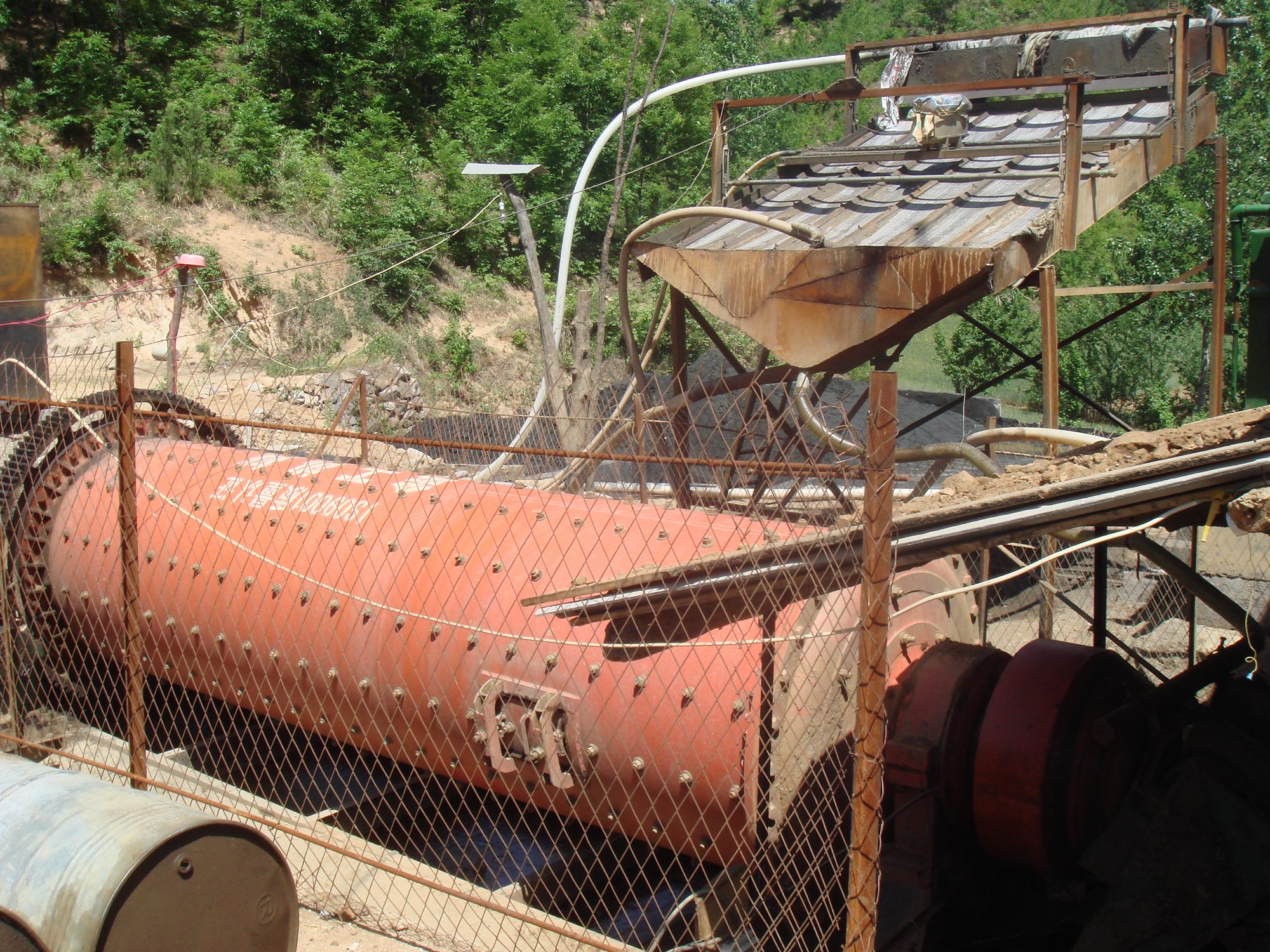
Overview
Practical, numbers-first guidance on the Straight-Through Centrifugal Mill — written for engineers specifying, buying and running crushing plants.
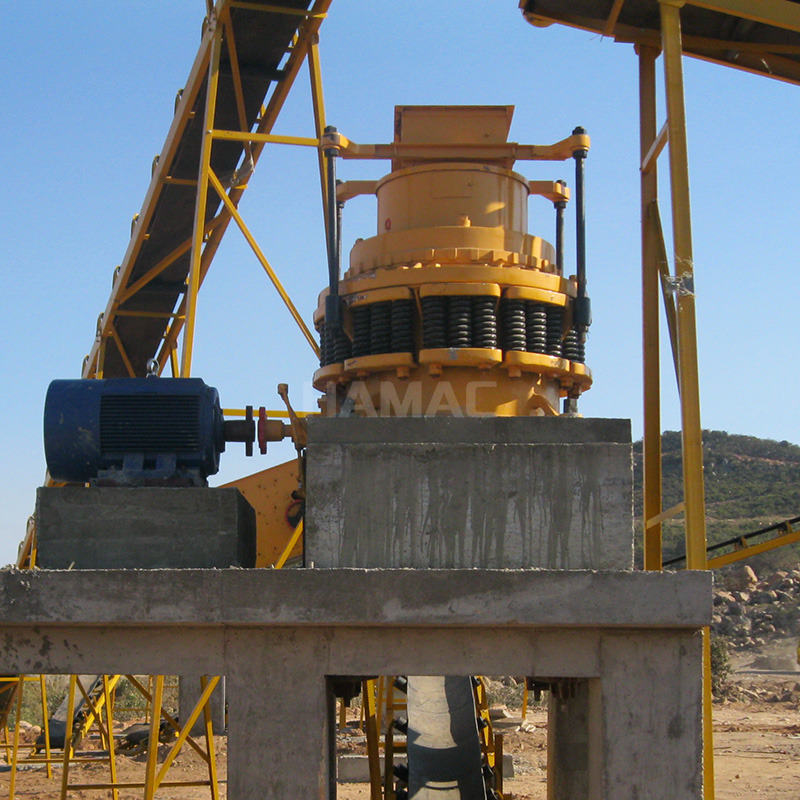
Preparation
- Confirm foundation per HAMAC layout.
- Check power and cable routing.
- Lift and level on grout.
Commissioning
- Dry run, then graded load.
- Set CSS and verify product.
- Train operators.
Reference data for this configuration
| Parameter | Reference value |
|---|---|
| Machine line | Straight-Through Centrifugal Mill |
| Category | Grinding Mills |
| Assumed duty | demolition and recycling duties |
| Evaluation horizon | three-year view |
Where a value is shown as nominal, the written proposal states the guaranteed figure for your material, feed grading and three-year operating plan.
Published Straight-Through Centrifugal Mill model data
| Parameter | Typical value | Engineering note |
|---|---|---|
| Finished fineness | 0-3 mm coarse powder | Set at the classifier |
| Nominal capacity | 15-90 t/h | Varies with material and moisture |
| Maximum feed size | 40-80 mm | Requires pre-crushing |
| Typical materials | Limestone, calcite, gypsum, talc, barite | Mohs <= 7, moisture <= 6% |
| Power supply | 380 / 415 / 440 V, 50 or 60 Hz | Configured to destination grid |
Straight-Through Centrifugal Mill for manufactured sand correction, dry-mix mortar and coarse mineral powder, producing 0-3 mm coarse powder at 15-90 t/h with an integrated classifier and dust collection. Read the table column by column against demolition and recycling duties: the model you pick is the one whose published range brackets your target tonnage, not simply the largest machine in the series. Availability, motor rating and shipping data are re-confirmed for a coastal export terminal in the written HAMAC proposal.
Project profile these notes assume
| Assumption | Value |
|---|---|
| Operating duty | demolition and recycling duties |
| Primary objective | tight grading compliance |
| Evaluation horizon | three-year view |
| Site condition | a coastal export terminal |
| Operating team | a rotating shift crew |
Change any one of these assumptions and the recommended configuration for straight-through centrifugal mill may change. HAMAC re-runs the same checks against your own numbers once the enquiry data sheet is received.
From enquiry to the first saleable tonne
- Book shipping, prepare the packing list and confirm the container loading plan.
- Confirm site voltage, frequency and applicable conformity standards before manufacture.
- Record the as-built settings and give the operator a written daily, weekly and monthly schedule.
- Sequence delivery so foundations cure while the equipment is still in manufacture.
- Budget for water, dust extraction and spillage handling as part of the plant, not as an afterthought.
- Check bearing and lubrication arrangements against the ambient temperature range at the site.
- Plan training for a rotating shift crew on CSS adjustment, liner change-out and lock-out / tag-out.
- Include dust suppression, guarding, emergency stops and lock-out points in the layout drawing.
- Log tonnes per liner set and kWh per tonne from day one so you have a real cost baseline within a quarter.
For a rotating shift crew, the commissioning and training steps need more calendar time than the mechanical erection itself.
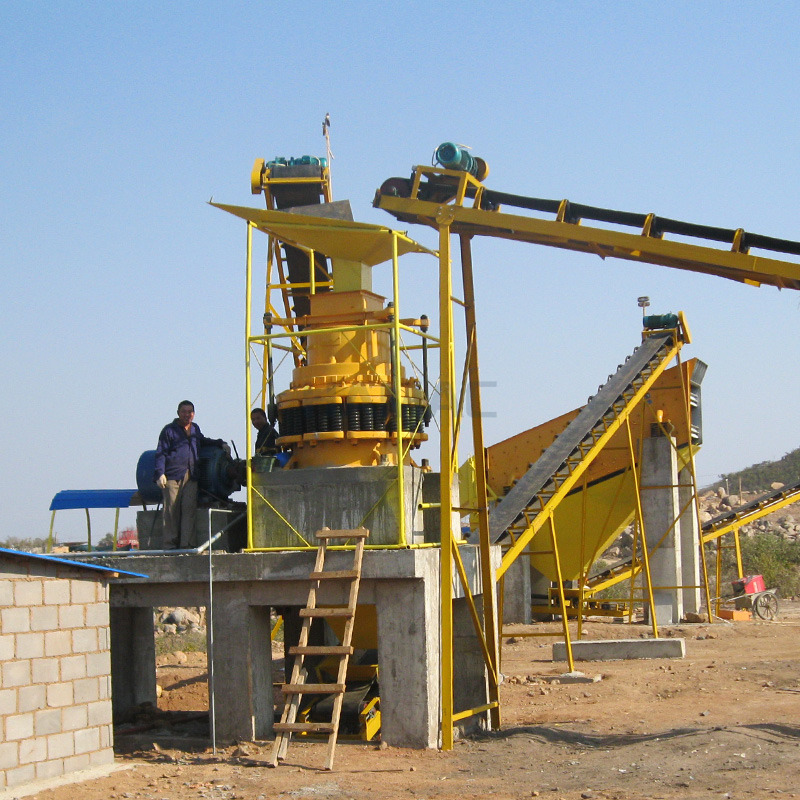
What to verify before you sign
- Written performance guarantee, sampling method and acceptance-test protocol.
- Wear-part interchangeability across machines in the same circuit.
- Product sampling points and the lab equipment needed for routine grading checks.
- Delivery terms (FOB / CFR / CIF) with the destination port named explicitly.
- Ambient temperature, altitude and dust load derating for motors and hydraulics.
- Availability of a rotating shift crew for liner changes and the lifting equipment on site.
- Erection scope: supervision only, or full civil, mechanical and electrical installation.
- Spare-parts consignment: one full liner or blow-bar set plus meshes, belts, bearings and seals.
- Saleable tonnes per hour at each product size, not gross crusher throughput, for your target tonnage.
Share this list with a rotating shift crew as well as procurement; operators are the ones who live with the omissions.
Where the money actually goes
| Cost line | Indicative share | What moves the number |
|---|---|---|
| Equipment & drive packages | 54% | Model size, number of stages and automation level |
| Ocean freight & insurance | 8% | Destination port, container count and out-of-gauge cargo |
| Civil works & foundations | 8% | Soil conditions, dynamic loads and site preparation |
| Erection, commissioning & training | 7% | Local labour, supervision scope and schedule |
| First-year wear parts | 15% | Rock abrasiveness, liner grade and operating hours |
| Power, lubricants & consumables | 8% | kWh per tonne, local tariff and dust suppression water |
Include downtime in the model. An unplanned liner change on a remote site costs far more than the casting itself.
Mistakes that cost more than the machine
- Letting the demolition and recycling duties duty be defined verbally instead of in the contract.
- Leaving tramp-iron protection out of the scope to save a small percentage of capital.
- Buying tight grading compliance on price alone and losing it in availability.
- Comparing quotations with different port terms and calling the lower number cheaper.
- Ignoring clay and moisture until the first wet season, when decks blind and chambers pack.
- Skipping a geotechnical check and discovering settlement under the primary crusher at a coastal export terminal.
- Overlooking dust, noise and water permits in your market until erection has already started.
- Forgetting surge capacity — an intermittent loader starves the chamber and ruins particle shape.
On a coastal export terminal, the civil and logistics items deserve as much attention as the crusher itself.
Commissioning checklist
- Check belt tracking, chute build-up and transfer-point dust.
- Introduce feed in graded steps: 25%, 50%, 75%, then full load.
- Sample each product fraction and compare with the specification.
- Record power draw, tonnage and chamber pressure at steady state.
- Confirm the direction and tension of every belt under no load.
- Dry-run the plant empty for the specified period and record vibration.
- Verify rotation direction on every motor before coupling.
- Verify chute liners, skirt rubber and impact bars after the first hour of feed.
Keep the signed record; it is the only defensible baseline for later performance disputes.