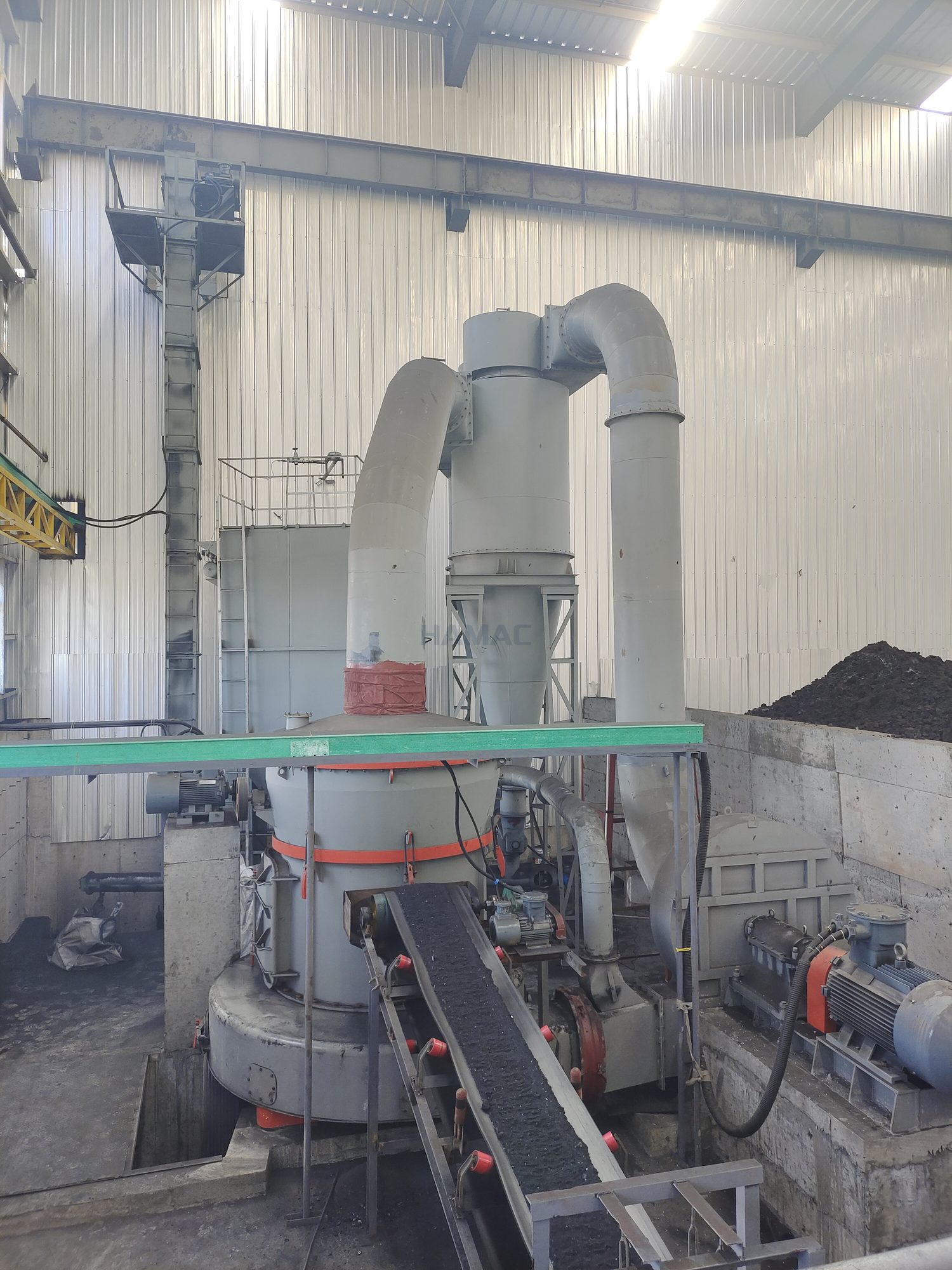
Overview
A 50–100 tph plant for river pebble (Mohs 7, ~120 MPa, high abrasion). Recommended circuit: jaw + cone + VSI.
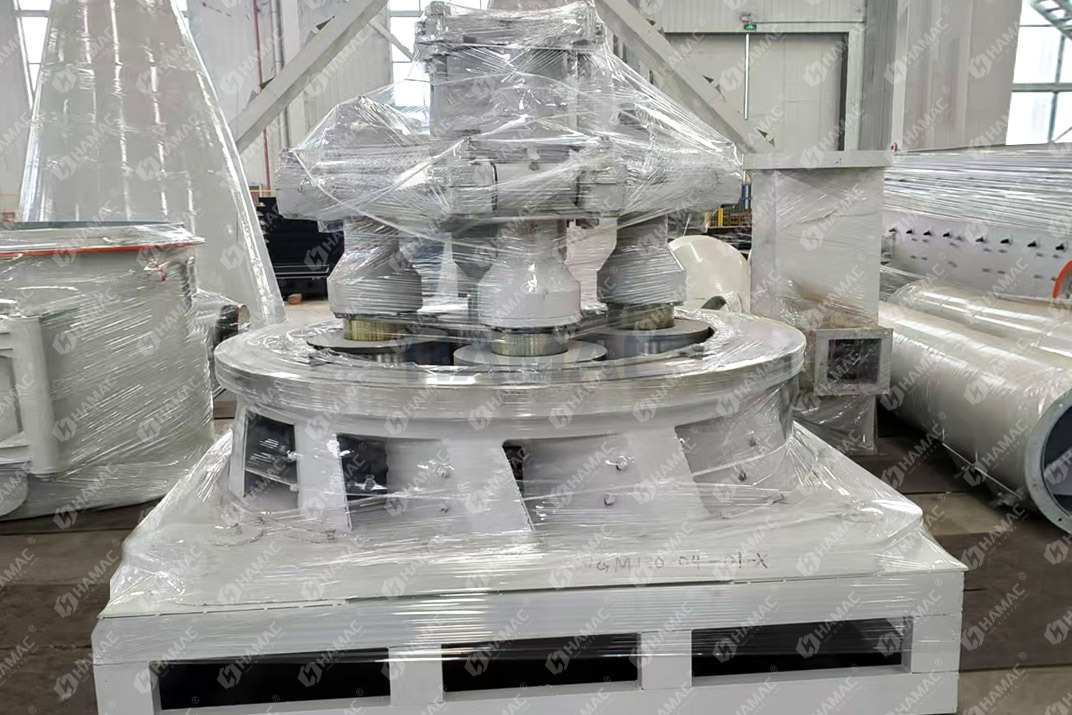
River pebble at this scale
| Capacity | 50–100 t/h |
|---|---|
| Material | River pebble (High abrasion) |
| Circuit | jaw + cone + VSI |
Equipment
- PE Series Jaw Crusher
- HPT Multi-Cylinder Hydraulic Cone Crusher
- VSI Vertical Shaft Impact Crusher (Sand Making Machine)
Notes
High silica; VSI essential for manufactured sand.
Reference data for this configuration
| Parameter | Reference value |
|---|---|
| Feed material | River pebble |
| Mohs hardness | 7 |
| Compressive strength | ~120 MPa |
| Abrasiveness | High |
| Recommended circuit | jaw + cone + VSI |
| Design capacity | 50–100 t/h |
| Typical main line | PE jaw + PF impact / cone + 2-deck screen |
| Scale note | Small quarries and concrete plants. |
| Assumed duty | contract crushing on short-term sites |
| Evaluation horizon | three-year view |
HAMAC engineers fill in the same fields on the project data sheet, which is why two plants of similar tonnage can still require different machines.
Project profile these notes assume
| Assumption | Value |
|---|---|
| Operating duty | contract crushing on short-term sites |
| Primary objective | minimal civil works |
| Evaluation horizon | three-year view |
| Site condition | a brownfield extension |
| Operating team | a small contractor crew |
Change any one of these assumptions and the recommended configuration for river pebble crushing may change. HAMAC re-runs the same checks against your own numbers once the enquiry data sheet is received.
From enquiry to the first saleable tonne
- Lay out the PE jaw + PF impact / cone + 2-deck screen arrangement with straight conveyor runs and crane access for liner changes.
- Set the maintenance stock list from the expected wear rate, not from a percentage of the equipment price.
- Review the crusher chamber profile with the liner supplier against River pebble (Mohs 7, ~120 MPa, high abrasion).
- Confirm site voltage, frequency and applicable conformity standards before manufacture.
- Define the acceptance test: sampling points, test duration, moisture range and who signs the protocol.
- Confirm the haul-road and stockpile plan with a brownfield extension in mind before fixing conveyor lengths.
- Include dust suppression, guarding, emergency stops and lock-out points in the layout drawing.
- Budget for water, dust extraction and spillage handling as part of the plant, not as an afterthought.
- Set the closed-side setting or rotor speed against the required product fractions, then verify the expected reduction ratio.
For a small contractor crew, the commissioning and training steps need more calendar time than the mechanical erection itself.
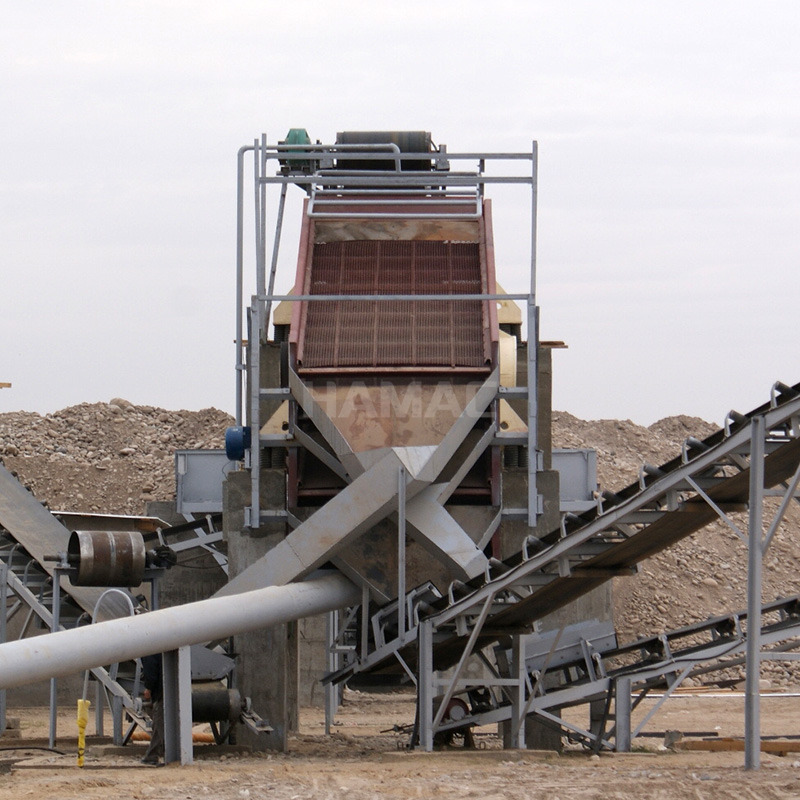
What to verify before you sign
- Whether the quoted t/h is achieved at contract crushing on short-term sites or under ideal laboratory feed.
- Maximum feed lump and gradation — a chamber that cannot accept the top size will bridge on day one.
- Ambient temperature, altitude and dust load derating for motors and hydraulics.
- Liner alloy: Mn13 is a common starting point for river pebble at high abrasion.
- Tramp-iron protection — hydraulic release, magnet and metal detection on the feed belt.
- Spare motor, gearbox and hydraulic pump lead times from the nearest HAMAC stock point.
- Wear-part interchangeability across machines in the same circuit.
- Control system language, telemetry and remote diagnostics availability.
- Nameplate data for local voltage, frequency and the applicable conformity scheme.
Share this list with a small contractor crew as well as procurement; operators are the ones who live with the omissions.
Where the money actually goes
| Cost line | Indicative share | What moves the number |
|---|---|---|
| Equipment & drive packages | 51% | Model size, number of stages and automation level |
| Ocean freight & insurance | 9% | Destination port, container count and out-of-gauge cargo |
| Civil works & foundations | 9% | Soil conditions, dynamic loads and site preparation |
| Erection, commissioning & training | 8% | Local labour, supervision scope and schedule |
| First-year wear parts | 17% | Rock abrasiveness, liner grade and operating hours |
| Power, lubricants & consumables | 6% | kWh per tonne, local tariff and dust suppression water |
Include downtime in the model. An unplanned liner change on a remote site costs far more than the casting itself.
Mistakes that cost more than the machine
- Leaving tramp-iron protection out of the scope to save a small percentage of capital.
- Ordering no spares with the plant and waiting six weeks for the first liner set.
- Assuming the manufacturer's warranty covers wear parts and consumables.
- Planning the crusher but not the conveyors, transfer chutes and stockpile capacity around it.
- Forgetting surge capacity — an intermittent loader starves the chamber and ruins particle shape.
- Letting the contract crushing on short-term sites duty be defined verbally instead of in the contract.
- Undersizing the screen, then blaming the crusher for a plant that never reaches 50–100 t/h.
- Ignoring clay and moisture until the first wet season, when decks blind and chambers pack.
For contract crushing on short-term sites, protect the minimal civil works requirement explicitly in the contract documents.
Commissioning checklist
- Calibrate the belt scale and any level probes against a known load.
- Introduce feed in graded steps: 25%, 50%, 75%, then full load.
- Check lubrication levels, grease lines and oil cooler operation.
- Sample each product fraction and compare with the specification.
- Measure and log the as-new CSS / setting for future wear comparison.
- Dry-run the plant empty for the specified period and record vibration.
- Confirm all guards, emergency stops and pull-wire switches function.
- Verify chute liners, skirt rubber and impact bars after the first hour of feed.
For a small contractor crew, run through this list twice — once with the supervisor and once without.