Overview
A 100–200 tph plant for granite (Mohs 6.5, ~180 MPa, high abrasion). Recommended circuit: jaw + cone (+ VSI for sand).
Granite at this scale
| Capacity | 100–200 t/h |
|---|---|
| Material | Granite (High abrasion) |
| Circuit | jaw + cone (+ VSI for sand) |
Equipment
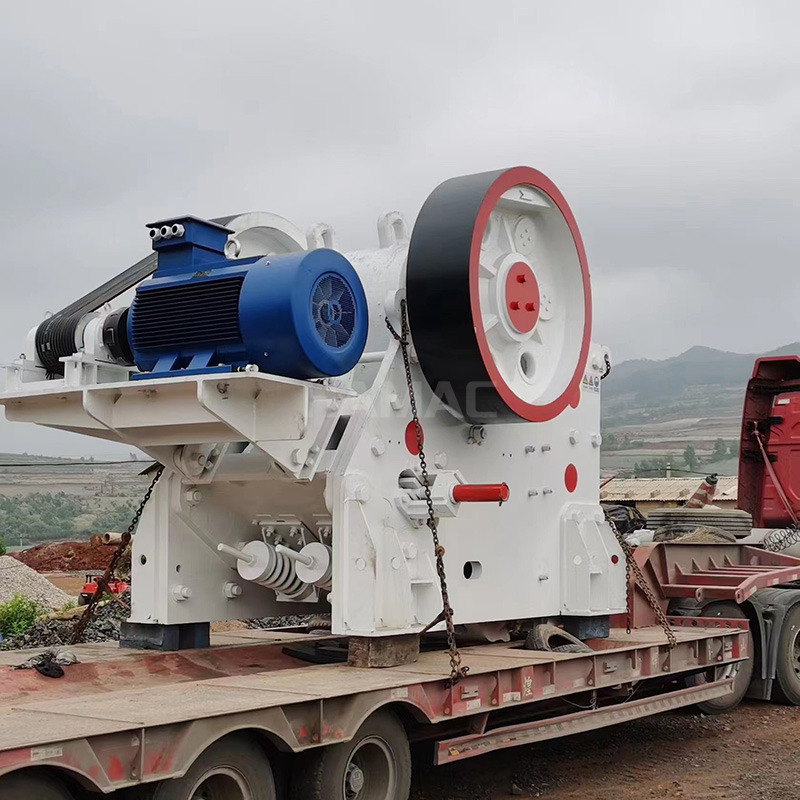
- PE Series Jaw Crusher
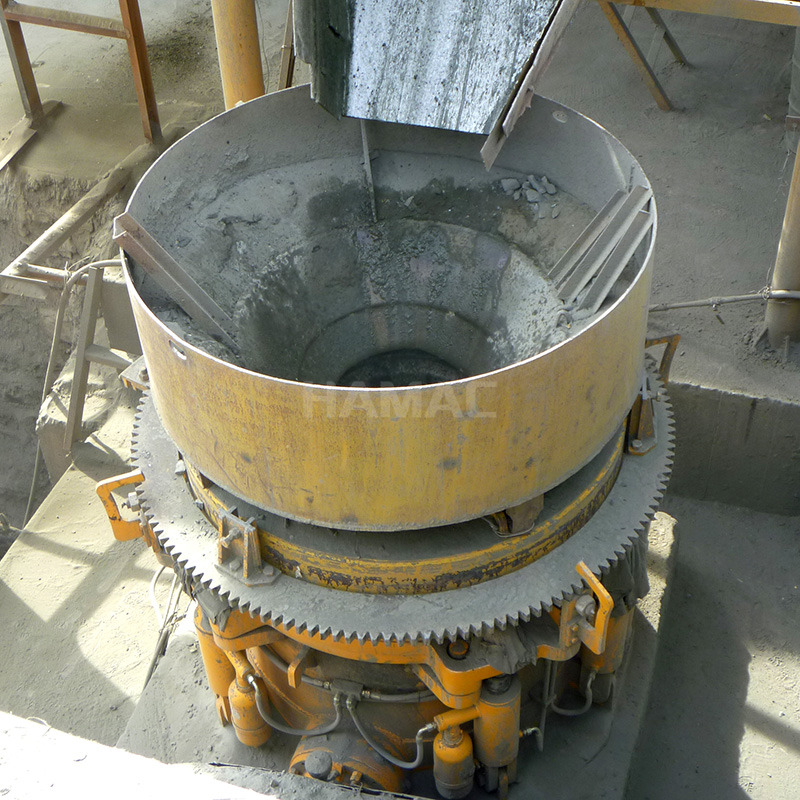
- HPT Multi-Cylinder Hydraulic Cone Crusher
- VSI Vertical Shaft Impact Crusher (Sand Making Machine)
Notes
Hard, abrasive, needs compression crushing and Mn liners.
Reference data for this configuration
| Parameter | Reference value |
|---|---|
| Feed material | Granite |
| Mohs hardness | 6.5 |
| Compressive strength | ~180 MPa |
| Abrasiveness | High |
| Recommended circuit | jaw + cone (+ VSI for sand) |
| Design capacity | 100–200 t/h |
| Typical main line | PE/PEW jaw + cone + 3-deck screen |
| Scale note | Most common export plant size. |
| Assumed duty | high-tonnage aggregate supply |
| Evaluation horizon | five-year view |
The figures above are transcribed from published HAMAC data and from the material properties of granite; site measurements take precedence.
Project profile these notes assume
| Assumption | Value |
|---|---|
| Operating duty | high-tonnage aggregate supply |
| Primary objective | tight grading compliance |
| Evaluation horizon | five-year view |
| Site condition | a greenfield site |
| Operating team | a mixed local and expatriate team |
Change any one of these assumptions and the recommended configuration for granite crushing may change. HAMAC re-runs the same checks against your own numbers once the enquiry data sheet is received.
From enquiry to the first saleable tonne
- Log tonnes per liner set and kWh per tonne from day one so you have a real cost baseline within a quarter.
- Budget for water, dust extraction and spillage handling as part of the plant, not as an afterthought.
- Size the primary stage for 100–200 t/h with a 10–20% surge allowance — never on nameplate throughput alone.
- Set the closed-side setting or rotor speed against the required product fractions, then verify the expected reduction ratio.
- Record the as-built settings and give the operator a written daily, weekly and monthly schedule.
- Set the maintenance stock list from the expected wear rate, not from a percentage of the equipment price.
- Apply jaw + cone (+ VSI for sand); the reduction mechanism must suit high abrasion and a compressive strength near 180 MPa.
- Survey the feed: Granite (Mohs 6.5, ~180 MPa, high abrasion); record top size, bulk density, moisture and clay content before fixing the flow sheet.
- Commission with graded load, sample the product grading, then train operators on liner change-out and daily checks.
Most delays at this stage come from missing feed data rather than from manufacturing capacity.
What to verify before you sign
- Decommissioning or relocation value at the end of a five-year horizon.
- Guaranteed power draw and the tight grading compliance trade-off it implies.
- Nameplate data for local voltage, frequency and the applicable conformity scheme.
- Energy draw in kW and the expected kWh per tonne at the design duty.
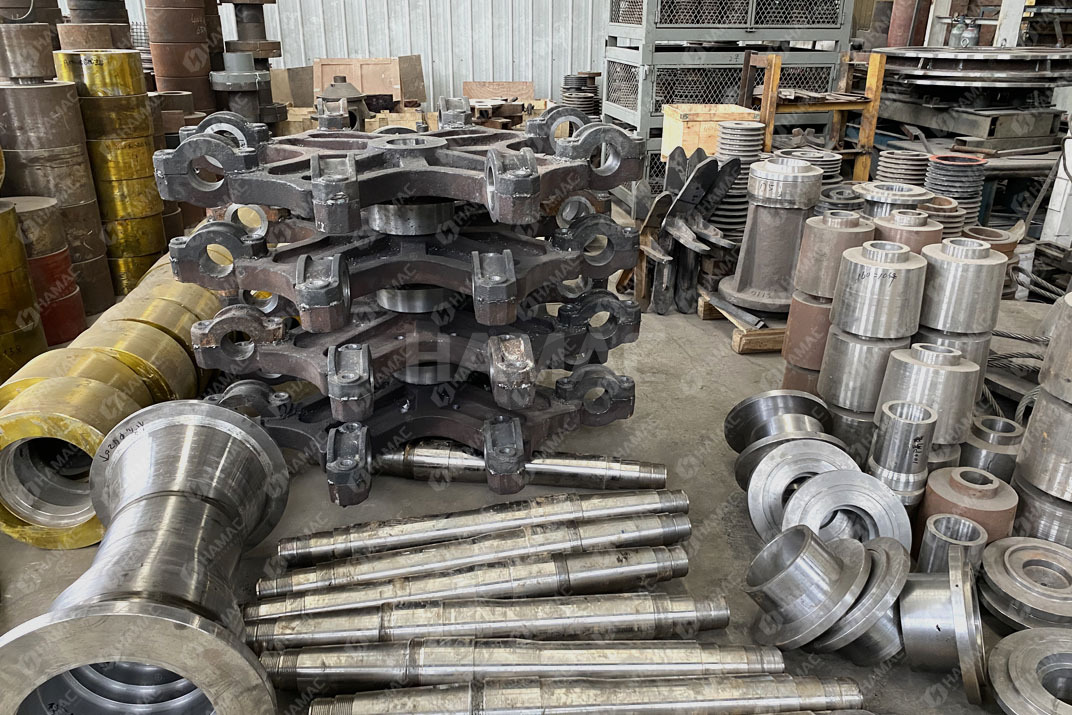
- Spare-parts consignment: one full liner or blow-bar set plus meshes, belts, bearings and seals.
- Saleable tonnes per hour at each product size, not gross crusher throughput, for 100–200 t/h.
- Local service partner, technician travel time and visa requirements for your market.
- Ambient temperature, altitude and dust load derating for motors and hydraulics.
- Whether the quoted t/h is achieved at high-tonnage aggregate supply or under ideal laboratory feed.
These are the items HAMAC puts in the technical proposal; if another offer is silent on them, ask why.
Where the money actually goes
| Cost line | Indicative share | What moves the number |
|---|---|---|
| Equipment & drive packages | 49% | Model size, number of stages and automation level |
| Ocean freight & insurance | 8% | Destination port, container count and out-of-gauge cargo |
| Civil works & foundations | 8% | Soil conditions, dynamic loads and site preparation |
| Erection, commissioning & training | 7% | Local labour, supervision scope and schedule |
| First-year wear parts | 20% | Rock abrasiveness, liner grade and operating hours |
| Power, lubricants & consumables | 8% | kWh per tonne, local tariff and dust suppression water |
Treat the percentages as a budgeting shape, not a quotation: HAMAC prices the equipment list in writing once the flow sheet is fixed.
Mistakes that cost more than the machine
- Planning the crusher but not the conveyors, transfer chutes and stockpile capacity around it.
- Omitting a bypass chute, so a single screen fault stops the whole line.
- Selecting the cheapest liner alloy for hard, high-silica rock and paying for it in change-outs.
- Choosing screen apertures before the concrete or asphalt mix design is fixed.
- Ordering no spares with the plant and waiting six weeks for the first liner set.
- Ignoring clay and moisture until the first wet season, when decks blind and chambers pack.
- Buying tight grading compliance on price alone and losing it in availability.
- Assuming a mobile plant can match a stationary line on high-tonnage, multi-product duty.
On a greenfield site, the civil and logistics items deserve as much attention as the crusher itself.
Commissioning checklist
- Check hydraulic pressure, accumulator pre-charge and tramp-release function.
- Record the baseline grading curve for each product fraction.
- Check lubrication levels, grease lines and oil cooler operation.
- Hand over the spare-parts list, manuals and maintenance schedule.
- Measure noise and dust at the operator position against the local limit.
- Measure and log the as-new CSS / setting for future wear comparison.
- Dry-run the plant empty for the specified period and record vibration.
- Confirm the direction and tension of every belt under no load.
On a greenfield site, allow extra time for the dust and noise measurements.