Overview
A 50–100 tph plant for calcite (Mohs 3, ~100 MPa, low abrasion). Recommended circuit: jaw + grinding mill.
Calcite at this scale
| Capacity | 50–100 t/h |
|---|---|
| Material | Calcite (Low abrasion) |
| Circuit | jaw + grinding mill |
Equipment
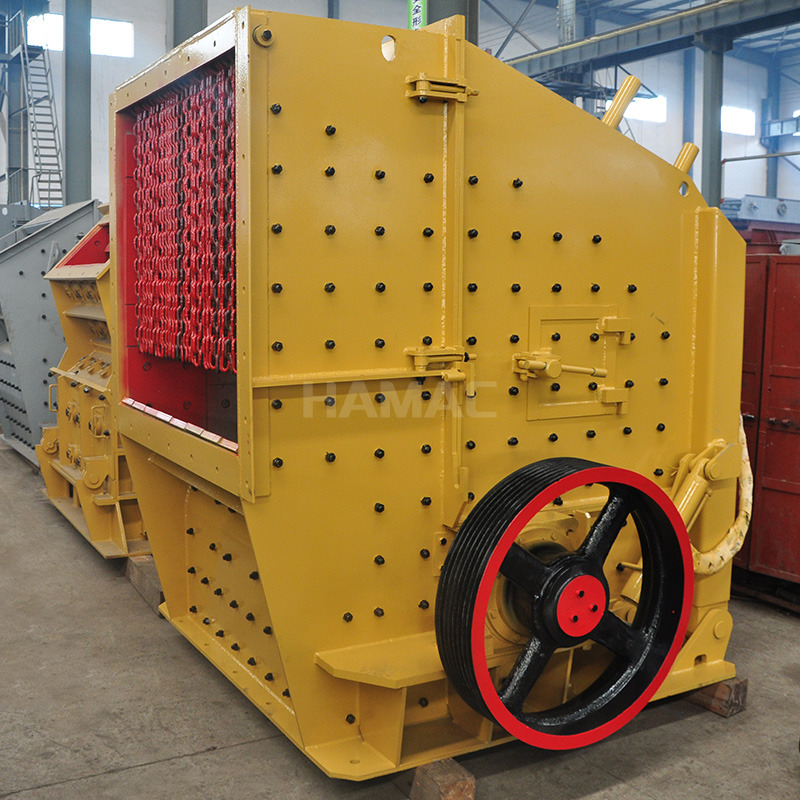
- PE Series Jaw Crusher
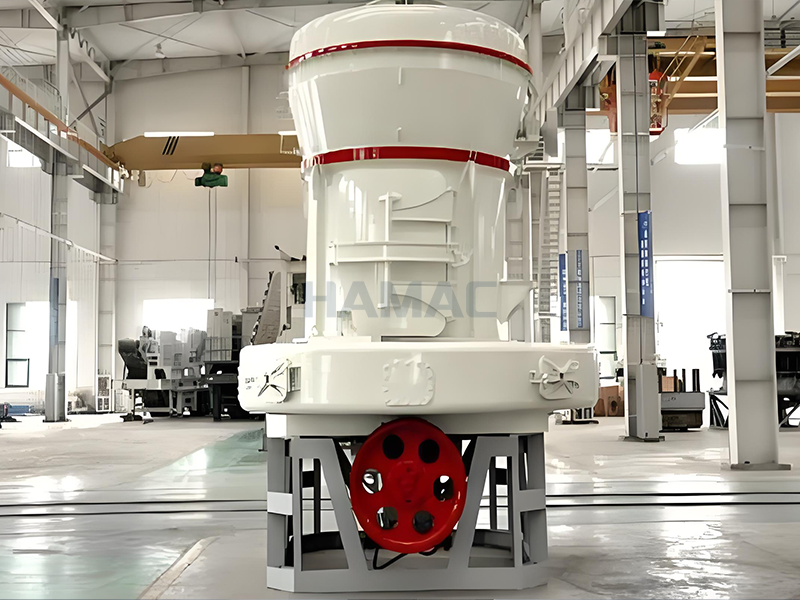
- MTW European Type Grinding Mill
Notes
Ground for filler / GCC.
Reference data for this configuration
| Parameter | Reference value |
|---|---|
| Feed material | Calcite |
| Mohs hardness | 3 |
| Compressive strength | ~100 MPa |
| Abrasiveness | Low |
| Recommended circuit | jaw + grinding mill |
| Design capacity | 50–100 t/h |
| Typical main line | PE jaw + PF impact / cone + 2-deck screen |
| Scale note | Small quarries and concrete plants. |
| Assumed duty | cement raw-meal preparation |
| Evaluation horizon | three-year view |
At cement raw-meal preparation, the ranking of these parameters changes: simple operator maintenance usually becomes the deciding constraint rather than the headline tonnage.
Project profile these notes assume
| Assumption | Value |
|---|---|
| Operating duty | cement raw-meal preparation |
| Primary objective | simple operator maintenance |
| Evaluation horizon | three-year view |
| Site condition | a coastal export terminal |
| Operating team | an owner-operator team |
Change any one of these assumptions and the recommended configuration for calcite crushing may change. HAMAC re-runs the same checks against your own numbers once the enquiry data sheet is received.
From enquiry to the first saleable tonne
- Allocate screen area per deck; blinding and pegging are the most common hidden bottlenecks in a new plant.
- Confirm the haul-road and stockpile plan with a coastal export terminal in mind before fixing conveyor lengths.
- Set the maintenance stock list from the expected wear rate, not from a percentage of the equipment price.
- Book shipping, prepare the packing list and confirm the container loading plan.
- Confirm site voltage, frequency and applicable conformity standards before manufacture.
- Review the crusher chamber profile with the liner supplier against Calcite (Mohs 3, ~100 MPa, low abrasion).
- Run a sieve analysis on a representative sample and attach the grading curve to the enquiry.
- Sequence delivery so foundations cure while the equipment is still in manufacture.
- Apply jaw + grinding mill; the reduction mechanism must suit low abrasion and a compressive strength near 100 MPa.
The sequence is deliberately front-loaded — decisions taken before manufacture are cheap, changes made on site are not.
What to verify before you sign
- Liner alloy: Mn13 is a common starting point for calcite at low abrasion.
- Erection scope: supervision only, or full civil, mechanical and electrical installation.
- Nameplate data for local voltage, frequency and the applicable conformity scheme.
- Local service partner, technician travel time and visa requirements for your market.
- Saleable tonnes per hour at each product size, not gross crusher throughput, for 50–100 t/h.
- Control system language, telemetry and remote diagnostics availability.
- Delivery terms (FOB / CFR / CIF) with the destination port named explicitly.
- Availability of an owner-operator team for liner changes and the lifting equipment on site.
- Energy draw in kW and the expected kWh per tonne at the design duty.
Score each supplier against the same ten items and keep the score sheet with the purchase file for the three-year review.
Where the money actually goes
| Cost line | Indicative share | What moves the number |
|---|---|---|
| Equipment & drive packages | 51% | Model size, number of stages and automation level |
| Ocean freight & insurance | 9% | Destination port, container count and out-of-gauge cargo |
| Civil works & foundations | 9% | Soil conditions, dynamic loads and site preparation |
| Erection, commissioning & training | 8% | Local labour, supervision scope and schedule |
| First-year wear parts | 16% | Rock abrasiveness, liner grade and operating hours |
| Power, lubricants & consumables | 7% | kWh per tonne, local tariff and dust suppression water |
Include downtime in the model. An unplanned liner change on a remote site costs far more than the casting itself.
Mistakes that cost more than the machine
- Assuming a mobile plant can match a stationary line on high-tonnage, multi-product duty.
- Assuming the manufacturer's warranty covers wear parts and consumables.
- Forgetting surge capacity — an intermittent loader starves the chamber and ruins particle shape.
- Selecting the cheapest liner alloy for hard, high-silica rock and paying for it in change-outs.
- Letting the cement raw-meal preparation duty be defined verbally instead of in the contract.
- Skipping a geotechnical check and discovering settlement under the primary crusher at a coastal export terminal.
- Undersizing the screen, then blaming the crusher for a plant that never reaches 50–100 t/h.
- Comparing quotations with different port terms and calling the lower number cheaper.
For cement raw-meal preparation, protect the simple operator maintenance requirement explicitly in the contract documents.
Commissioning checklist
- Dry-run the plant empty for the specified period and record vibration.
- Measure noise and dust at the operator position against the local limit.
- Agree the punch list, sign the hand-over protocol and file the as-built drawings.
- Verify rotation direction on every motor before coupling.
- Sample each product fraction and compare with the specification.
- Verify chute liners, skirt rubber and impact bars after the first hour of feed.
- Introduce feed in graded steps: 25%, 50%, 75%, then full load.
- Record power draw, tonnage and chamber pressure at steady state.
On a coastal export terminal, allow extra time for the dust and noise measurements.