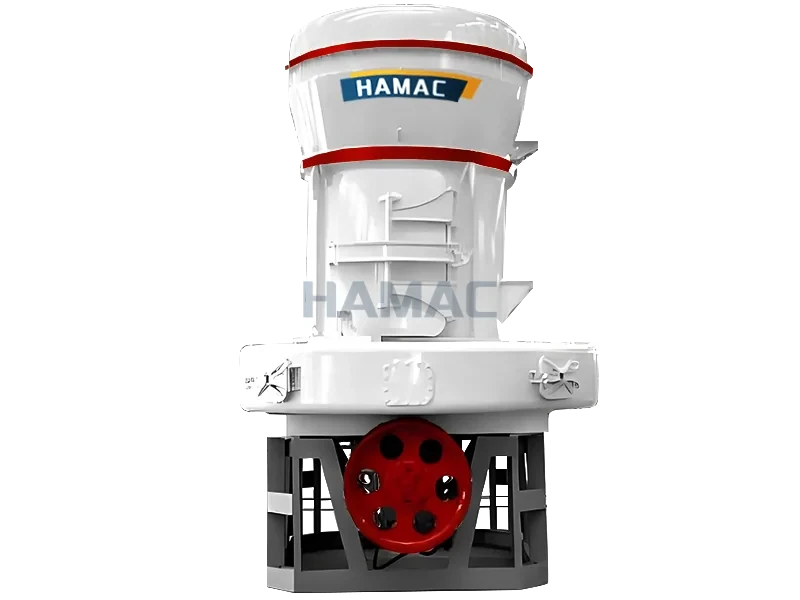
Overview
This page brings together the published MTW European Type Grinding Mill model data and the practical details of importing it into United States — power supply, standards, shipping and commissioning. Popular feed materials in the market include Granite, Basalt, Limestone.
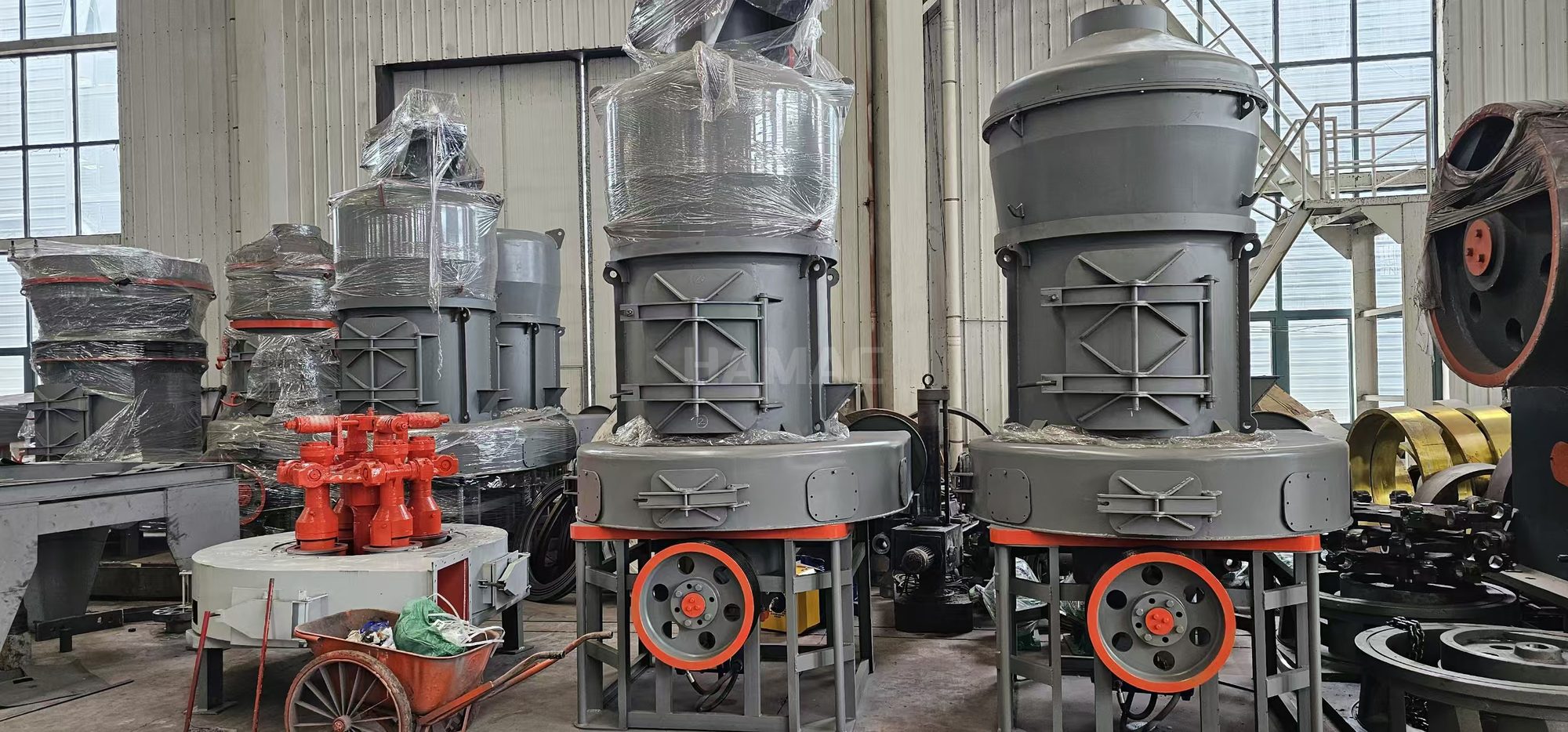
Published MTW European Type Grinding Mill data
| Published parameter | Nominal value |
|---|---|
| Quantity of roller (PCS) | 4 4 |
| Inner diameter of ring (mm) | 1100 1380 |
| Rotary speed of main frame (r/min) | 120 96 |
| Max. Feeding size (mm) | < 30 < 35 |
| Output size (mm) | 1.6~0.045 1.6~0.045 |
| Output fineness | 0.038 0.038 |
Local conditions in United States
- Destination port: Los Angeles / Houston.
- Site supply: 460V 60Hz.
- Standards: ASTM / OSHA.
- Common materials: Granite, Basalt, Limestone.
- Region: North America.
Delivery scope
HAMAC quotes FOB, CFR or CIF to Los Angeles / Houston, sets motors and starters to 460V 60Hz, and supplies the certificate set applicable to ASTM / OSHA. Workshop assembly, test, container loading plan and installation supervision are included in a turnkey scope.
Reference data for this configuration
| Parameter | Reference value |
|---|---|
| Destination port | Los Angeles / Houston |
| Site supply | 460V 60Hz |
| Local standards | ASTM / OSHA |
| Region | North America |
| Machine line | MTW European Type Grinding Mill |
| Category | Grinding Mills |
| Assumed duty | seasonal road-project supply |
| Evaluation horizon | ten-year view |
At seasonal road-project supply, the ranking of these parameters changes: fast mobilisation usually becomes the deciding constraint rather than the headline tonnage.
Published MTW European Type Grinding Mill model data
| Item | MTW110 | MTW138 | MTW175 | MTW215 |
|---|---|---|---|---|
| Quantity of roller (PCS) | 4 | 4 | 5 | 5 |
| Inner diameter of ring (mm) | 1100 | 1380 | 1750 | 2150 |
| Rotary speed of main frame (r/min) | 120 | 96 | 75 | 65 |
| Max. Feeding size (mm) | < 30 | < 35 | < 40 | < 50 |
| Output size (mm) | 1.6~0.045 | 1.6~0.045 | 1.6~0.045 | 1.6-0.055 |
| Output fineness | 0.038 | 0.038 | 0.038 | 0.045 |
| Capacity (t/h) | 3.5~10 | 6.5~15 | 11~25 | 20-50 |
| Total weight (t) | 18 | 28.5 | 46 | 96 |
MTW European Tech. grinding mill (Raymond mill) is a national patented product developed by our company on the basis of absorbing European grinding technology and concepts. Read the table column by column against seasonal road-project supply: the model you pick is the one whose published range brackets your target tonnage, not simply the largest machine in the series. Availability, motor rating and shipping data are re-confirmed for a remote mine site in the written HAMAC proposal.
Project profile these notes assume
| Assumption | Value |
|---|---|
| Operating duty | seasonal road-project supply |
| Primary objective | fast mobilisation |
| Evaluation horizon | ten-year view |
| Site condition | a remote mine site |
| Operating team | a small contractor crew |
Change any one of these assumptions and the recommended configuration for mtw european type grinding mill may change. HAMAC re-runs the same checks against your own numbers once the enquiry data sheet is received.
From enquiry to the first saleable tonne
- Allocate screen area per deck; blinding and pegging are the most common hidden bottlenecks in a new plant.
- Survey the feed: the feed material; record top size, bulk density, moisture and clay content before fixing the flow sheet.
- Confirm the haul-road and stockpile plan with a remote mine site in mind before fixing conveyor lengths.
- Budget for water, dust extraction and spillage handling as part of the plant, not as an afterthought.
- Commission with graded load, sample the product grading, then train operators on liner change-out and daily checks.
- Size the primary stage for your target tonnage with a 10–20% surge allowance — never on nameplate throughput alone.
- Define the acceptance test: sampling points, test duration, moisture range and who signs the protocol.
- Sequence delivery so foundations cure while the equipment is still in manufacture.
- Verify the electrical single-line diagram, cable sizing and starter type with the local utility.
Shortening this sequence is possible on a remote mine site, but only where the feed and product specification are already fully defined.
What to verify before you sign
- Availability of a small contractor crew for liner changes and the lifting equipment on site.
- Saleable tonnes per hour at each product size, not gross crusher throughput, for your target tonnage.
- Spare motor, gearbox and hydraulic pump lead times from the nearest HAMAC stock point.
- Screen deck count, aperture and area; ask for the efficiency calculation, not just the mesh size.
- Control system language, telemetry and remote diagnostics availability.
- Choke-feed arrangement: surge bin, feeder control and level indication.
- Decommissioning or relocation value at the end of a ten-year horizon.
- Written performance guarantee, sampling method and acceptance-test protocol.
- Nameplate data for 460V 60Hz and the ASTM / OSHA certificate set.
Score each supplier against the same ten items and keep the score sheet with the purchase file for the ten-year review.
Where the money actually goes
| Cost line | Indicative share | What moves the number |
|---|---|---|
| Equipment & drive packages | 53% | Model size, number of stages and automation level |
| Ocean freight & insurance | 11% | Destination port, container count and out-of-gauge cargo |
| Civil works & foundations | 8% | Soil conditions, dynamic loads and site preparation |
| Erection, commissioning & training | 7% | Local labour, supervision scope and schedule |
| First-year wear parts | 14% | Rock abrasiveness, liner grade and operating hours |
| Power, lubricants & consumables | 7% | kWh per tonne, local tariff and dust suppression water |
The weighting shifts with hardness and scale — a hard feed pushes the wear line up, while a larger plant pushes equipment share up.
Mistakes that cost more than the machine
- Letting the seasonal road-project supply duty be defined verbally instead of in the contract.
- Forgetting surge capacity — an intermittent loader starves the chamber and ruins particle shape.
- Skipping the acceptance test, so no one has a baseline to measure degradation against.
- Using one liner profile for both secondary and tertiary stages.
- Specifying motors for the wrong voltage or frequency and rewinding them on site.
- Choosing screen apertures before the concrete or asphalt mix design is fixed.
- Planning the crusher but not the conveyors, transfer chutes and stockpile capacity around it.
- Leaving tramp-iron protection out of the scope to save a small percentage of capital.
Review the list with a small contractor crew before the order is placed — they will recognise most of them.
Commissioning checklist
- Check belt tracking, chute build-up and transfer-point dust.
- Dry-run the plant empty for the specified period and record vibration.
- Confirm all guards, emergency stops and pull-wire switches function.
- Calibrate the belt scale and any level probes against a known load.
- Verify rotation direction on every motor before coupling.
- Check hydraulic pressure, accumulator pre-charge and tramp-release function.
- Test emergency stops, pull wires and interlock trips in sequence.
- Agree the punch list, sign the hand-over protocol and file the as-built drawings.
On a remote mine site, allow extra time for the dust and noise measurements.