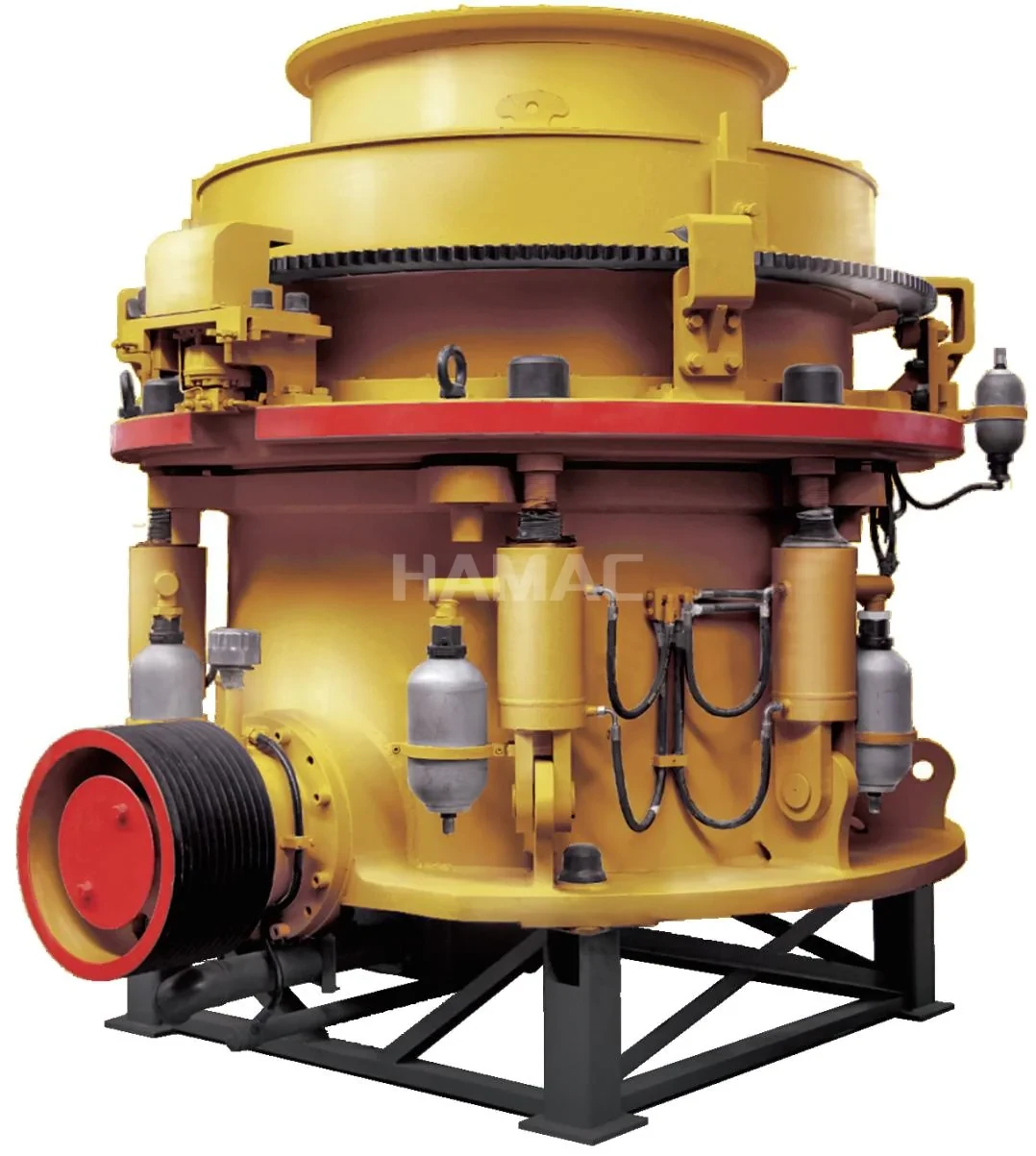
Overview
This page brings together the published HPT Multi-Cylinder Hydraulic Cone Crusher model data and the practical details of importing it into South Africa — power supply, standards, shipping and commissioning. Popular feed materials in the market include Gold ore, Manganese ore, Platinum.
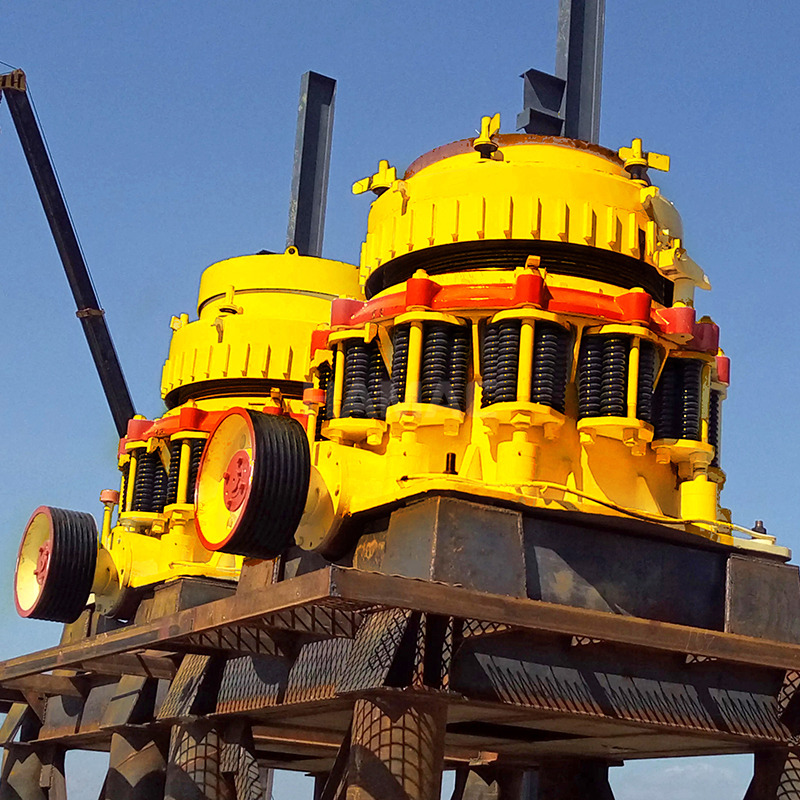
Published HPT Multi-Cylinder Hydraulic Cone Crusher data
| Published parameter | Nominal value |
|---|---|
| HPT100 | 90 45–140 |
| HPT200 | 160 90–250 |
| HPT300 | 220 110–440 |
| HPT400 / HPT500 | On request On request |
Local conditions in South Africa
- Destination port: Durban.
- Site supply: 380V 50Hz.
- Standards: SANS.
- Common materials: Gold ore, Manganese ore, Platinum.
- Region: Africa.
Delivery scope
HAMAC quotes FOB, CFR or CIF to Durban, sets motors and starters to 380V 50Hz, and supplies the certificate set applicable to SANS. Workshop assembly, test, container loading plan and installation supervision are included in a turnkey scope.
Reference data for this configuration
| Parameter | Reference value |
|---|---|
| Destination port | Durban |
| Site supply | 380V 50Hz |
| Local standards | SANS |
| Region | Africa |
| Machine line | HPT Multi-Cylinder Hydraulic Cone Crusher |
| Category | Cone Crusher |
| Assumed duty | contract crushing on short-term sites |
| Evaluation horizon | seven-year view |
At contract crushing on short-term sites, the ranking of these parameters changes: maximum mechanical availability usually becomes the deciding constraint rather than the headline tonnage.
Published HPT Multi-Cylinder Hydraulic Cone Crusher model data
| Model | Installed power (kW) | Capacity range (t/h) | Dimensions (mm) |
|---|---|---|---|
| HPT100 | 90 | 45–140 | 1705 × 1510 × 1583 |
| HPT200 | 160 | 90–250 | 2135 × 1750 × 1927 |
| HPT300 | 220 | 110–440 | 2725 × 2110 × 2871 |
| HPT400 / HPT500 | On request | On request | On request |
Hydraulic multi-cylinder cone crusher for secondary and tertiary crushing of limestone through basalt, with 5–15% higher efficiency and 35–60% higher output than spring cone crushers. Read the table column by column against contract crushing on short-term sites: the model you pick is the one whose published range brackets your target tonnage, not simply the largest machine in the series. Availability, motor rating and shipping data are re-confirmed for a greenfield site in the written HAMAC proposal.
Project profile these notes assume
| Assumption | Value |
|---|---|
| Operating duty | contract crushing on short-term sites |
| Primary objective | maximum mechanical availability |
| Evaluation horizon | seven-year view |
| Site condition | a greenfield site |
| Operating team | an owner-operator team |
Change any one of these assumptions and the recommended configuration for hpt multi-cylinder hydraulic cone crusher may change. HAMAC re-runs the same checks against your own numbers once the enquiry data sheet is received.
From enquiry to the first saleable tonne
- Lay out conveyors, access ways, stockpile capacity and drainage before ordering steelwork.
- Book container or flat-rack space to Durban and prepare the customs document set in advance.
- Set the closed-side setting or rotor speed against the required product fractions, then verify the expected reduction ratio.
- Define the acceptance test: sampling points, test duration, moisture range and who signs the protocol.
- Survey the feed: the feed material; record top size, bulk density, moisture and clay content before fixing the flow sheet.
- Commission with graded load, sample the product grading, then train operators on liner change-out and daily checks.
- Log tonnes per liner set and kWh per tonne from day one so you have a real cost baseline within a quarter.
- Sequence delivery so foundations cure while the equipment is still in manufacture.
- Run a sieve analysis on a representative sample and attach the grading curve to the enquiry.
For an owner-operator team, the commissioning and training steps need more calendar time than the mechanical erection itself.
What to verify before you sign
- Choke-feed arrangement: surge bin, feeder control and level indication.
- Closed-side setting range and whether automatic setting regulation is included.
- Tramp-iron protection — hydraulic release, magnet and metal detection on the feed belt.
- Wear-part interchangeability across machines in the same circuit.
- Access for liner change-out — crane radius, lifting points and clearance around the chamber.
- Spare-parts consignment: one full liner or blow-bar set plus meshes, belts, bearings and seals.
- Local service partner, technician travel time and visa requirements for South Africa.
- Whether the quoted t/h is achieved at contract crushing on short-term sites or under ideal laboratory feed.
- Product sampling points and the lab equipment needed for routine grading checks.
The cheapest offer usually wins on equipment and loses on one of the last six items — freight terms, spares or the acceptance test.
Where the money actually goes
| Cost line | Indicative share | What moves the number |
|---|---|---|
| Equipment & drive packages | 53% | Model size, number of stages and automation level |
| Ocean freight & insurance | 11% | Destination port, container count and out-of-gauge cargo |
| Civil works & foundations | 8% | Soil conditions, dynamic loads and site preparation |
| Erection, commissioning & training | 7% | Local labour, supervision scope and schedule |
| First-year wear parts | 14% | Rock abrasiveness, liner grade and operating hours |
| Power, lubricants & consumables | 7% | kWh per tonne, local tariff and dust suppression water |
A seven-year view normally reverses the ranking of two otherwise similar offers once wear and energy are included.
Mistakes that cost more than the machine
- Assuming a mobile plant can match a stationary line on high-tonnage, multi-product duty.
- Buying on nameplate t/h without converting to saleable product at the specified fractions.
- Leaving tramp-iron protection out of the scope to save a small percentage of capital.
- Forgetting surge capacity — an intermittent loader starves the chamber and ruins particle shape.
- Skipping the acceptance test, so no one has a baseline to measure degradation against.
- Overlooking dust, noise and water permits in South Africa until erection has already started.
- Assuming the manufacturer's warranty covers wear parts and consumables.
- Choosing screen apertures before the concrete or asphalt mix design is fixed.
On a greenfield site, the civil and logistics items deserve as much attention as the crusher itself.
Commissioning checklist
- Hand over the spare-parts list, manuals and maintenance schedule.
- Check hydraulic pressure, accumulator pre-charge and tramp-release function.
- Calibrate the belt scale and any level probes against a known load.
- Record the baseline grading curve for each product fraction.
- Verify chute liners, skirt rubber and impact bars after the first hour of feed.
- Check belt tracking, chute build-up and transfer-point dust.
- Confirm the direction and tension of every belt under no load.
- Dry-run the plant empty for the specified period and record vibration.
On a greenfield site, allow extra time for the dust and noise measurements.