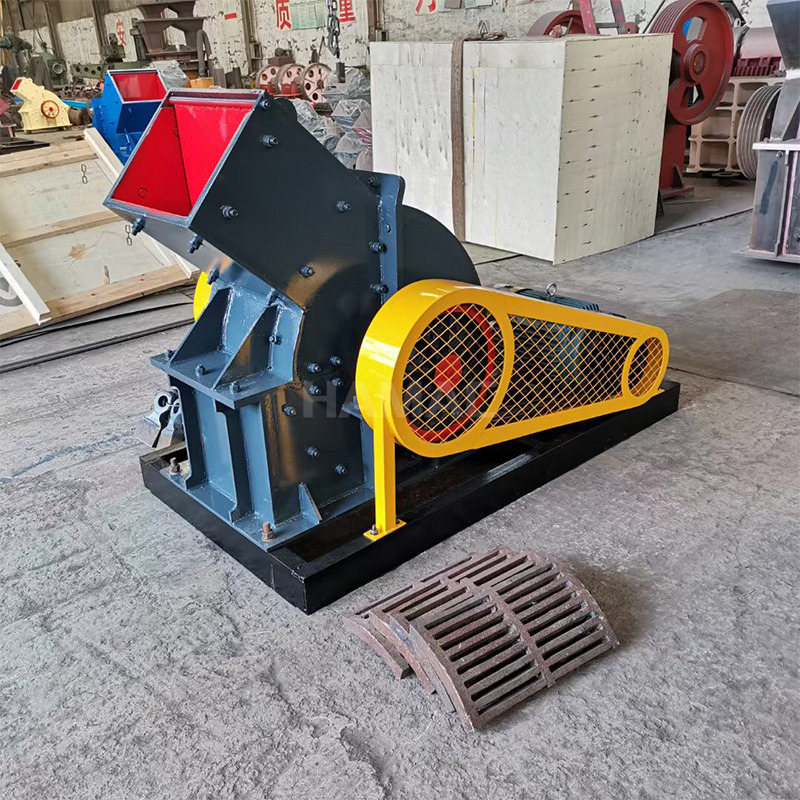
Overview
Basalt (Mohs 6, ~200 MPa) is processed in Chile for aggregates, ore or industrial minerals. HAMAC configures the circuit to local conditions: Valparaíso, 380V 50Hz, NCh.
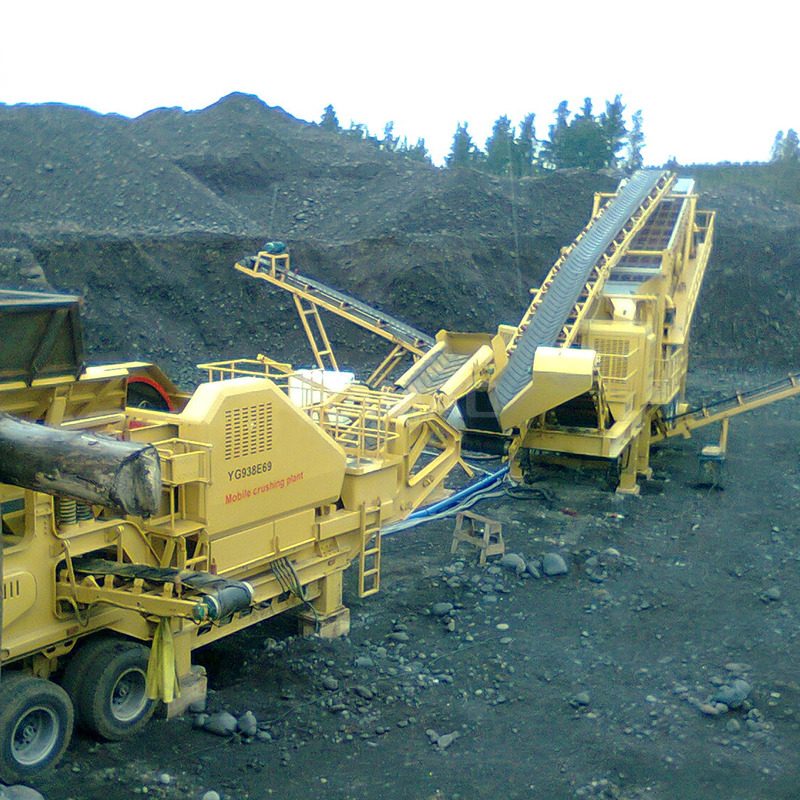
Basalt properties
| Property | Value |
|---|---|
| Mohs | 6 |
| Compressive strength | 200 MPa |
| Abrasion | High |
| Circuit | jaw + cone + VSI |
In Chile
- Port: Valparaíso.
- Power: 380V 50Hz.
- Standards: NCh.
Equipment
- PE Series Jaw Crusher
- HPT Multi-Cylinder Hydraulic Cone Crusher
- VSI Vertical Shaft Impact Crusher (Sand Making Machine)
Budget
Send material, capacity and product sizes for a configured FOB/CIF budget to Valparaíso.
Reference data for this configuration
| Parameter | Reference value |
|---|---|
| Feed material | Basalt |
| Mohs hardness | 6 |
| Compressive strength | ~200 MPa |
| Abrasiveness | High |
| Recommended circuit | jaw + cone + VSI |
| Destination port | Valparaíso |
| Site supply | 380V 50Hz |
| Local standards | NCh |
| Region | South America |
| Assumed duty | cement raw-meal preparation |
| Evaluation horizon | three-year view |
Treat this as a living sheet. Every revision of the flow sheet for Chile should update the same fields so the equipment list stays traceable.
Project profile these notes assume
| Assumption | Value |
|---|---|
| Operating duty | cement raw-meal preparation |
| Primary objective | maximum mechanical availability |
| Evaluation horizon | three-year view |
| Site condition | a greenfield site |
| Operating team | a rotating shift crew |
Change any one of these assumptions and the recommended configuration for basalt crushing may change. HAMAC re-runs the same checks against your own numbers once the enquiry data sheet is received.
From enquiry to the first saleable tonne
- Survey the feed: Basalt (Mohs 6, ~200 MPa, high abrasion); record top size, bulk density, moisture and clay content before fixing the flow sheet.
- Commission with graded load, sample the product grading, then train operators on liner change-out and daily checks.
- Budget for water, dust extraction and spillage handling as part of the plant, not as an afterthought.
- Lay out conveyors, access ways, stockpile capacity and drainage before ordering steelwork.
- Include dust suppression, guarding, emergency stops and lock-out points in the layout drawing.
- Confirm the haul-road and stockpile plan with a greenfield site in mind before fixing conveyor lengths.
- Set the maintenance stock list from the expected wear rate, not from a percentage of the equipment price.
- Specify motors, starters and documentation for 380V 50Hz and NCh before manufacture.
- Review the crusher chamber profile with the liner supplier against Basalt (Mohs 6, ~200 MPa, high abrasion).
A HAMAC project manager stays with the order from the first data sheet through hand-over in Chile.
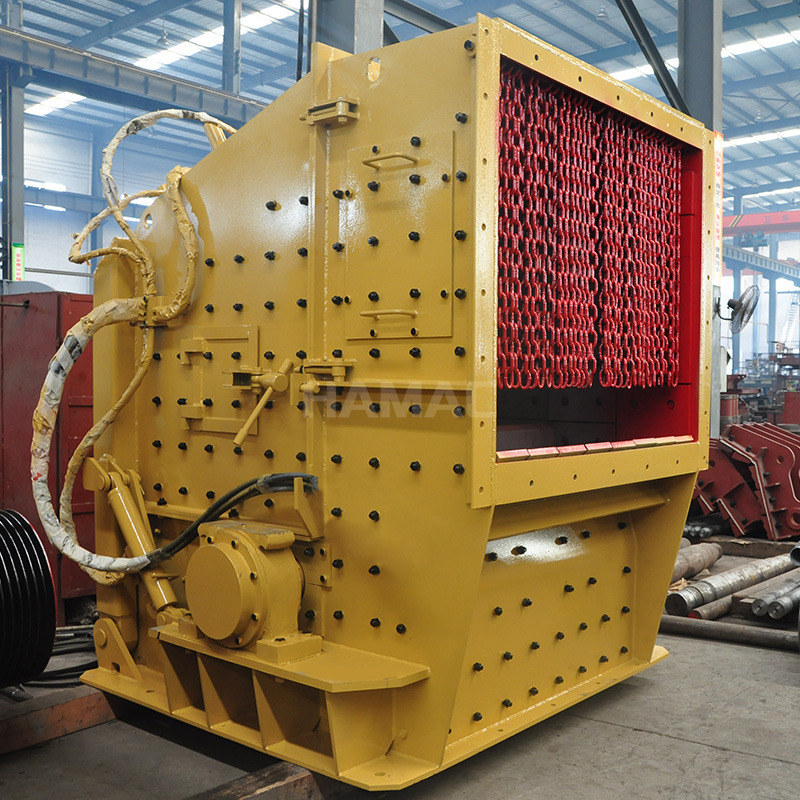
What to verify before you sign
- Erection scope: supervision only, or full civil, mechanical and electrical installation.
- After-sales response time, technician availability and the warranty exclusions in writing.
- Dust and noise control designed to the local emission limits for Chile.
- Spare motor, gearbox and hydraulic pump lead times from the nearest HAMAC stock point.
- Whether the quoted t/h is achieved at cement raw-meal preparation or under ideal laboratory feed.
- Tramp-iron protection — hydraulic release, magnet and metal detection on the feed belt.
- Closed-side setting range and whether automatic setting regulation is included.
- Delivery terms (FOB / CFR / CIF) with the destination port named explicitly.
- Written performance guarantee, sampling method and acceptance-test protocol.
Share this list with a rotating shift crew as well as procurement; operators are the ones who live with the omissions.
Where the money actually goes
| Cost line | Indicative share | What moves the number |
|---|---|---|
| Equipment & drive packages | 50% | Model size, number of stages and automation level |
| Ocean freight & insurance | 10% | Destination port, container count and out-of-gauge cargo |
| Civil works & foundations | 8% | Soil conditions, dynamic loads and site preparation |
| Erection, commissioning & training | 7% | Local labour, supervision scope and schedule |
| First-year wear parts | 19% | Rock abrasiveness, liner grade and operating hours |
| Power, lubricants & consumables | 6% | kWh per tonne, local tariff and dust suppression water |
For basalt crushing at your target tonnage, wear parts and energy usually outweigh the difference between two purchase prices within three to five years.
Mistakes that cost more than the machine
- Ordering no spares with the plant and waiting six weeks for the first liner set.
- Comparing quotations with different port terms and calling the lower number cheaper.
- Skipping the acceptance test, so no one has a baseline to measure degradation against.
- Buying on nameplate t/h without converting to saleable product at the specified fractions.
- Omitting a bypass chute, so a single screen fault stops the whole line.
- Planning the crusher but not the conveyors, transfer chutes and stockpile capacity around it.
- Letting the cement raw-meal preparation duty be defined verbally instead of in the contract.
- Buying maximum mechanical availability on price alone and losing it in availability.
On a greenfield site, the civil and logistics items deserve as much attention as the crusher itself.
Commissioning checklist
- Introduce feed in graded steps: 25%, 50%, 75%, then full load.
- Hand over the spare-parts list, manuals and maintenance schedule.
- Agree the punch list, sign the hand-over protocol and file the as-built drawings.
- Verify chute liners, skirt rubber and impact bars after the first hour of feed.
- Check lubrication levels, grease lines and oil cooler operation.
- Confirm all guards, emergency stops and pull-wire switches function.
- Measure and log the as-new CSS / setting for future wear comparison.
- Confirm the direction and tension of every belt under no load.
For a rotating shift crew, run through this list twice — once with the supervisor and once without.