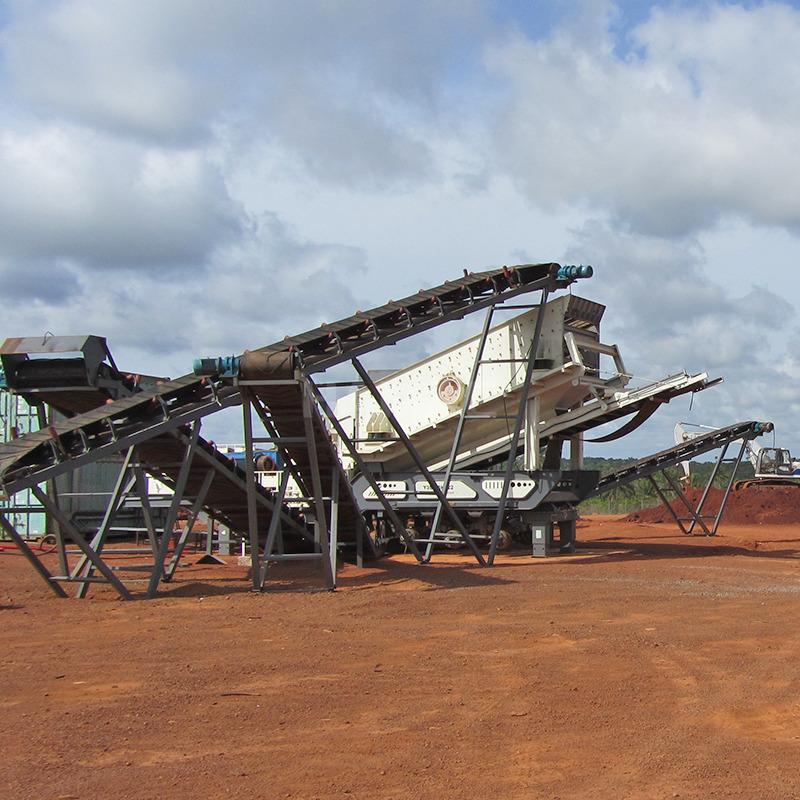
Overview
Compression crushing with premium manganese liners. In Tanzania the most frequently processed feed materials are Gold ore, Granite, and equipment is normally delivered through Dar es Salaam on 415V 50Hz supplies.
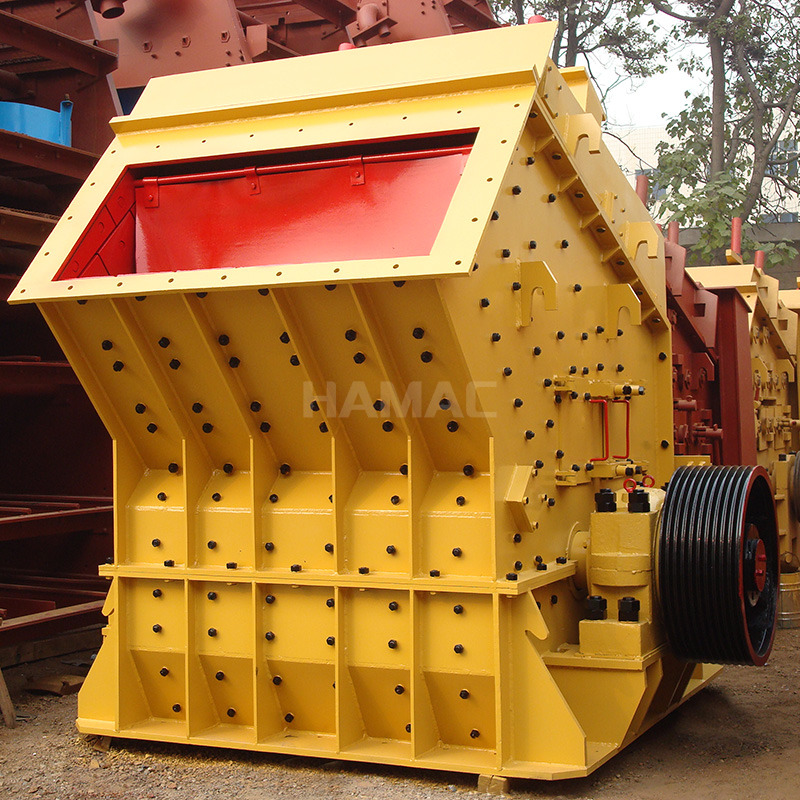
Materials in scope
- Granite — Mohs 6.5, ~180 MPa, high abrasion
- Basalt — Mohs 6, ~200 MPa, high abrasion
- Andesite — Mohs 6, ~170 MPa, high abrasion
- Gabbro — Mohs 6, ~180 MPa, high abrasion
Recommended machines
- PE Series Jaw Crusher
- HPT Multi-Cylinder Hydraulic Cone Crusher
- VSI Vertical Shaft Impact Crusher (Sand Making Machine)
Engineering for Tanzania
| Item | Reference |
|---|---|
| Port | Dar es Salaam |
| Power | 415V 50Hz |
| Standards | TBS |
| Region | Africa |
Reference data for this configuration
| Parameter | Reference value |
|---|---|
| Destination port | Dar es Salaam |
| Site supply | 415V 50Hz |
| Local standards | TBS |
| Region | Africa |
| Application | Hard Rock |
| Typical feed | Granite, Basalt, Andesite, Gabbro |
| Assumed duty | continuous quarry production |
| Evaluation horizon | three-year view |
Treat this as a living sheet. Every revision of the flow sheet for Tanzania should update the same fields so the equipment list stays traceable.
Project profile these notes assume
| Assumption | Value |
|---|---|
| Operating duty | continuous quarry production |
| Primary objective | simple operator maintenance |
| Evaluation horizon | three-year view |
| Site condition | a confined urban yard |
| Operating team | a rotating shift crew |
Change any one of these assumptions and the recommended configuration for the crushing and screening plant may change. HAMAC re-runs the same checks against your own numbers once the enquiry data sheet is received.
From enquiry to the first saleable tonne
- Sequence delivery so foundations cure while the equipment is still in manufacture.
- Log tonnes per liner set and kWh per tonne from day one so you have a real cost baseline within a quarter.
- Set the maintenance stock list from the expected wear rate, not from a percentage of the equipment price.
- Define the acceptance test: sampling points, test duration, moisture range and who signs the protocol.
- Record the as-built settings and give the operator a written daily, weekly and monthly schedule.
- Commission with graded load, sample the product grading, then train operators on liner change-out and daily checks.
- Budget for water, dust extraction and spillage handling as part of the plant, not as an afterthought.
- Set the closed-side setting or rotor speed against the required product fractions, then verify the expected reduction ratio.
- Choose compression or impact reduction according to hardness, silica content and required particle shape.
Most delays at this stage come from missing feed data rather than from manufacturing capacity.
What to verify before you sign
- Tramp-iron protection — hydraulic release, magnet and metal detection on the feed belt.
- Erection scope: supervision only, or full civil, mechanical and electrical installation.
- Delivery terms (FOB / CFR / CIF) with the destination port named explicitly.
- Saleable tonnes per hour at each product size, not gross crusher throughput, for your target tonnage.
- After-sales response time, technician availability and the warranty exclusions in writing.
- Written performance guarantee, sampling method and acceptance-test protocol.
- Screen deck count, aperture and area; ask for the efficiency calculation, not just the mesh size.
- Decommissioning or relocation value at the end of a three-year horizon.
- Access for liner change-out — crane radius, lifting points and clearance around the chamber.
The cheapest offer usually wins on equipment and loses on one of the last six items — freight terms, spares or the acceptance test.
Where the money actually goes
| Cost line | Indicative share | What moves the number |
|---|---|---|
| Equipment & drive packages | 53% | Model size, number of stages and automation level |
| Ocean freight & insurance | 11% | Destination port, container count and out-of-gauge cargo |
| Civil works & foundations | 8% | Soil conditions, dynamic loads and site preparation |
| Erection, commissioning & training | 7% | Local labour, supervision scope and schedule |
| First-year wear parts | 14% | Rock abrasiveness, liner grade and operating hours |
| Power, lubricants & consumables | 7% | kWh per tonne, local tariff and dust suppression water |
Model a low, base and high case for tonnes per liner set. The spread tells you more than a single optimistic estimate.
Mistakes that cost more than the machine
- Leaving tramp-iron protection out of the scope to save a small percentage of capital.
- Letting the continuous quarry production duty be defined verbally instead of in the contract.
- Ignoring clay and moisture until the first wet season, when decks blind and chambers pack.
- Forgetting surge capacity — an intermittent loader starves the chamber and ruins particle shape.
- Overlooking dust, noise and water permits in Tanzania until erection has already started.
- Skipping a geotechnical check and discovering settlement under the primary crusher at a confined urban yard.
- Choosing screen apertures before the concrete or asphalt mix design is fixed.
- Omitting a bypass chute, so a single screen fault stops the whole line.
On a confined urban yard, the civil and logistics items deserve as much attention as the crusher itself.
Commissioning checklist
- Record power draw, tonnage and chamber pressure at steady state.
- Verify rotation direction on every motor before coupling.
- Agree the punch list, sign the hand-over protocol and file the as-built drawings.
- Check belt tracking, chute build-up and transfer-point dust.
- Confirm all guards, emergency stops and pull-wire switches function.
- Hand over the spare-parts list, manuals and maintenance schedule.
- Confirm the direction and tension of every belt under no load.
- Sample each product fraction and compare with the specification.
The commissioning record becomes the reference for every liner change in the three-year plan.