
Mobile Crusher: Buy or Rent? A Practical Cost and Project Decision Guide
There is no meaningful single "price" for crushing equipment: a Mobile Crusher: Buy or Rent? A Practical Cost and Project Decision Guide is quoted as a configured package. Budget is driven by capacity, the number of crushing stages, mobility, motors / generators, wear-part specification and the scope of installation and after-sales service.
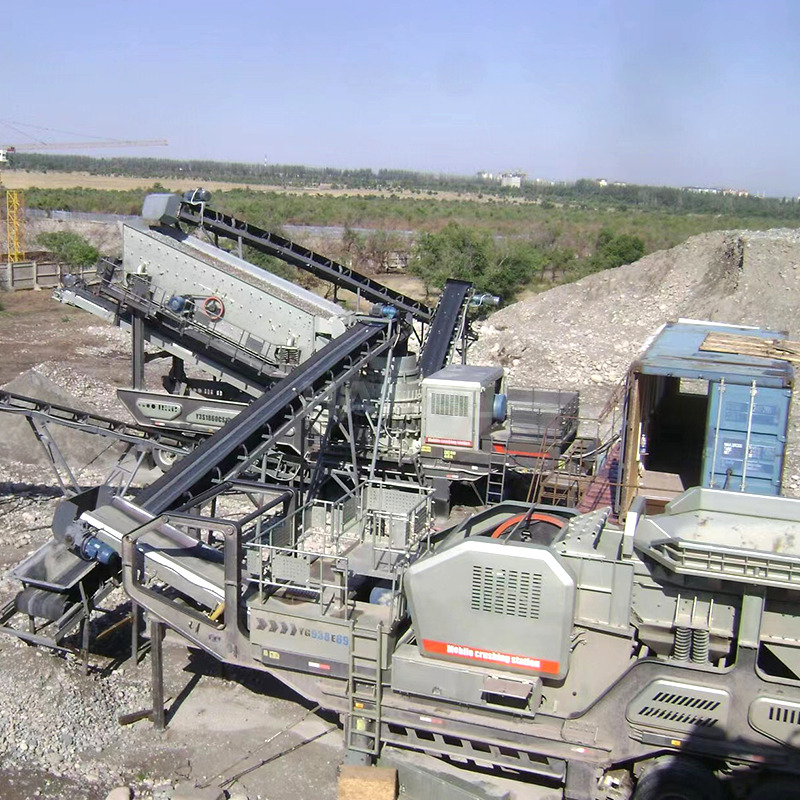
What actually drives the price
Six inputs explain most of the difference between two quotations: (1) required tonnes per hour of saleable product; (2) raw material hardness and abrasiveness, which sets crusher type and liner material; (3) number of stages and screens; (4) stationary, modular, wheel-mobile or tracked configuration; (5) motor voltage / frequency and whether a generator is included; (6) shipping terms, supervision and spare-parts package.
Capital cost versus cost per tonne
A cheaper machine can be the more expensive plant. Energy, wear parts and downtime usually dominate the lifetime cost of a quarry line, especially in abrasive granite, basalt or river pebble. Compare suppliers on kWh per tonne, liner life in tonnes, and expected availability — not only on the invoice. See operating cost per tonne and wear parts.
Budget checklist
- Raw material + compressive strength / silica content
- Maximum feed size and required product fractions
- Required t/h and planned operating hours per day
- Stationary / mobile, grid power availability
- Country and destination port (FOB, CFR or CIF)
- Spare parts, installation supervision, training
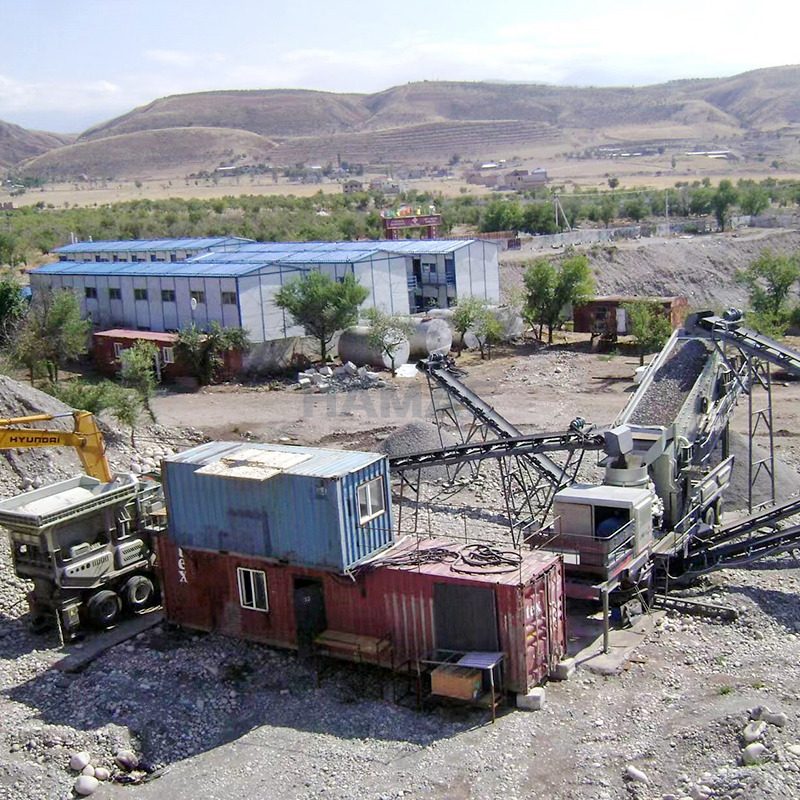
How to get an accurate number
Send the six items above through the RFQ form. HAMAC returns a process flow, itemised equipment list and budget quotation within 24 hours. For plant designs, see configurations by capacity; for mobile equipment, compare wheel mobile and tracked plants.