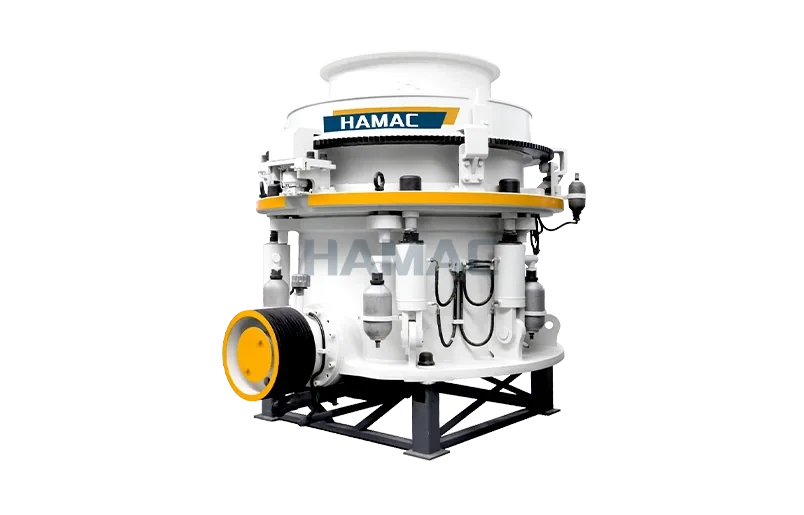
Overview
The HP Hydraulic Cone Crusher is offered across several model sizes. Price depends on capacity, wear-package grade, mobility (stationary, wheel or tracked) and the level of automation, not on a single list price.
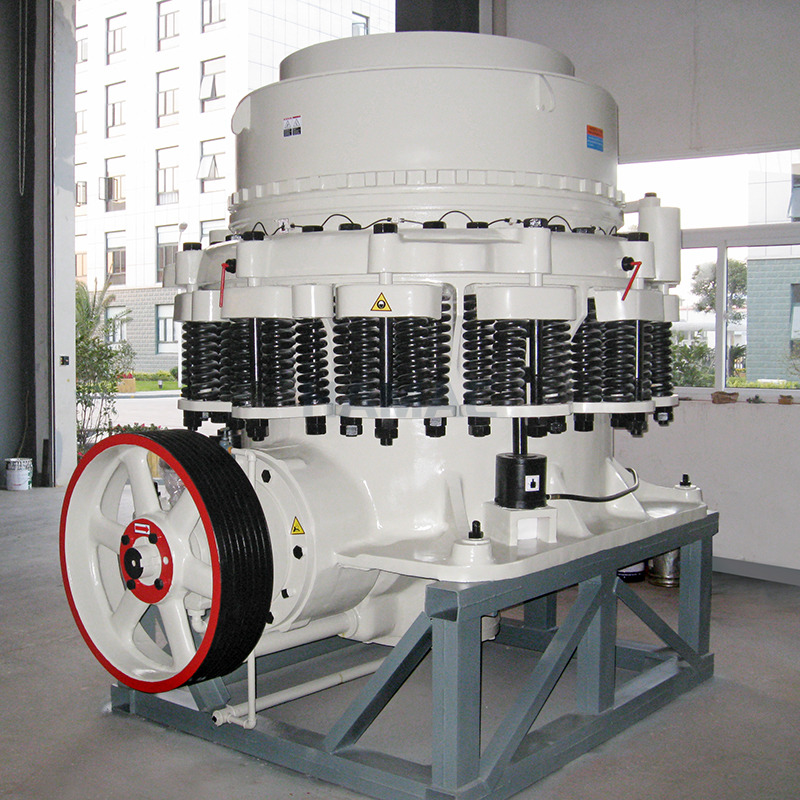
What drives the price
- Model size and rated capacity — larger rotors / chambers cost more.
- Mobility: stationary < wheel-mounted < tracked (tracked adds hydraulic & engine cost).
- Motor specification and starter (soft-start / VFD) and local voltage.
- Wear-parts grade (Mn13 / Mn18 / Mn22 / high-chrome) and spare-parts package.
- Control system: relay panel vs PLC with remote monitoring.
Typical price brackets
Entry models for contractor use start in the low five-figure USD range; mid-size export configurations are typically six-figure; large tracked or fully automated lines are higher. Exact numbers depend on the technical specification — request a written quotation rather than a ballpark.
How to get an accurate quote
Send material, feed size, target t/h and product sizes. HAMAC returns a flow sheet, equipment list and FOB / CFR / CIF price within 24 hours.
Reference data for this configuration
| Parameter | Reference value |
|---|---|
| Machine line | HP Hydraulic Cone Crusher |
| Category | Cone Crusher |
| Assumed duty | seasonal road-project supply |
| Evaluation horizon | single-project view |
Use the table as a checklist when comparing quotations for hp hydraulic cone crusher — a lower price often means one of these parameters was quietly reduced.
Published HP Hydraulic Cone Crusher model data
| Model | Crushing Chamber | Standard type | Short head type | Power | Capacity |
|---|---|---|---|---|---|
| Feeding opening | Min. Discharge opening | Feeding opening | Min. Discharge opening | ||
| HPT200 | Extra Coarse(EC) | ||||
| Coarse(C) | 185 mm | 19 mm | 76 mm | 10 mm | |
| Medium(M) | 125 mm | 17 mm | 54 mm | 6 mm | |
| Fine(F) | 95 mm | 13 mm | 23 mm | 6 mm | |
| Extra fine(EF) | 10 mm | 5 mm | |||
| HPT300 | Extra Coarse(EC) | 230 mm | 25 mm | ||
| Coarse(C) | 210 mm | 20 mm | 10 mm |
HP Series of highly efficient Hydraulic Cone Crusher is a world-level cone crusher introduced with the up-to-the-minute technology of Germany. Read the table column by column against seasonal road-project supply: the model you pick is the one whose published range brackets your target tonnage, not simply the largest machine in the series. Availability, motor rating and shipping data are re-confirmed for a confined urban yard in the written HAMAC proposal.
Project profile these notes assume
| Assumption | Value |
|---|---|
| Operating duty | seasonal road-project supply |
| Primary objective | lowest energy per tonne |
| Evaluation horizon | single-project view |
| Site condition | a confined urban yard |
| Operating team | a full-time plant team |
Change any one of these assumptions and the recommended configuration for hp hydraulic cone crusher may change. HAMAC re-runs the same checks against your own numbers once the enquiry data sheet is received.
From enquiry to the first saleable tonne
- Review the crusher chamber profile with the liner supplier against the feed material.
- Commission with graded load, sample the product grading, then train operators on liner change-out and daily checks.
- Choose compression or impact reduction according to hardness, silica content and required particle shape.
- Verify the electrical single-line diagram, cable sizing and starter type with the local utility.
- Include dust suppression, guarding, emergency stops and lock-out points in the layout drawing.
- Confirm site voltage, frequency and applicable conformity standards before manufacture.
- Set the closed-side setting or rotor speed against the required product fractions, then verify the expected reduction ratio.
- Log tonnes per liner set and kWh per tonne from day one so you have a real cost baseline within a quarter.
- Plan training for a full-time plant team on CSS adjustment, liner change-out and lock-out / tag-out.
A HAMAC project manager stays with the order from the first data sheet through hand-over in your market.
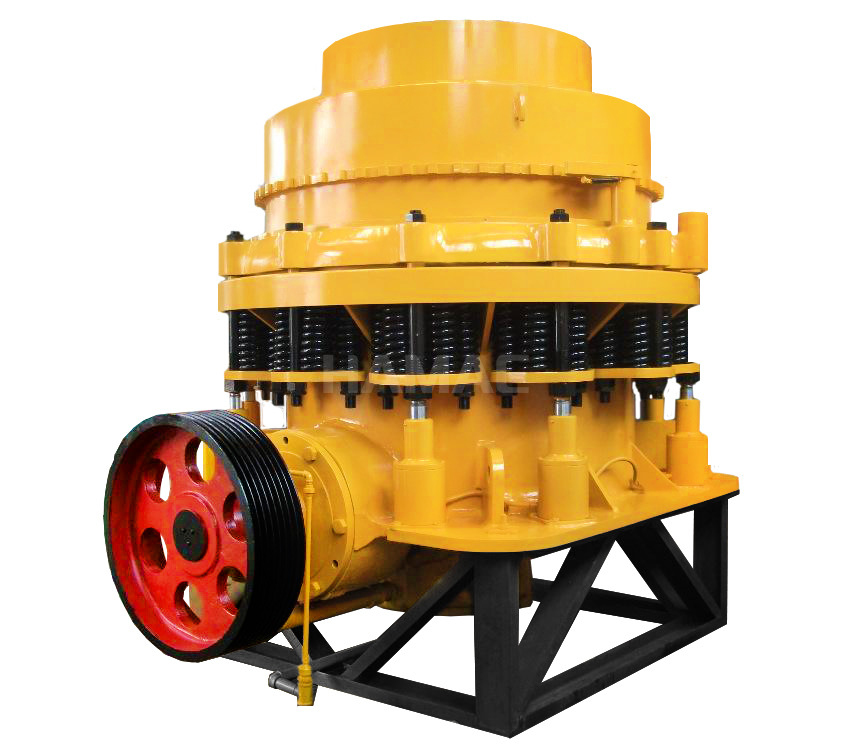
What to verify before you sign
- Liner alloy: Mn18 with ceramic inserts matched to the rock, not to the lowest purchase price.
- Nameplate data for local voltage, frequency and the applicable conformity scheme.
- Decommissioning or relocation value at the end of a single-project horizon.
- Choke-feed arrangement: surge bin, feeder control and level indication.
- Product sampling points and the lab equipment needed for routine grading checks.
- Tramp-iron protection — hydraulic release, magnet and metal detection on the feed belt.
- Ambient temperature, altitude and dust load derating for motors and hydraulics.
- Closed-side setting range and whether automatic setting regulation is included.
- Spare motor, gearbox and hydraulic pump lead times from the nearest HAMAC stock point.
Bring this list to the design review — it is cheaper to resolve an omission on paper than during commissioning.
Where the money actually goes
| Cost line | Indicative share | What moves the number |
|---|---|---|
| Equipment & drive packages | 54% | Model size, number of stages and automation level |
| Ocean freight & insurance | 8% | Destination port, container count and out-of-gauge cargo |
| Civil works & foundations | 8% | Soil conditions, dynamic loads and site preparation |
| Erection, commissioning & training | 7% | Local labour, supervision scope and schedule |
| First-year wear parts | 15% | Rock abrasiveness, liner grade and operating hours |
| Power, lubricants & consumables | 8% | kWh per tonne, local tariff and dust suppression water |
Freight to your market is volatile; ask for the quotation to state validity and the port basis rather than a single delivered number.
Mistakes that cost more than the machine
- Specifying motors for the wrong voltage or frequency and rewinding them on site.
- Skipping the acceptance test, so no one has a baseline to measure degradation against.
- Leaving tramp-iron protection out of the scope to save a small percentage of capital.
- Choosing screen apertures before the concrete or asphalt mix design is fixed.
- Ordering no spares with the plant and waiting six weeks for the first liner set.
- Overlooking dust, noise and water permits in your market until erection has already started.
- Using one liner profile for both secondary and tertiary stages.
- Letting the seasonal road-project supply duty be defined verbally instead of in the contract.
On a confined urban yard, the civil and logistics items deserve as much attention as the crusher itself.
Commissioning checklist
- Verify chute liners, skirt rubber and impact bars after the first hour of feed.
- Sample each product fraction and compare with the specification.
- Record the baseline grading curve for each product fraction.
- Introduce feed in graded steps: 25%, 50%, 75%, then full load.
- Confirm the direction and tension of every belt under no load.
- Measure and log the as-new CSS / setting for future wear comparison.
- Check lubrication levels, grease lines and oil cooler operation.
- Measure noise and dust at the operator position against the local limit.
The commissioning record becomes the reference for every liner change in the single-project plan.