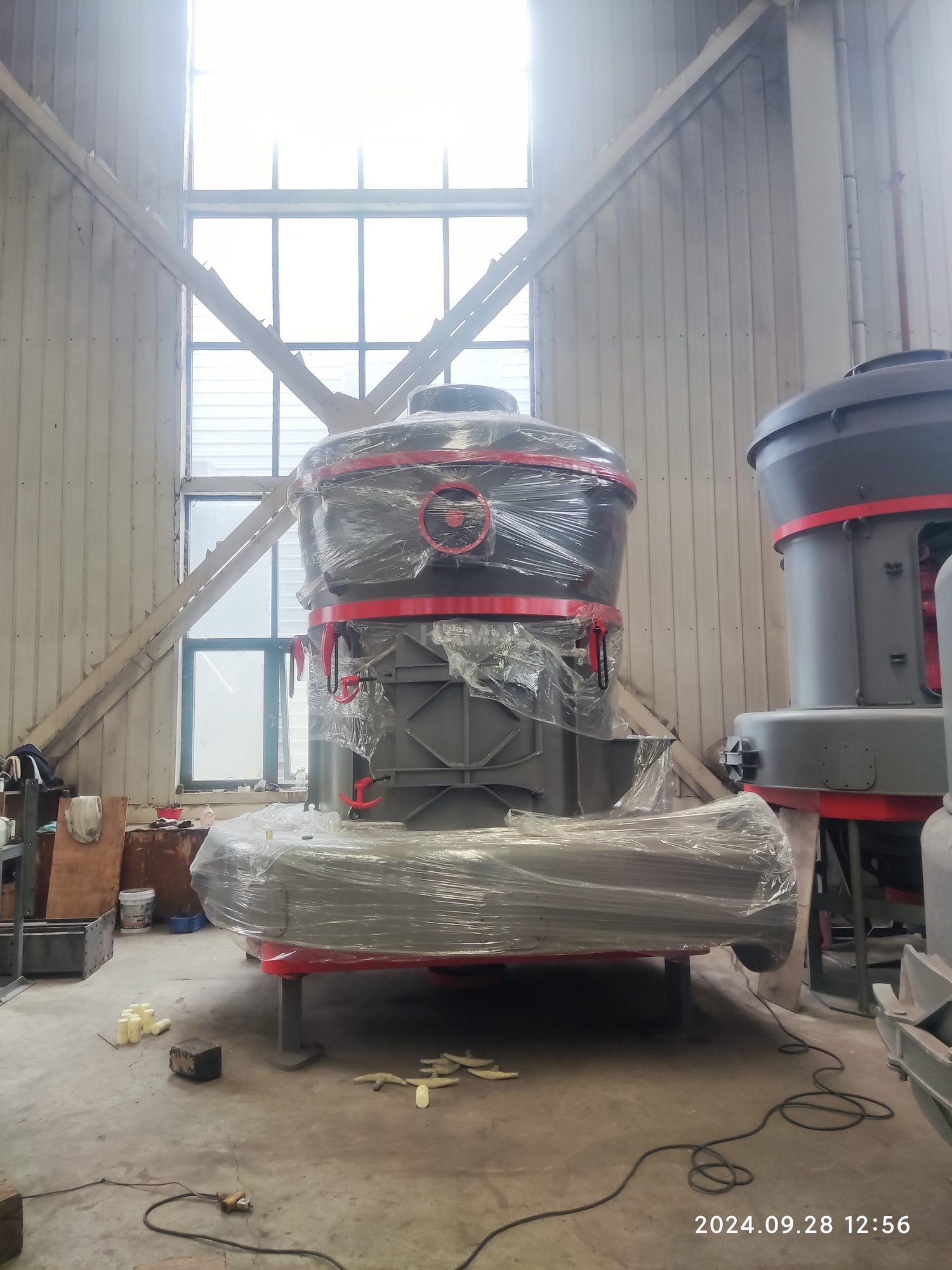
Overview
Wear parts are the largest variable cost on a LM Vertical Coal Mill. HAMAC supplies matched consumables and a recommended stock list with every plant.
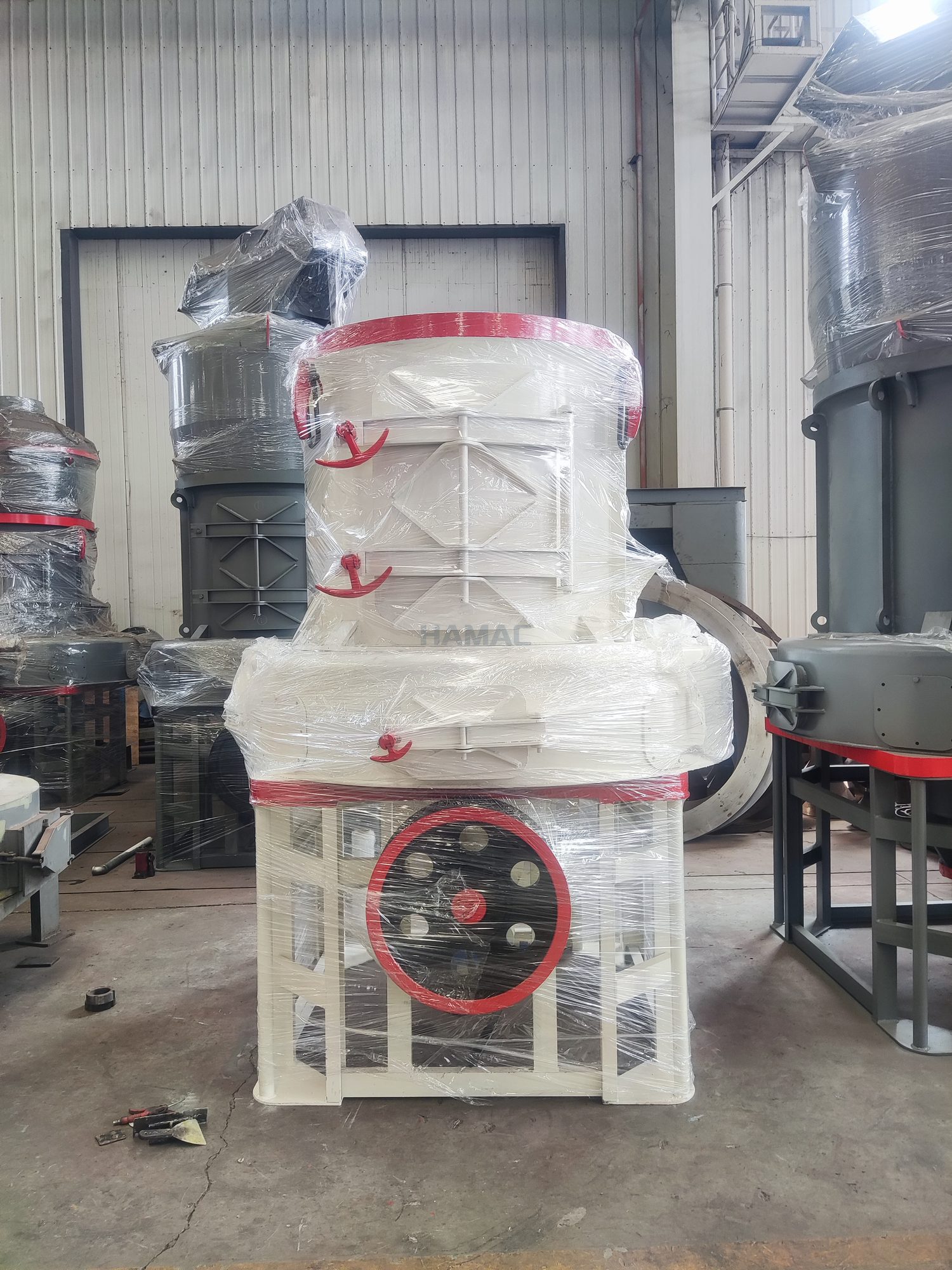
Main consumables
- Chamber liners / blow bars / Impact plates.
- Rotors, distributor plates and anvils (VSI).
- Screen meshes for every deck.
- Belts, bearings, seals and sensors.
Liner material grade
Mn13 / Mn18 / Mn22 work-harden under impact; high-chrome resists abrasion in low-impact duties. Choice follows the rock, not the price.
Recommended stock
- One full set of chamber liners or blow bars.
- Screen meshes for every deck.
- Belts, bearings and seals.
- Electrical consumables and sensors.
Reference data for this configuration
| Parameter | Reference value |
|---|---|
| Feed material | Coal |
| Mohs hardness | 2 |
| Compressive strength | ~40 MPa |
| Abrasiveness | Low |
| Recommended circuit | impact / jaw with gentle reduction |
| Machine line | LM Vertical Coal Mill |
| Category | Grinding Mills |
| Assumed duty | high-tonnage aggregate supply |
| Evaluation horizon | seven-year view |
At high-tonnage aggregate supply, the ranking of these parameters changes: strict product cubicity usually becomes the deciding constraint rather than the headline tonnage.
Published LM Vertical Coal Mill model data
| Parameter | Typical value | Engineering note |
|---|---|---|
| Finished fineness | 20-400 mesh (0.8-0.045 mm) | Set at the classifier |
| Nominal capacity | 3-60 t/h | Varies with material and moisture |
| Maximum feed size | 30-50 mm | Requires pre-crushing |
| Typical materials | Limestone, calcite, gypsum, talc, barite | Mohs <= 7, moisture <= 6% |
| Power supply | 380 / 415 / 440 V, 50 or 60 Hz | Configured to destination grid |
LM Vertical Coal Mill for limestone, calcite, barite, gypsum, talc, dolomite, kaolin and coal powder projects, producing 20-400 mesh (0.8-0.045 mm) at 3-60 t/h with an integrated classifier and dust collection. Read the table column by column against high-tonnage aggregate supply: the model you pick is the one whose published range brackets your target tonnage, not simply the largest machine in the series. Availability, motor rating and shipping data are re-confirmed for a confined urban yard in the written HAMAC proposal.
Project profile these notes assume
| Assumption | Value |
|---|---|
| Operating duty | high-tonnage aggregate supply |
| Primary objective | strict product cubicity |
| Evaluation horizon | seven-year view |
| Site condition | a confined urban yard |
| Operating team | a rotating shift crew |
Change any one of these assumptions and the recommended configuration for lm vertical coal mill may change. HAMAC re-runs the same checks against your own numbers once the enquiry data sheet is received.
From enquiry to the first saleable tonne
- Size the primary stage for your target tonnage with a 10–20% surge allowance — never on nameplate throughput alone.
- Confirm the haul-road and stockpile plan with a confined urban yard in mind before fixing conveyor lengths.
- Define the acceptance test: sampling points, test duration, moisture range and who signs the protocol.
- Book shipping, prepare the packing list and confirm the container loading plan.
- Allocate screen area per deck; blinding and pegging are the most common hidden bottlenecks in a new plant.
- Review the crusher chamber profile with the liner supplier against Coal (Mohs 2, ~40 MPa, low abrasion).
- Commission with graded load, sample the product grading, then train operators on liner change-out and daily checks.
- Include dust suppression, guarding, emergency stops and lock-out points in the layout drawing.
- Plan training for a rotating shift crew on CSS adjustment, liner change-out and lock-out / tag-out.
Shortening this sequence is possible on a confined urban yard, but only where the feed and product specification are already fully defined.
What to verify before you sign
- Closed-side setting range and whether automatic setting regulation is included.
- Choke-feed arrangement: surge bin, feeder control and level indication.
- Delivery terms (FOB / CFR / CIF) with the destination port named explicitly.
- Access for liner change-out — crane radius, lifting points and clearance around the chamber.
- Energy draw in kW and the expected kWh per tonne at the design duty.
- Liner alloy: high-chrome iron is a common starting point for coal at low abrasion.
- Spare-parts consignment: one full liner or blow-bar set plus meshes, belts, bearings and seals.
- Control system language, telemetry and remote diagnostics availability.
- Guaranteed power draw and the strict product cubicity trade-off it implies.
These are the items HAMAC puts in the technical proposal; if another offer is silent on them, ask why.
Where the money actually goes
| Cost line | Indicative share | What moves the number |
|---|---|---|
| Equipment & drive packages | 55% | Model size, number of stages and automation level |
| Ocean freight & insurance | 9% | Destination port, container count and out-of-gauge cargo |
| Civil works & foundations | 9% | Soil conditions, dynamic loads and site preparation |
| Erection, commissioning & training | 7% | Local labour, supervision scope and schedule |
| First-year wear parts | 13% | Rock abrasiveness, liner grade and operating hours |
| Power, lubricants & consumables | 7% | kWh per tonne, local tariff and dust suppression water |
On high-tonnage aggregate supply, the strict product cubicity objective changes which line deserves the most attention during value engineering.
Mistakes that cost more than the machine
- Specifying motors for the wrong voltage or frequency and rewinding them on site.
- Skipping the acceptance test, so no one has a baseline to measure degradation against.
- Choosing screen apertures before the concrete or asphalt mix design is fixed.
- Forgetting surge capacity — an intermittent loader starves the chamber and ruins particle shape.
- Letting the high-tonnage aggregate supply duty be defined verbally instead of in the contract.
- Omitting a bypass chute, so a single screen fault stops the whole line.
- Ignoring clay and moisture until the first wet season, when decks blind and chambers pack.
- Assuming a mobile plant can match a stationary line on high-tonnage, multi-product duty.
Every item on this list has cost someone a commissioning date; none of them requires new technology to avoid.
Commissioning checklist
- Record the baseline grading curve for each product fraction.
- Verify rotation direction on every motor before coupling.
- Hand over the spare-parts list, manuals and maintenance schedule.
- Test emergency stops, pull wires and interlock trips in sequence.
- Check hydraulic pressure, accumulator pre-charge and tramp-release function.
- Introduce feed in graded steps: 25%, 50%, 75%, then full load.
- Confirm all guards, emergency stops and pull-wire switches function.
- Agree the punch list, sign the hand-over protocol and file the as-built drawings.
Keep the signed record; it is the only defensible baseline for later performance disputes.