Overview
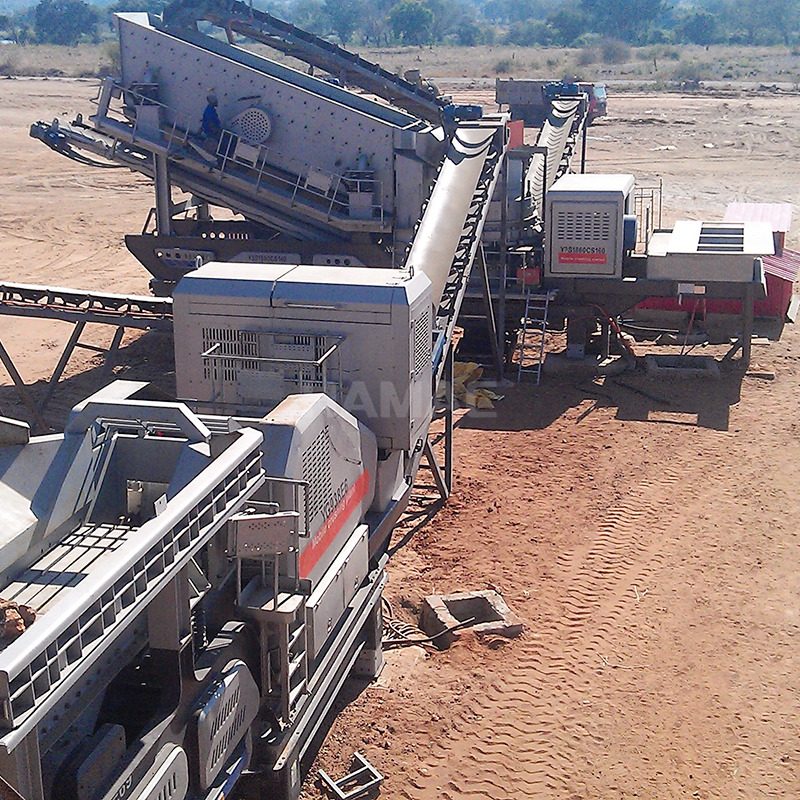
Water sprays, enclosures and filtration used to control airborne particulate at transfer points.
Why it matters in practice
- Wet sprays suit most quarries
- Baghouse for dry or enclosed plants
- Design to local emission limits
Applying it to plant selection
Engineers use dust suppression and baghouse together with feed gradation, moisture content and target tonnage when fixing the flow sheet. HAMAC records the value in the project data sheet so the equipment list, liner grade and motor rating can be checked against the written performance guarantee.
Reference data for this configuration
| Parameter | Reference value |
|---|---|
| Assumed duty | seasonal road-project supply |
| Evaluation horizon | ten-year view |
At seasonal road-project supply, the ranking of these parameters changes: simple operator maintenance usually becomes the deciding constraint rather than the headline tonnage.
Project profile these notes assume
| Assumption | Value |
|---|---|
| Operating duty | seasonal road-project supply |
| Primary objective | simple operator maintenance |
| Evaluation horizon | ten-year view |
| Site condition | a greenfield site |
| Operating team | a mixed local and expatriate team |
Change any one of these assumptions and the recommended configuration for the crushing and screening plant may change. HAMAC re-runs the same checks against your own numbers once the enquiry data sheet is received.
From enquiry to the first saleable tonne
- Review the crusher chamber profile with the liner supplier against the feed material.
- Survey the feed: the feed material; record top size, bulk density, moisture and clay content before fixing the flow sheet.
- Record the as-built settings and give the operator a written daily, weekly and monthly schedule.
- Choose compression or impact reduction according to hardness, silica content and required particle shape.
- Allocate screen area per deck; blinding and pegging are the most common hidden bottlenecks in a new plant.
- Verify the electrical single-line diagram, cable sizing and starter type with the local utility.
- Lay out conveyors, access ways, stockpile capacity and drainage before ordering steelwork.
- Include dust suppression, guarding, emergency stops and lock-out points in the layout drawing.
- Run a sieve analysis on a representative sample and attach the grading curve to the enquiry.
For a mixed local and expatriate team, the commissioning and training steps need more calendar time than the mechanical erection itself.
What to verify before you sign
- Saleable tonnes per hour at each product size, not gross crusher throughput, for your target tonnage.
- Whether the quoted t/h is achieved at seasonal road-project supply or under ideal laboratory feed.
- Tramp-iron protection — hydraulic release, magnet and metal detection on the feed belt.
- Spare-parts consignment: one full liner or blow-bar set plus meshes, belts, bearings and seals.
- Guaranteed power draw and the simple operator maintenance trade-off it implies.
- Ambient temperature, altitude and dust load derating for motors and hydraulics.
- Written performance guarantee, sampling method and acceptance-test protocol.
- Energy draw in kW and the expected kWh per tonne at the design duty.
- Screen deck count, aperture and area; ask for the efficiency calculation, not just the mesh size.
For seasonal road-project supply, give the simple operator maintenance line extra weight; a generic checklist will not rank the offers correctly.
Where the money actually goes
| Cost line | Indicative share | What moves the number |
|---|---|---|
| Equipment & drive packages | 54% | Model size, number of stages and automation level |
| Ocean freight & insurance | 8% | Destination port, container count and out-of-gauge cargo |
| Civil works & foundations | 8% | Soil conditions, dynamic loads and site preparation |
| Erection, commissioning & training | 7% | Local labour, supervision scope and schedule |
| First-year wear parts | 15% | Rock abrasiveness, liner grade and operating hours |
| Power, lubricants & consumables | 8% | kWh per tonne, local tariff and dust suppression water |
Treat the percentages as a budgeting shape, not a quotation: HAMAC prices the equipment list in writing once the flow sheet is fixed.
Mistakes that cost more than the machine
- Letting the seasonal road-project supply duty be defined verbally instead of in the contract.
- Omitting a bypass chute, so a single screen fault stops the whole line.
- Overlooking dust, noise and water permits in your market until erection has already started.
- Assuming a mobile plant can match a stationary line on high-tonnage, multi-product duty.
- Ordering no spares with the plant and waiting six weeks for the first liner set.
- Planning the crusher but not the conveyors, transfer chutes and stockpile capacity around it.
- Leaving tramp-iron protection out of the scope to save a small percentage of capital.
- Comparing quotations with different port terms and calling the lower number cheaper.
Every item on this list has cost someone a commissioning date; none of them requires new technology to avoid.
Commissioning checklist
- Measure noise and dust at the operator position against the local limit.
- Introduce feed in graded steps: 25%, 50%, 75%, then full load.
- Dry-run the plant empty for the specified period and record vibration.
- Verify chute liners, skirt rubber and impact bars after the first hour of feed.
- Calibrate the belt scale and any level probes against a known load.
- Agree the punch list, sign the hand-over protocol and file the as-built drawings.
- Check belt tracking, chute build-up and transfer-point dust.
- Hand over the spare-parts list, manuals and maintenance schedule.
The commissioning record becomes the reference for every liner change in the ten-year plan.