Overview
Practical, numbers-first guidance on the Mobile Cone Crusher Plant — written for engineers specifying, buying and running crushing plants.
Abnormal noise / vibration
- Check for loose liner bolts or foreign metal in feed.
- Verify foundation bolts and coupling alignment.
- Listen for bearing distress; schedule replacement.
Low output
- Worn liners / blow bars reduce reduction.
- Wrong CSS / setting for target product.
- Screen blinding limits throughput.
Poor product shape
- Increase reduction in the shaping stage.
- Verify VSI rotor speed / anvil.
- Re-check screen mesh.
Reference data for this configuration
| Parameter | Reference value |
|---|---|
| Machine line | Mobile Cone Crusher Plant |
| Category | Wheel Type Mobile Crushers |
| Assumed duty | mine pre-beneficiation feed |
| Evaluation horizon | single-project view |
Treat this as a living sheet. Every revision of the flow sheet for your market should update the same fields so the equipment list stays traceable.
Published Mobile Cone Crusher Plant model data
| Model | MC75 | MC160 | MC300 |
|---|---|---|---|
| Transportation Length | 14000 mm | 14500 mm | 14500 mm |
| Transportation Width | 3100 mm | 3100 mm | 3100 mm |
| Transportation Height | 4300 mm | 4500 mm | 4500 mm |
| Weight | 38.2 t | 49.5 t | 43 t |
| Axles | Double | Double | Three |
| Cone Crusher | 3FT | 4.25FT | HP300 |
| Belt Conveyor for Discharging | B650×7M | B800×7.5M | B800×7.5M |
| Belt Conveyor for Return Material 1# | B650×9.5M | B800×9.5M | B800×9.5M |
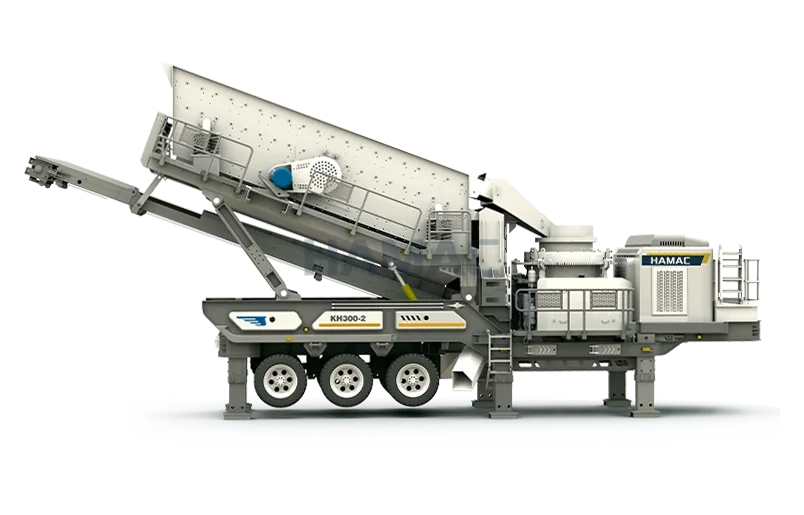
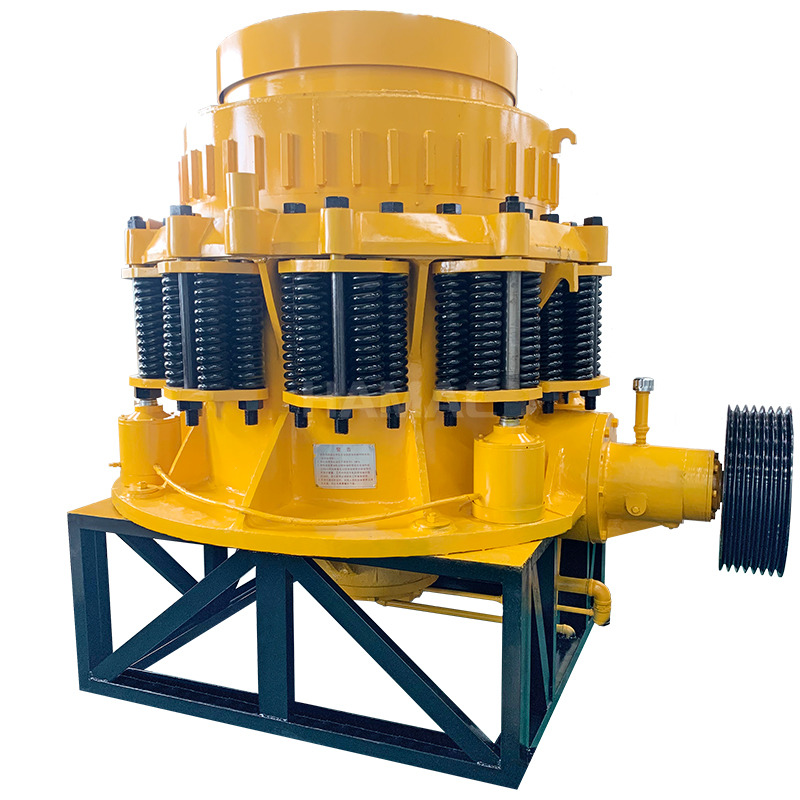
Mobile cone crushing plant is a new type of rock crusher, designed to overcome ground and environmental obstacles. Read the table column by column against mine pre-beneficiation feed: the model you pick is the one whose published range brackets your target tonnage, not simply the largest machine in the series. Availability, motor rating and shipping data are re-confirmed for a confined urban yard in the written HAMAC proposal.
Project profile these notes assume
| Assumption | Value |
|---|---|
| Operating duty | mine pre-beneficiation feed |
| Primary objective | maximum mechanical availability |
| Evaluation horizon | single-project view |
| Site condition | a confined urban yard |
| Operating team | a full-time plant team |
Change any one of these assumptions and the recommended configuration for mobile cone crusher plant may change. HAMAC re-runs the same checks against your own numbers once the enquiry data sheet is received.
From enquiry to the first saleable tonne
- Set the maintenance stock list from the expected wear rate, not from a percentage of the equipment price.
- Run a sieve analysis on a representative sample and attach the grading curve to the enquiry.
- Confirm site voltage, frequency and applicable conformity standards before manufacture.
- Verify the electrical single-line diagram, cable sizing and starter type with the local utility.
- Check bearing and lubrication arrangements against the ambient temperature range at the site.
- Confirm the haul-road and stockpile plan with a confined urban yard in mind before fixing conveyor lengths.
- Size the primary stage for your target tonnage with a 10–20% surge allowance — never on nameplate throughput alone.
- Define the acceptance test: sampling points, test duration, moisture range and who signs the protocol.
- Set the closed-side setting or rotor speed against the required product fractions, then verify the expected reduction ratio.
For a full-time plant team, the commissioning and training steps need more calendar time than the mechanical erection itself.
What to verify before you sign
- Choke-feed arrangement: surge bin, feeder control and level indication.
- Ambient temperature, altitude and dust load derating for motors and hydraulics.
- Erection scope: supervision only, or full civil, mechanical and electrical installation.
- Spare motor, gearbox and hydraulic pump lead times from the nearest HAMAC stock point.
- Wear-part interchangeability across machines in the same circuit.
- Nameplate data for local voltage, frequency and the applicable conformity scheme.
- Decommissioning or relocation value at the end of a single-project horizon.
- Liner alloy: Mn18 with ceramic inserts matched to the rock, not to the lowest purchase price.
- Dust and noise control designed to the local emission limits for your market.
Bring this list to the design review — it is cheaper to resolve an omission on paper than during commissioning.
Where the money actually goes
| Cost line | Indicative share | What moves the number |
|---|---|---|
| Equipment & drive packages | 54% | Model size, number of stages and automation level |
| Ocean freight & insurance | 8% | Destination port, container count and out-of-gauge cargo |
| Civil works & foundations | 8% | Soil conditions, dynamic loads and site preparation |
| Erection, commissioning & training | 7% | Local labour, supervision scope and schedule |
| First-year wear parts | 15% | Rock abrasiveness, liner grade and operating hours |
| Power, lubricants & consumables | 8% | kWh per tonne, local tariff and dust suppression water |
Include downtime in the model. An unplanned liner change on a remote site costs far more than the casting itself.
Mistakes that cost more than the machine
- Planning the crusher but not the conveyors, transfer chutes and stockpile capacity around it.
- Comparing quotations with different port terms and calling the lower number cheaper.
- Forgetting surge capacity — an intermittent loader starves the chamber and ruins particle shape.
- Buying maximum mechanical availability on price alone and losing it in availability.
- Letting the mine pre-beneficiation feed duty be defined verbally instead of in the contract.
- Skipping the acceptance test, so no one has a baseline to measure degradation against.
- Leaving tramp-iron protection out of the scope to save a small percentage of capital.
- Undersizing the screen, then blaming the crusher for a plant that never reaches your target tonnage.
Every item on this list has cost someone a commissioning date; none of them requires new technology to avoid.
Commissioning checklist
- Check hydraulic pressure, accumulator pre-charge and tramp-release function.
- Test emergency stops, pull wires and interlock trips in sequence.
- Dry-run the plant empty for the specified period and record vibration.
- Record power draw, tonnage and chamber pressure at steady state.
- Check lubrication levels, grease lines and oil cooler operation.
- Sample each product fraction and compare with the specification.
- Check belt tracking, chute build-up and transfer-point dust.
- Record the baseline grading curve for each product fraction.
For a full-time plant team, run through this list twice — once with the supervisor and once without.