Overview
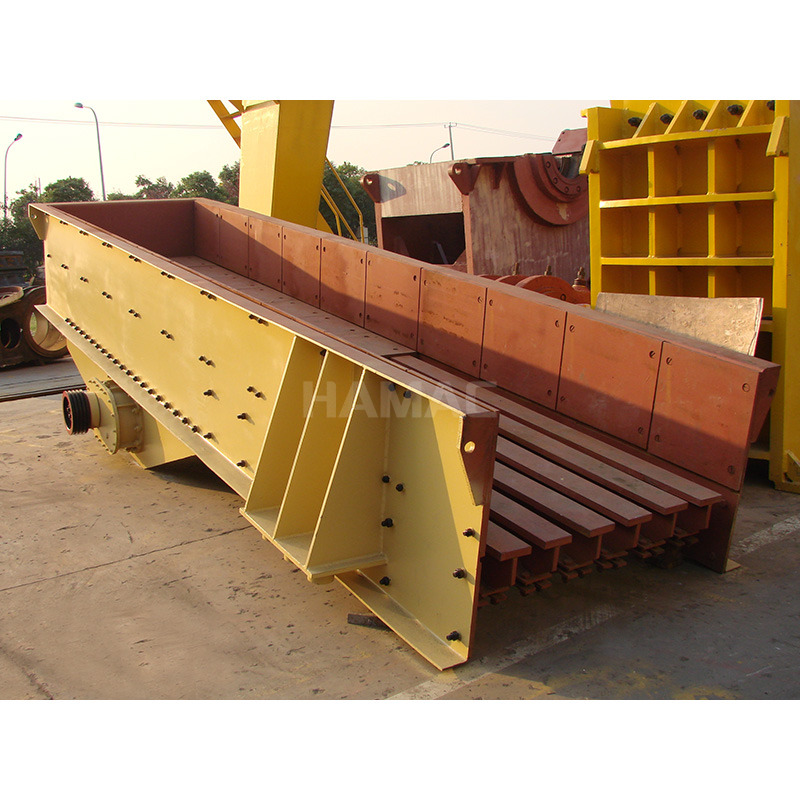
Mobile impact plants recover rebar-free aggregate from demolition concrete and RAP asphalt directly on site in Spain, cutting haulage and landfill cost.
Scope of supply
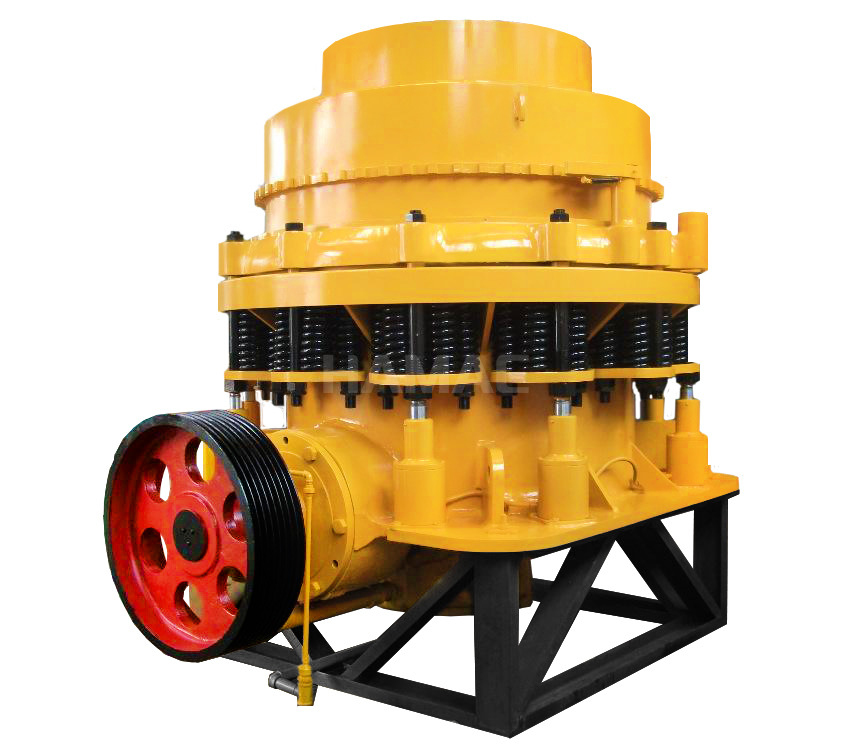
- Tracked or wheel impact crusher with a magnet.
- Grizzly / scalping screen to remove fines and soil.
- Air separation for light contaminants.
- Closed-loop water where washing is required.
- Product certification to local UNE EN grading.
Market parameters for Spain
| Item | Reference |
|---|---|
| Region | Europe |
| Port | Valencia |
| Voltage / frequency | 400V 50Hz |
| Standards | UNE EN |
| Typical feed | Limestone, Marble |
Reference data for this configuration
| Parameter | Reference value |
|---|---|
| Feed material | Concrete & asphalt |
| Mohs hardness | 3 |
| Compressive strength | ~50 MPa |
| Abrasiveness | Low |
| Recommended circuit | mobile impact + screen |
| Destination port | Valencia |
| Site supply | 400V 50Hz |
| Local standards | UNE EN |
| Region | Europe |
| Assumed duty | manufactured-sand production |
| Evaluation horizon | three-year view |
Ask for the same table from any competing supplier; without it, an offer for concrete & asphalt crushing cannot be compared on scope.
Project profile these notes assume
| Assumption | Value |
|---|---|
| Operating duty | manufactured-sand production |
| Primary objective | lowest cost per tonne |
| Evaluation horizon | three-year view |
| Site condition | a confined urban yard |
| Operating team | an owner-operator team |
Change any one of these assumptions and the recommended configuration for concrete & asphalt crushing may change. HAMAC re-runs the same checks against your own numbers once the enquiry data sheet is received.
From enquiry to the first saleable tonne
- Sequence delivery so foundations cure while the equipment is still in manufacture.
- Apply mobile impact + screen; the reduction mechanism must suit low abrasion and a compressive strength near 50 MPa.
- Commission with graded load, sample the product grading, then train operators on liner change-out and daily checks.
- Verify the electrical single-line diagram, cable sizing and starter type with the local utility.
- Record the as-built settings and give the operator a written daily, weekly and monthly schedule.
- Set the closed-side setting or rotor speed against the required product fractions, then verify the expected reduction ratio.
- Set the maintenance stock list from the expected wear rate, not from a percentage of the equipment price.
- Lay out conveyors, access ways, stockpile capacity and drainage before ordering steelwork.
- Define the acceptance test: sampling points, test duration, moisture range and who signs the protocol.
For an owner-operator team, the commissioning and training steps need more calendar time than the mechanical erection itself.
What to verify before you sign
- Written performance guarantee, sampling method and acceptance-test protocol.
- Energy draw in kW and the expected kWh per tonne at the design duty.
- Product sampling points and the lab equipment needed for routine grading checks.
- Wear-part interchangeability across machines in the same circuit.
- After-sales response time, technician availability and the warranty exclusions in writing.
- Access for liner change-out — crane radius, lifting points and clearance around the chamber.
- Availability of an owner-operator team for liner changes and the lifting equipment on site.
- Delivery terms (FOB / CFR / CIF) with the destination port named explicitly.
- Local service partner, technician travel time and visa requirements for Spain.
For manufactured-sand production, give the lowest cost per tonne line extra weight; a generic checklist will not rank the offers correctly.
Where the money actually goes
| Cost line | Indicative share | What moves the number |
|---|---|---|
| Equipment & drive packages | 53% | Model size, number of stages and automation level |
| Ocean freight & insurance | 11% | Destination port, container count and out-of-gauge cargo |
| Civil works & foundations | 8% | Soil conditions, dynamic loads and site preparation |
| Erection, commissioning & training | 7% | Local labour, supervision scope and schedule |
| First-year wear parts | 13% | Rock abrasiveness, liner grade and operating hours |
| Power, lubricants & consumables | 8% | kWh per tonne, local tariff and dust suppression water |
Model a low, base and high case for tonnes per liner set. The spread tells you more than a single optimistic estimate.
Mistakes that cost more than the machine
- Comparing quotations with different port terms and calling the lower number cheaper.
- Skipping the acceptance test, so no one has a baseline to measure degradation against.
- Ignoring clay and moisture until the first wet season, when decks blind and chambers pack.
- Forgetting surge capacity — an intermittent loader starves the chamber and ruins particle shape.
- Undersizing the screen, then blaming the crusher for a plant that never reaches your target tonnage.
- Planning the crusher but not the conveyors, transfer chutes and stockpile capacity around it.
- Overlooking dust, noise and water permits in Spain until erection has already started.
- Assuming the manufacturer's warranty covers wear parts and consumables.
Every item on this list has cost someone a commissioning date; none of them requires new technology to avoid.
Commissioning checklist
- Confirm the direction and tension of every belt under no load.
- Confirm all guards, emergency stops and pull-wire switches function.
- Check hydraulic pressure, accumulator pre-charge and tramp-release function.
- Verify rotation direction on every motor before coupling.
- Test emergency stops, pull wires and interlock trips in sequence.
- Check belt tracking, chute build-up and transfer-point dust.
- Measure and log the as-new CSS / setting for future wear comparison.
- Check lubrication levels, grease lines and oil cooler operation.
For an owner-operator team, run through this list twice — once with the supervisor and once without.