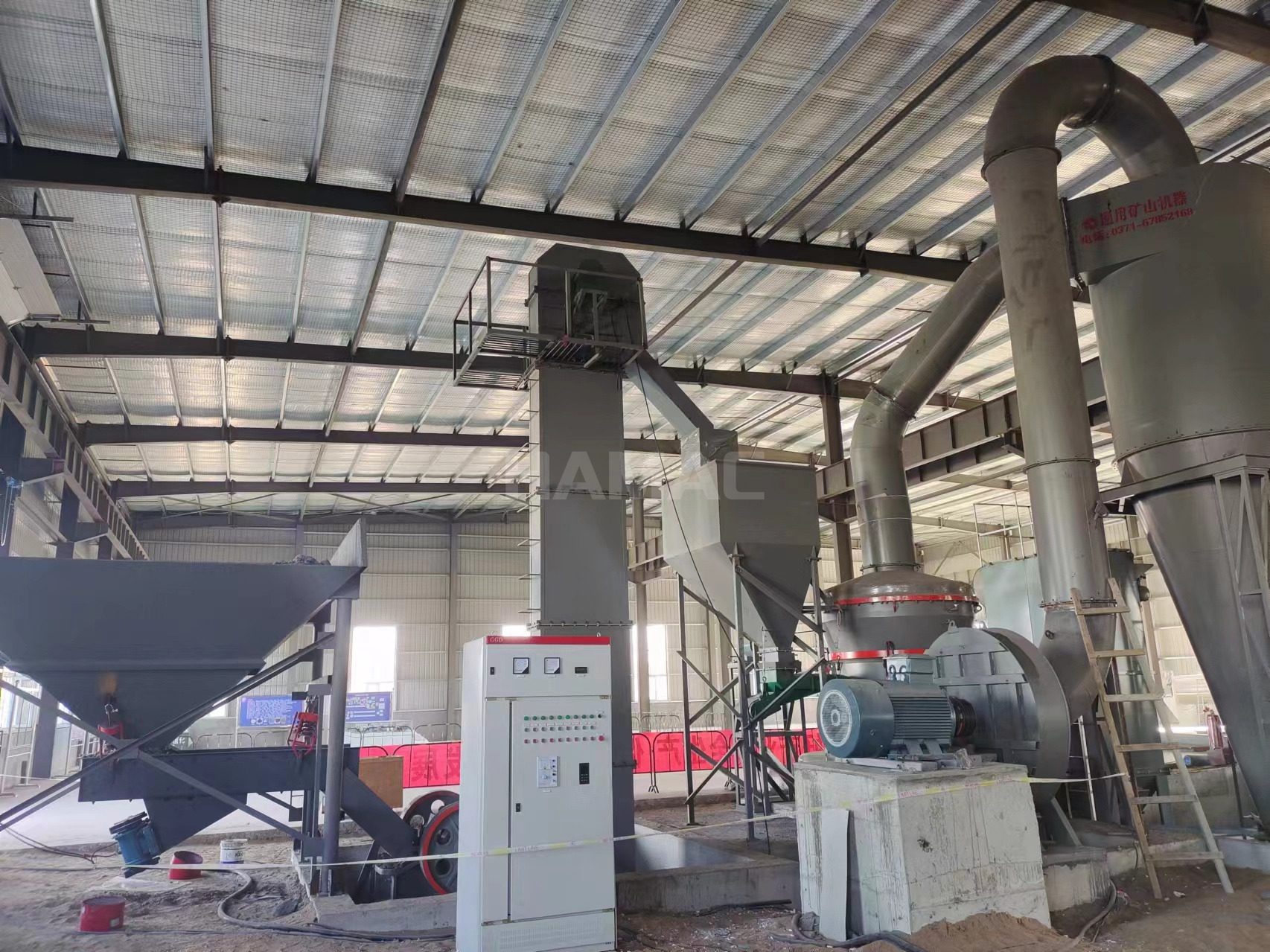
Overview
A above 800 tph plant for barite (Mohs 3, ~80 MPa, low abrasion). Recommended circuit: jaw + grinding mill.
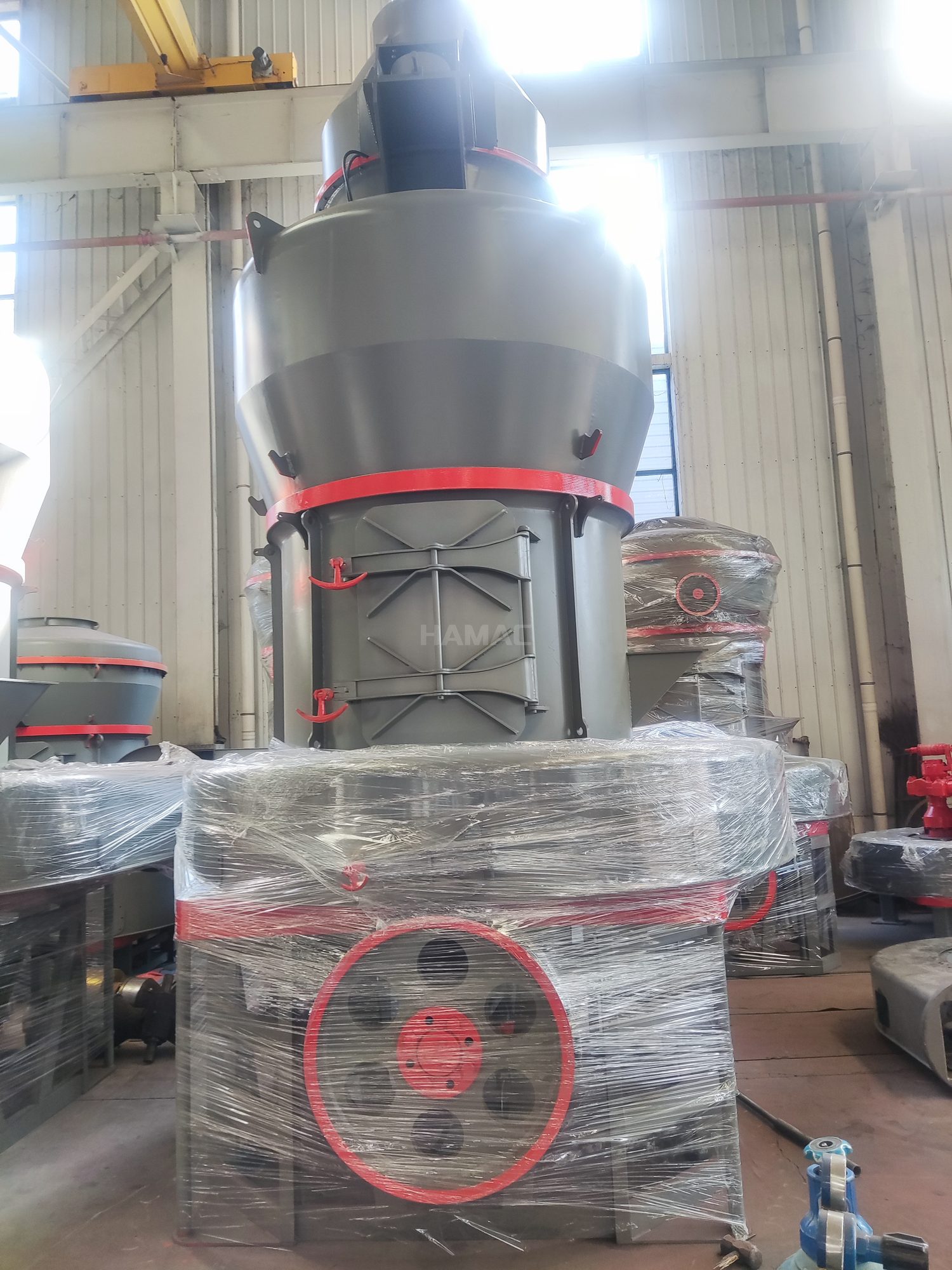
Barite at this scale
| Capacity | 800–1500 t/h |
|---|---|
| Material | Barite (Low abrasion) |
| Circuit | jaw + grinding mill |
Equipment
- PE Series Jaw Crusher
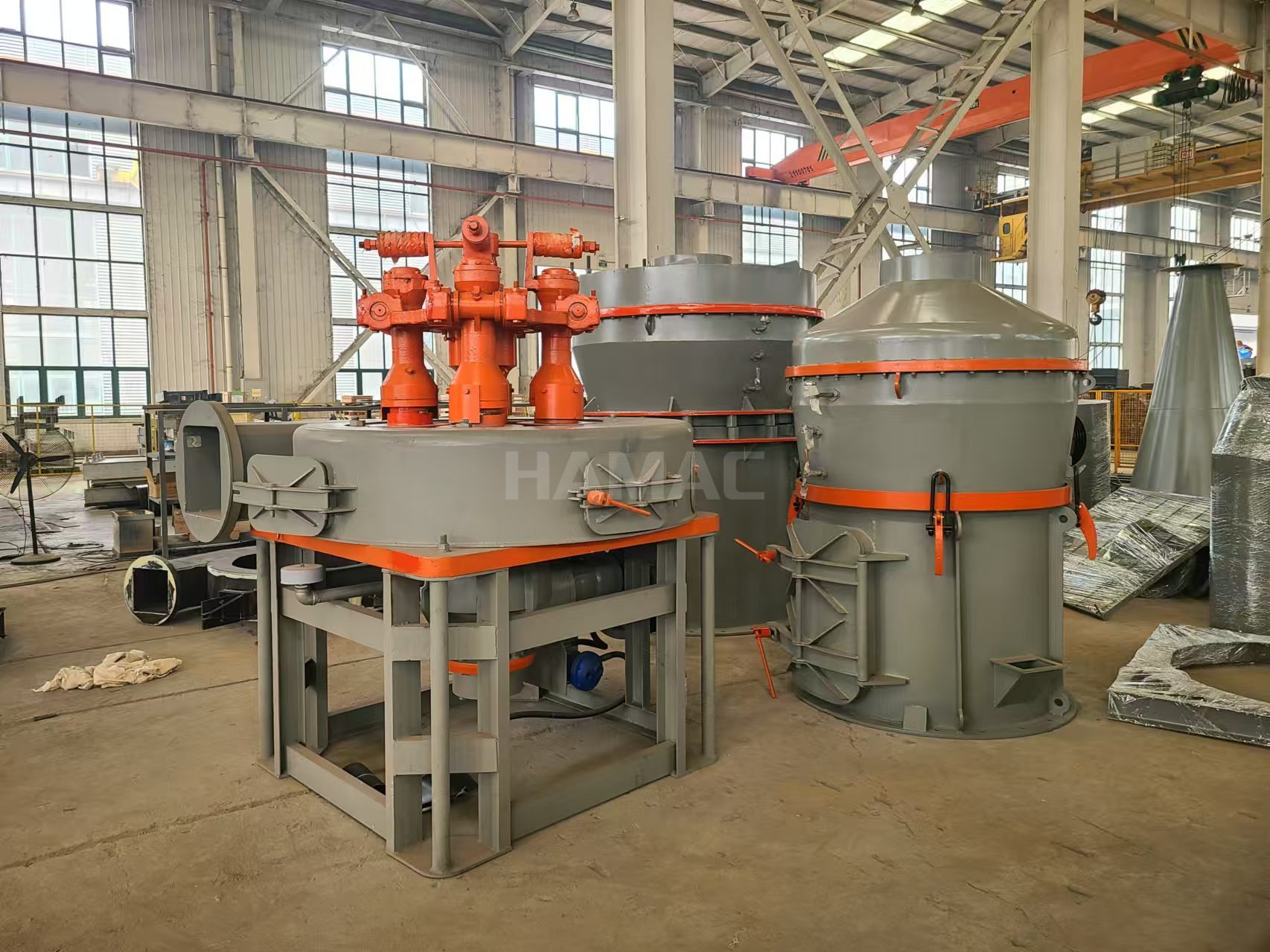
- MTW European Type Grinding Mill
Notes
Ground to 200+ mesh for drilling mud.
Reference data for this configuration
| Parameter | Reference value |
|---|---|
| Feed material | Barite |
| Mohs hardness | 3 |
| Compressive strength | ~80 MPa |
| Abrasiveness | Low |
| Recommended circuit | jaw + grinding mill |
| Design capacity | 800–1500 t/h |
| Typical main line | gyratory primary + SAG feed |
| Scale note | Mine-scale, often with HPGR. |
| Assumed duty | contract crushing on short-term sites |
| Evaluation horizon | seven-year view |
At contract crushing on short-term sites, the ranking of these parameters changes: minimal civil works usually becomes the deciding constraint rather than the headline tonnage.
Project profile these notes assume
| Assumption | Value |
|---|---|
| Operating duty | contract crushing on short-term sites |
| Primary objective | minimal civil works |
| Evaluation horizon | seven-year view |
| Site condition | a coastal export terminal |
| Operating team | a rotating shift crew |
Change any one of these assumptions and the recommended configuration for barite crushing may change. HAMAC re-runs the same checks against your own numbers once the enquiry data sheet is received.
From enquiry to the first saleable tonne
- Run a sieve analysis on a representative sample and attach the grading curve to the enquiry.
- Allocate screen area per deck; blinding and pegging are the most common hidden bottlenecks in a new plant.
- Check bearing and lubrication arrangements against the ambient temperature range at the site.
- Budget for water, dust extraction and spillage handling as part of the plant, not as an afterthought.
- Confirm site voltage, frequency and applicable conformity standards before manufacture.
- Book shipping, prepare the packing list and confirm the container loading plan.
- Review the crusher chamber profile with the liner supplier against Barite (Mohs 3, ~80 MPa, low abrasion).
- Apply jaw + grinding mill; the reduction mechanism must suit low abrasion and a compressive strength near 80 MPa.
- Record the as-built settings and give the operator a written daily, weekly and monthly schedule.
Each step has an owner and a document: flow sheet, general arrangement, foundation reference, packing list and acceptance protocol.
What to verify before you sign
- Energy draw in kW and the expected kWh per tonne at the design duty.
- Guaranteed power draw and the minimal civil works trade-off it implies.
- Dust and noise control designed to the local emission limits for your market.
- After-sales response time, technician availability and the warranty exclusions in writing.
- Screen deck count, aperture and area; ask for the efficiency calculation, not just the mesh size.
- Local service partner, technician travel time and visa requirements for your market.
- Maximum feed lump and gradation — a chamber that cannot accept the top size will bridge on day one.
- Spare-parts consignment: one full liner or blow-bar set plus meshes, belts, bearings and seals.
- Spare motor, gearbox and hydraulic pump lead times from the nearest HAMAC stock point.
Bring this list to the design review — it is cheaper to resolve an omission on paper than during commissioning.
Where the money actually goes
| Cost line | Indicative share | What moves the number |
|---|---|---|
| Equipment & drive packages | 57% | Model size, number of stages and automation level |
| Ocean freight & insurance | 8% | Destination port, container count and out-of-gauge cargo |
| Civil works & foundations | 8% | Soil conditions, dynamic loads and site preparation |
| Erection, commissioning & training | 7% | Local labour, supervision scope and schedule |
| First-year wear parts | 14% | Rock abrasiveness, liner grade and operating hours |
| Power, lubricants & consumables | 6% | kWh per tonne, local tariff and dust suppression water |
On contract crushing on short-term sites, the minimal civil works objective changes which line deserves the most attention during value engineering.
Mistakes that cost more than the machine
- Skipping the acceptance test, so no one has a baseline to measure degradation against.
- Skipping a geotechnical check and discovering settlement under the primary crusher at a coastal export terminal.
- Planning the crusher but not the conveyors, transfer chutes and stockpile capacity around it.
- Letting the contract crushing on short-term sites duty be defined verbally instead of in the contract.
- Leaving tramp-iron protection out of the scope to save a small percentage of capital.
- Selecting the cheapest liner alloy for hard, high-silica rock and paying for it in change-outs.
- Ignoring clay and moisture until the first wet season, when decks blind and chambers pack.
- Ordering no spares with the plant and waiting six weeks for the first liner set.
Review the list with a rotating shift crew before the order is placed — they will recognise most of them.
Commissioning checklist
- Check lubrication levels, grease lines and oil cooler operation.
- Confirm the direction and tension of every belt under no load.
- Check belt tracking, chute build-up and transfer-point dust.
- Measure noise and dust at the operator position against the local limit.
- Record the baseline grading curve for each product fraction.
- Sample each product fraction and compare with the specification.
- Confirm all guards, emergency stops and pull-wire switches function.
- Dry-run the plant empty for the specified period and record vibration.
Keep the signed record; it is the only defensible baseline for later performance disputes.