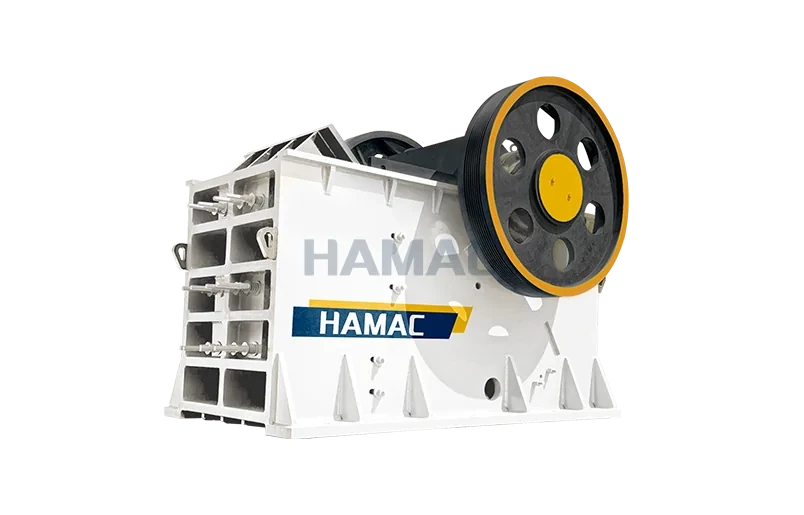
Overview
This page brings together the published PE Series Jaw Crusher model data and the practical details of importing it into Japan — power supply, standards, shipping and commissioning. Popular feed materials in the market include Granite, Limestone.
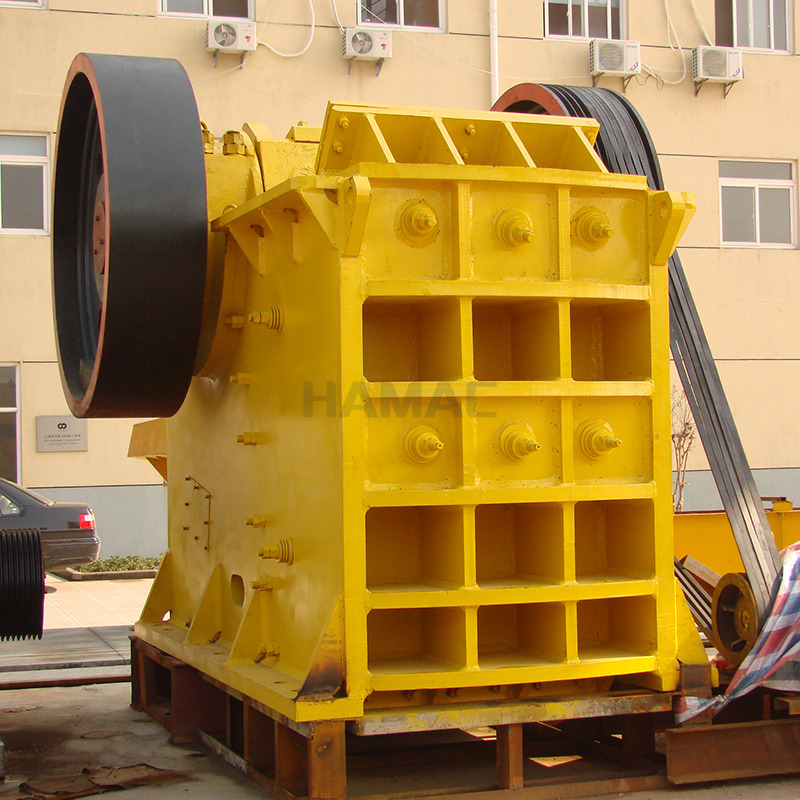
Published PE Series Jaw Crusher data
| Published parameter | Nominal value |
|---|---|
| PEX250x750 | 250x750 mm 210 mm |
| PEX250x1000 | 250x1000 mm 210 mm |
| PEX250x1200 | 250x1200 mm 210 mm |
| PEX300x1300 | 300x1300 mm 250 mm |
| PE400×600 | 400×600 mm 340 mm |
| PE500×750 | 500×750 mm 425 mm |
Local conditions in Japan
- Destination port: Yokohama.
- Site supply: 200V 50/60Hz.
- Standards: JIS.
- Common materials: Granite, Limestone.
- Region: Asia.
Delivery scope
HAMAC quotes FOB, CFR or CIF to Yokohama, sets motors and starters to 200V 50/60Hz, and supplies the certificate set applicable to JIS. Workshop assembly, test, container loading plan and installation supervision are included in a turnkey scope.
Reference data for this configuration
| Parameter | Reference value |
|---|---|
| Destination port | Yokohama |
| Site supply | 200V 50/60Hz |
| Local standards | JIS |
| Region | Asia |
| Machine line | PE Series Jaw Crusher |
| Category | Jaw Crusher |
| Assumed duty | continuous quarry production |
| Evaluation horizon | single-project view |
The figures above are transcribed from published HAMAC data and from the material properties of the feed; site measurements take precedence.
Published PE Series Jaw Crusher model data
| Model | Input Size | Max Feeding Size | Output Range | Capacity | Engine Power | Weight |
|---|---|---|---|---|---|---|
| PEX250x750 | 250x750 mm | 210 mm | 25-60 mm | 13-35 T/H | 30 KW | 5.5 T |
| PEX250x1000 | 250x1000 mm | 210 mm | 25-60 mm | 16-52 T/H | 37 KW | 7 T |
| PEX250x1200 | 250x1200 mm | 210 mm | 25-60 mm | 20-61 T/H | 55 KW | 9.5 T |
| PEX300x1300 | 300x1300 mm | 250 mm | 20-90 mm | 16-105 T/H | 75 KW | 15.6 T |
| PE400×600 | 400×600 mm | 340 mm | 40-100 mm | 16-60 T/H | 30 KW | 6.7 T |
| PE500×750 | 500×750 mm | 425 mm | 50-100 mm | 40-110 T/H | 55 KW | 11.7 T |
| PE600×900 | 600×900 mm | 500 mm | 65-180 mm | 80-180 T/H | 55-75 KW | 16.1 T |
| PE750×1060 | 750×1060 mm | 630 mm | 80-180 mm | 110-320 T/H | 90-110 KW | 30.1 T |
Jaw crushers are often used for primary crushing in mine material crushing. Read the table column by column against continuous quarry production: the model you pick is the one whose published range brackets your target tonnage, not simply the largest machine in the series. Availability, motor rating and shipping data are re-confirmed for a remote mine site in the written HAMAC proposal.
Project profile these notes assume
| Assumption | Value |
|---|---|
| Operating duty | continuous quarry production |
| Primary objective | lowest energy per tonne |
| Evaluation horizon | single-project view |
| Site condition | a remote mine site |
| Operating team | a rotating shift crew |
Change any one of these assumptions and the recommended configuration for pe series jaw crusher may change. HAMAC re-runs the same checks against your own numbers once the enquiry data sheet is received.
From enquiry to the first saleable tonne
- Survey the feed: the feed material; record top size, bulk density, moisture and clay content before fixing the flow sheet.
- Budget for water, dust extraction and spillage handling as part of the plant, not as an afterthought.
- Verify the electrical single-line diagram, cable sizing and starter type with the local utility.
- Size the primary stage for your target tonnage with a 10–20% surge allowance — never on nameplate throughput alone.
- Commission with graded load, sample the product grading, then train operators on liner change-out and daily checks.
- Specify motors, starters and documentation for 200V 50/60Hz and JIS before manufacture.
- Lay out conveyors, access ways, stockpile capacity and drainage before ordering steelwork.
- Set the closed-side setting or rotor speed against the required product fractions, then verify the expected reduction ratio.
- Plan training for a rotating shift crew on CSS adjustment, liner change-out and lock-out / tag-out.
The sequence is deliberately front-loaded — decisions taken before manufacture are cheap, changes made on site are not.
What to verify before you sign
- Delivery terms (FOB / CFR / CIF) with the destination port named explicitly.
- Maximum feed lump and gradation — a chamber that cannot accept the top size will bridge on day one.
- Control system language, telemetry and remote diagnostics availability.
- Ambient temperature, altitude and dust load derating for motors and hydraulics.
- Product sampling points and the lab equipment needed for routine grading checks.
- Written performance guarantee, sampling method and acceptance-test protocol.
- Dust and noise control designed to the local emission limits for Japan.
- Nameplate data for 200V 50/60Hz and the JIS certificate set.
- Decommissioning or relocation value at the end of a single-project horizon.
Score each supplier against the same ten items and keep the score sheet with the purchase file for the single-project review.
Where the money actually goes
| Cost line | Indicative share | What moves the number |
|---|---|---|
| Equipment & drive packages | 53% | Model size, number of stages and automation level |
| Ocean freight & insurance | 11% | Destination port, container count and out-of-gauge cargo |
| Civil works & foundations | 8% | Soil conditions, dynamic loads and site preparation |
| Erection, commissioning & training | 7% | Local labour, supervision scope and schedule |
| First-year wear parts | 14% | Rock abrasiveness, liner grade and operating hours |
| Power, lubricants & consumables | 7% | kWh per tonne, local tariff and dust suppression water |
Freight to Japan is volatile; ask for the quotation to state validity and the port basis rather than a single delivered number.
Mistakes that cost more than the machine
- Assuming the manufacturer's warranty covers wear parts and consumables.
- Overlooking dust, noise and water permits in Japan until erection has already started.
- Specifying motors for the wrong voltage or frequency and rewinding them on site.
- Undersizing the screen, then blaming the crusher for a plant that never reaches your target tonnage.
- Skipping the acceptance test, so no one has a baseline to measure degradation against.
- Letting the continuous quarry production duty be defined verbally instead of in the contract.
- Selecting the cheapest liner alloy for hard, high-silica rock and paying for it in change-outs.
- Omitting a bypass chute, so a single screen fault stops the whole line.
For continuous quarry production, protect the lowest energy per tonne requirement explicitly in the contract documents.
Commissioning checklist
- Sample each product fraction and compare with the specification.
- Dry-run the plant empty for the specified period and record vibration.
- Record power draw, tonnage and chamber pressure at steady state.
- Hand over the spare-parts list, manuals and maintenance schedule.
- Check lubrication levels, grease lines and oil cooler operation.
- Verify chute liners, skirt rubber and impact bars after the first hour of feed.
- Check hydraulic pressure, accumulator pre-charge and tramp-release function.
- Calibrate the belt scale and any level probes against a known load.
The commissioning record becomes the reference for every liner change in the single-project plan.