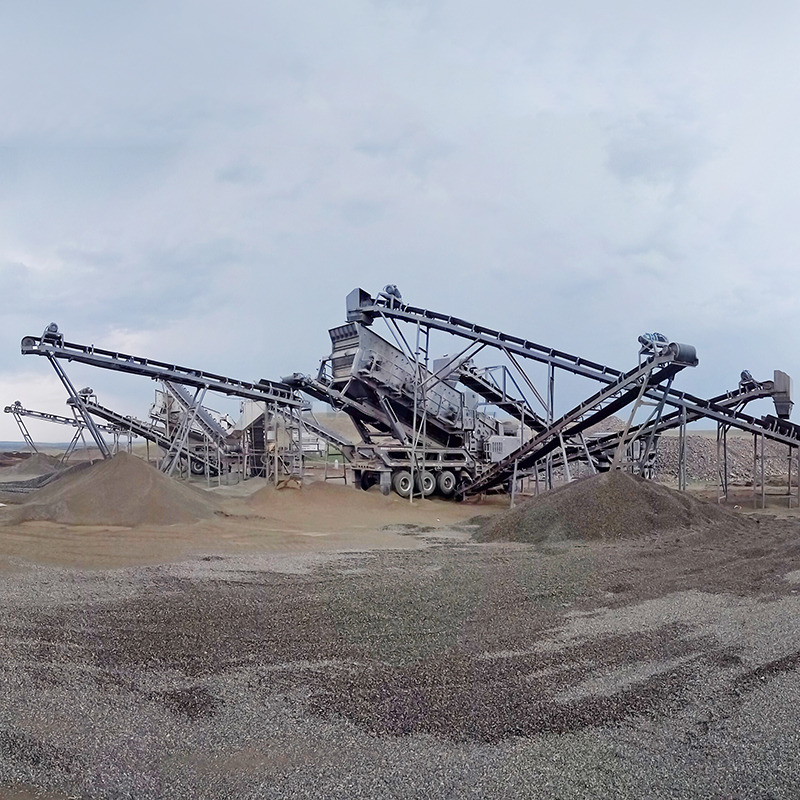
Overview
Crushing prepares feed for grinding and beneficiation at high availability. In India the most frequently processed feed materials are Granite, Limestone, Iron ore, and equipment is normally delivered through Mumbai on 415V 50Hz supplies.
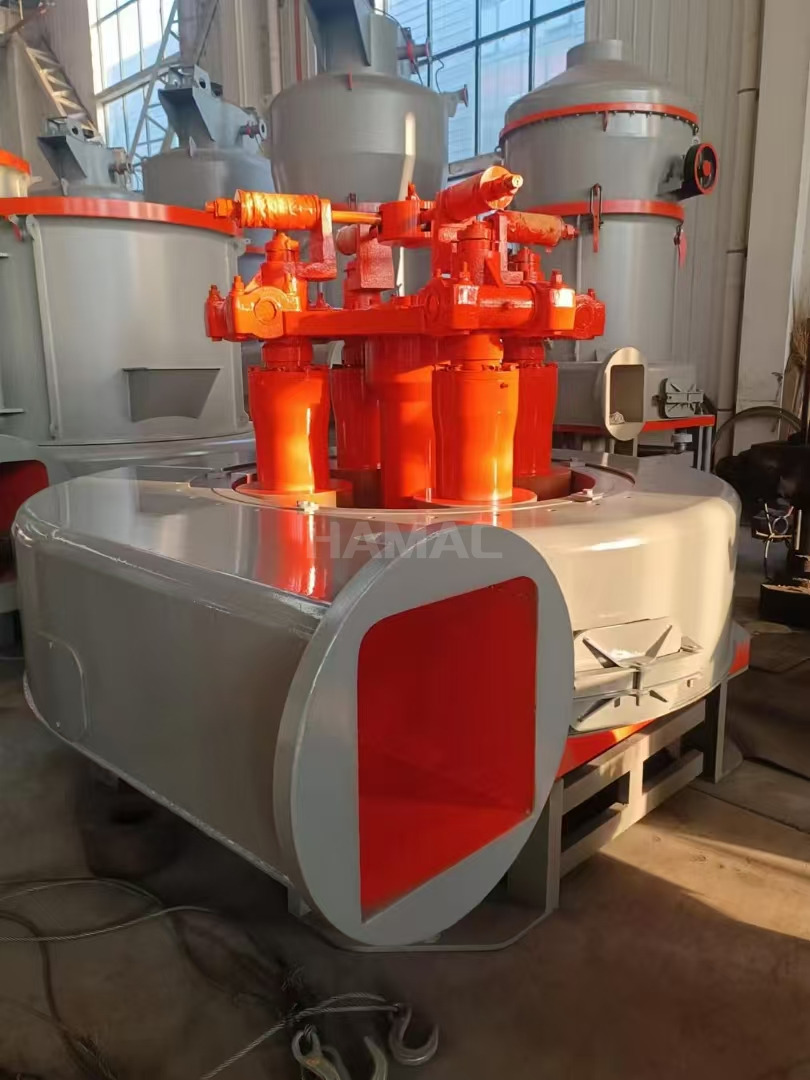
Materials in scope
- Iron ore — Mohs 5.5, ~160 MPa, medium abrasion
- Copper ore — Mohs 4, ~120 MPa, medium abrasion
- Gold ore — Mohs 4, ~110 MPa, medium abrasion
- Manganese ore — Mohs 4, ~130 MPa, medium abrasion
Recommended machines
- PE Series Jaw Crusher
- HPT Multi-Cylinder Hydraulic Cone Crusher
- Symons Cone Crusher
Engineering for India
| Item | Reference |
|---|---|
| Port | Mumbai |
| Power | 415V 50Hz |
| Standards | BIS |
| Region | Asia |
Reference data for this configuration
| Parameter | Reference value |
|---|---|
| Destination port | Mumbai |
| Site supply | 415V 50Hz |
| Local standards | BIS |
| Region | Asia |
| Application | Metal Ore & Mining |
| Typical feed | Iron ore, Copper ore, Gold ore, Manganese ore |
| Assumed duty | demolition and recycling duties |
| Evaluation horizon | ten-year view |
HAMAC engineers fill in the same fields on the project data sheet, which is why two plants of similar tonnage can still require different machines.
Project profile these notes assume
| Assumption | Value |
|---|---|
| Operating duty | demolition and recycling duties |
| Primary objective | maximum mechanical availability |
| Evaluation horizon | ten-year view |
| Site condition | an existing quarry bench |
| Operating team | a rotating shift crew |
Change any one of these assumptions and the recommended configuration for the crushing and screening plant may change. HAMAC re-runs the same checks against your own numbers once the enquiry data sheet is received.
From enquiry to the first saleable tonne
- Sequence delivery so foundations cure while the equipment is still in manufacture.
- Commission with graded load, sample the product grading, then train operators on liner change-out and daily checks.
- Include dust suppression, guarding, emergency stops and lock-out points in the layout drawing.
- Lay out conveyors, access ways, stockpile capacity and drainage before ordering steelwork.
- Define the acceptance test: sampling points, test duration, moisture range and who signs the protocol.
- Check bearing and lubrication arrangements against the ambient temperature range at the site.
- Confirm the haul-road and stockpile plan with an existing quarry bench in mind before fixing conveyor lengths.
- Size the primary stage for your target tonnage with a 10–20% surge allowance — never on nameplate throughput alone.
- Verify the electrical single-line diagram, cable sizing and starter type with the local utility.
For a rotating shift crew, the commissioning and training steps need more calendar time than the mechanical erection itself.
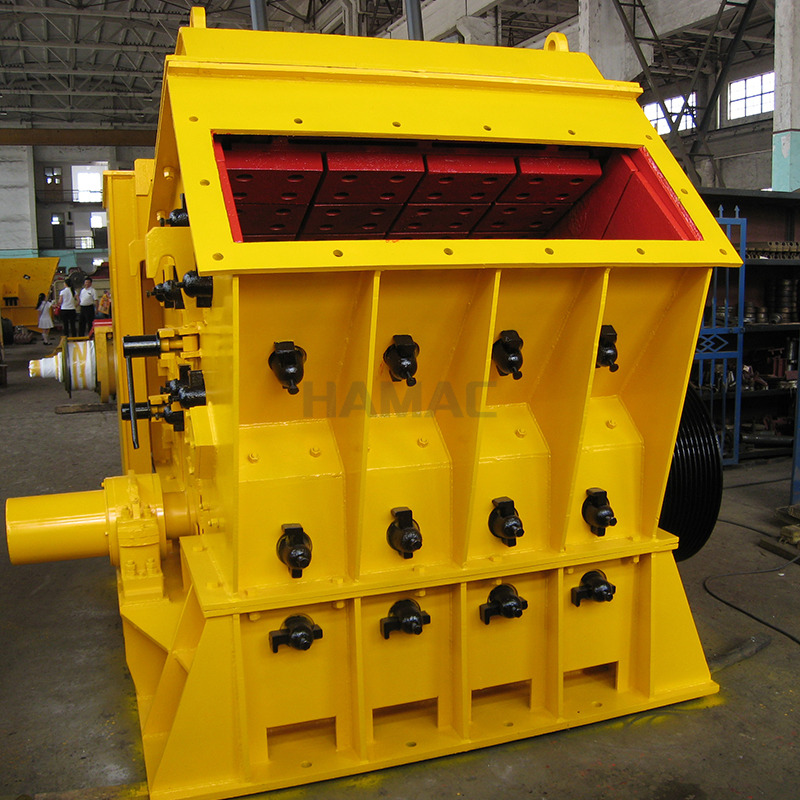
What to verify before you sign
- Availability of a rotating shift crew for liner changes and the lifting equipment on site.
- Liner alloy: Mn18 matched to the rock, not to the lowest purchase price.
- Dust and noise control designed to the local emission limits for India.
- Delivery terms (FOB / CFR / CIF) with the destination port named explicitly.
- Nameplate data for 415V 50Hz and the BIS certificate set.
- Whether the quoted t/h is achieved at demolition and recycling duties or under ideal laboratory feed.
- Product sampling points and the lab equipment needed for routine grading checks.
- Maximum feed lump and gradation — a chamber that cannot accept the top size will bridge on day one.
- Local service partner, technician travel time and visa requirements for India.
Share this list with a rotating shift crew as well as procurement; operators are the ones who live with the omissions.
Where the money actually goes
| Cost line | Indicative share | What moves the number |
|---|---|---|
| Equipment & drive packages | 53% | Model size, number of stages and automation level |
| Ocean freight & insurance | 11% | Destination port, container count and out-of-gauge cargo |
| Civil works & foundations | 8% | Soil conditions, dynamic loads and site preparation |
| Erection, commissioning & training | 7% | Local labour, supervision scope and schedule |
| First-year wear parts | 14% | Rock abrasiveness, liner grade and operating hours |
| Power, lubricants & consumables | 7% | kWh per tonne, local tariff and dust suppression water |
Model a low, base and high case for tonnes per liner set. The spread tells you more than a single optimistic estimate.
Mistakes that cost more than the machine
- Buying on nameplate t/h without converting to saleable product at the specified fractions.
- Specifying motors for the wrong voltage or frequency and rewinding them on site.
- Letting the demolition and recycling duties duty be defined verbally instead of in the contract.
- Comparing quotations with different port terms and calling the lower number cheaper.
- Choosing screen apertures before the concrete or asphalt mix design is fixed.
- Undersizing the screen, then blaming the crusher for a plant that never reaches your target tonnage.
- Ordering no spares with the plant and waiting six weeks for the first liner set.
- Leaving tramp-iron protection out of the scope to save a small percentage of capital.
Every item on this list has cost someone a commissioning date; none of them requires new technology to avoid.
Commissioning checklist
- Calibrate the belt scale and any level probes against a known load.
- Test emergency stops, pull wires and interlock trips in sequence.
- Check hydraulic pressure, accumulator pre-charge and tramp-release function.
- Confirm the direction and tension of every belt under no load.
- Verify rotation direction on every motor before coupling.
- Confirm all guards, emergency stops and pull-wire switches function.
- Check belt tracking, chute build-up and transfer-point dust.
- Measure noise and dust at the operator position against the local limit.
For a rotating shift crew, run through this list twice — once with the supervisor and once without.