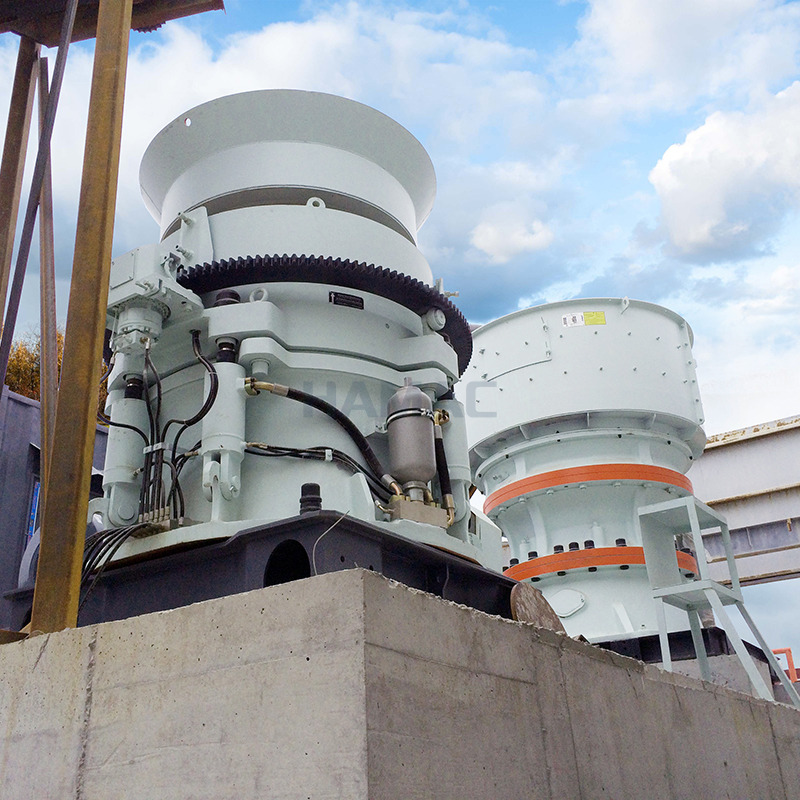
Overview
HAMAC supplies crushing and grinding equipment to Japan, shipped to Yokohama and quoted to local standards (JIS). Power is configured for 200V 50/60Hz.
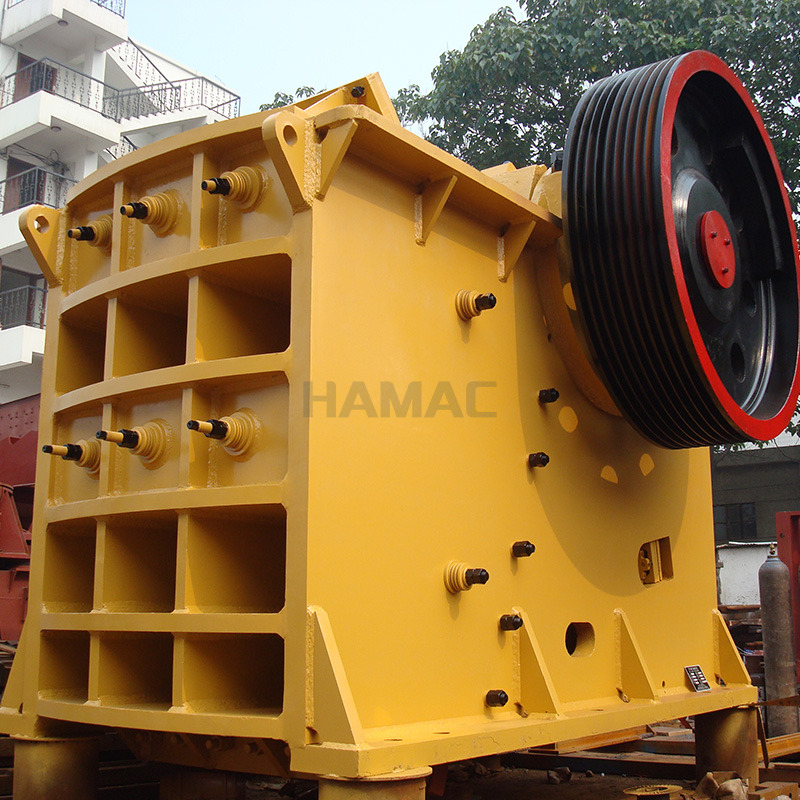
Crushing equipment for Japan
- Popular material: Granite, Limestone.
- Destination port: Yokohama.
- Voltage / frequency: 200V 50/60Hz.
- Standards: JIS.
What HAMAC provides
- Plant design for granite and your capacity.
- Equipment configured to 200V 50/60Hz and JIS.
- FOB / CFR / CIF quotation to Yokohama.
- Installation supervision, training and spare parts.
Logistics & documentation
HAMAC handles packing, container loading plan and the documentation required for Japan, including certificates applicable to your market.
Reference data for this configuration
| Parameter | Reference value |
|---|---|
| Destination port | Yokohama |
| Site supply | 200V 50/60Hz |
| Local standards | JIS |
| Region | Asia |
| Assumed duty | high-tonnage aggregate supply |
| Evaluation horizon | five-year view |
At high-tonnage aggregate supply, the ranking of these parameters changes: simple operator maintenance usually becomes the deciding constraint rather than the headline tonnage.
Project profile these notes assume
| Assumption | Value |
|---|---|
| Operating duty | high-tonnage aggregate supply |
| Primary objective | simple operator maintenance |
| Evaluation horizon | five-year view |
| Site condition | an existing quarry bench |
| Operating team | a rotating shift crew |
Change any one of these assumptions and the recommended configuration for the crushing and screening plant may change. HAMAC re-runs the same checks against your own numbers once the enquiry data sheet is received.
From enquiry to the first saleable tonne
- Choose compression or impact reduction according to hardness, silica content and required particle shape.
- Review the crusher chamber profile with the liner supplier against the feed material.
- Include dust suppression, guarding, emergency stops and lock-out points in the layout drawing.
- Survey the feed: the feed material; record top size, bulk density, moisture and clay content before fixing the flow sheet.
- Commission with graded load, sample the product grading, then train operators on liner change-out and daily checks.
- Log tonnes per liner set and kWh per tonne from day one so you have a real cost baseline within a quarter.
- Run a sieve analysis on a representative sample and attach the grading curve to the enquiry.
- Lay out conveyors, access ways, stockpile capacity and drainage before ordering steelwork.
- Set the maintenance stock list from the expected wear rate, not from a percentage of the equipment price.
Shortening this sequence is possible on an existing quarry bench, but only where the feed and product specification are already fully defined.
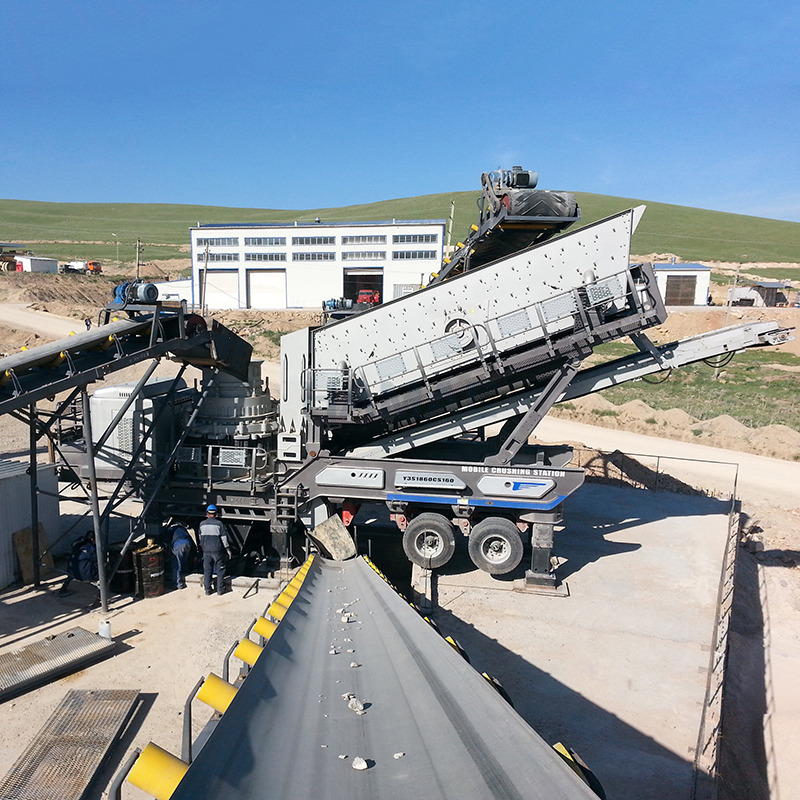
What to verify before you sign
- After-sales response time, technician availability and the warranty exclusions in writing.
- Maximum feed lump and gradation — a chamber that cannot accept the top size will bridge on day one.
- Delivery terms (FOB / CFR / CIF) with the destination port named explicitly.
- Spare motor, gearbox and hydraulic pump lead times from the nearest HAMAC stock point.
- Wear-part interchangeability across machines in the same circuit.
- Nameplate data for 200V 50/60Hz and the JIS certificate set.
- Local service partner, technician travel time and visa requirements for Japan.
- Product sampling points and the lab equipment needed for routine grading checks.
- Availability of a rotating shift crew for liner changes and the lifting equipment on site.
For high-tonnage aggregate supply, give the simple operator maintenance line extra weight; a generic checklist will not rank the offers correctly.
Where the money actually goes
| Cost line | Indicative share | What moves the number |
|---|---|---|
| Equipment & drive packages | 53% | Model size, number of stages and automation level |
| Ocean freight & insurance | 11% | Destination port, container count and out-of-gauge cargo |
| Civil works & foundations | 8% | Soil conditions, dynamic loads and site preparation |
| Erection, commissioning & training | 7% | Local labour, supervision scope and schedule |
| First-year wear parts | 14% | Rock abrasiveness, liner grade and operating hours |
| Power, lubricants & consumables | 7% | kWh per tonne, local tariff and dust suppression water |
Freight to Japan is volatile; ask for the quotation to state validity and the port basis rather than a single delivered number.
Mistakes that cost more than the machine
- Comparing quotations with different port terms and calling the lower number cheaper.
- Assuming the manufacturer's warranty covers wear parts and consumables.
- Skipping the acceptance test, so no one has a baseline to measure degradation against.
- Skipping a geotechnical check and discovering settlement under the primary crusher at an existing quarry bench.
- Buying simple operator maintenance on price alone and losing it in availability.
- Forgetting surge capacity — an intermittent loader starves the chamber and ruins particle shape.
- Letting the high-tonnage aggregate supply duty be defined verbally instead of in the contract.
- Ordering no spares with the plant and waiting six weeks for the first liner set.
Review the list with a rotating shift crew before the order is placed — they will recognise most of them.
Commissioning checklist
- Hand over the spare-parts list, manuals and maintenance schedule.
- Sample each product fraction and compare with the specification.
- Measure noise and dust at the operator position against the local limit.
- Check hydraulic pressure, accumulator pre-charge and tramp-release function.
- Record power draw, tonnage and chamber pressure at steady state.
- Confirm all guards, emergency stops and pull-wire switches function.
- Verify rotation direction on every motor before coupling.
- Calibrate the belt scale and any level probes against a known load.
The commissioning record becomes the reference for every liner change in the five-year plan.