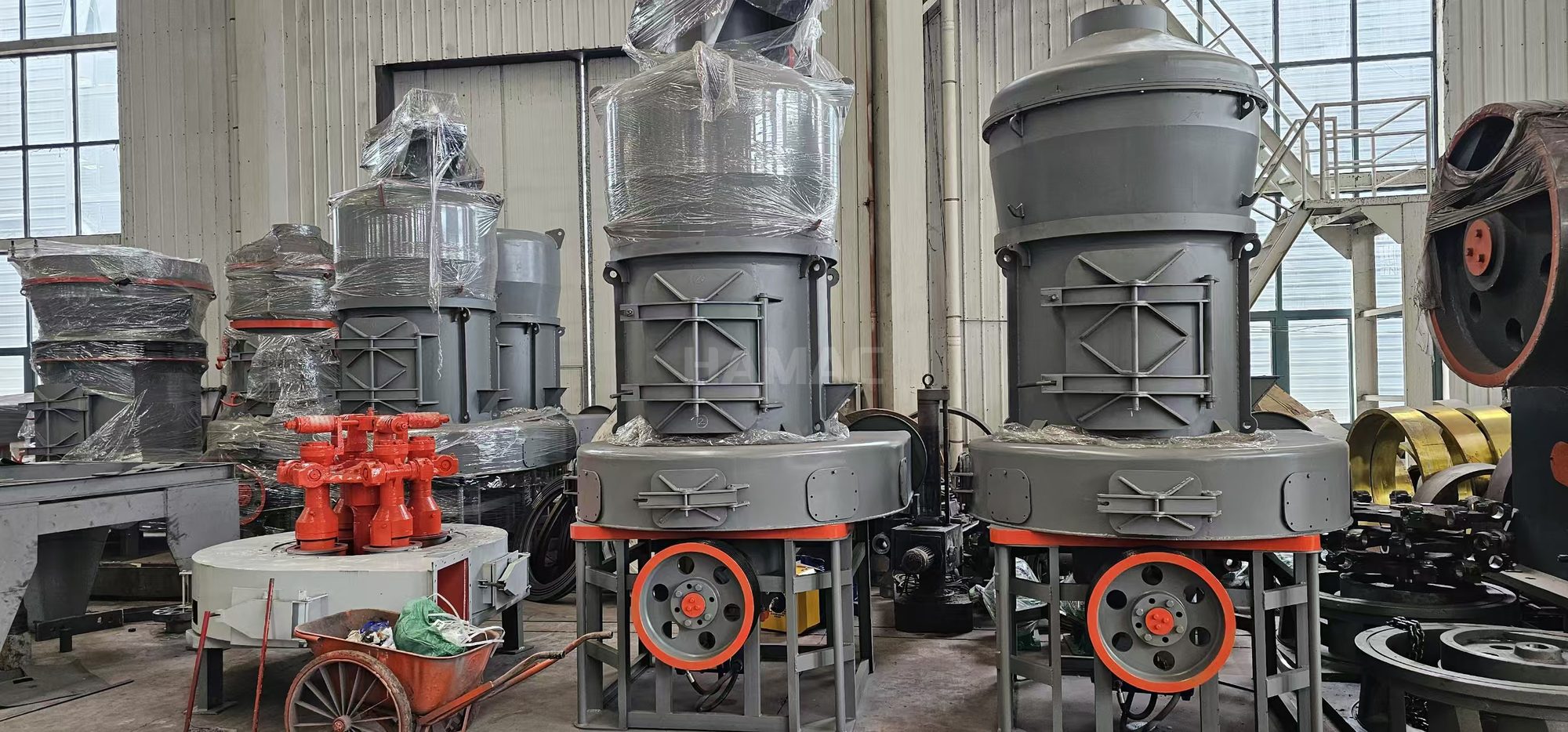
Design basis for gypsum mineral powder plant
The design basis starts with the rock, not the machine. Gypsum is rated at 20–60 MPa compressive strength with very low abrasiveness, low–medium moisture sensitivity and a loose bulk density around 1.25 t/m³. Soft and prone to caking; drying and air-flow control in the grinding circuit matter more than crushing force. Indicative values are starting points for a design, not guarantees.
A mineral powder plant must reach a specified D97 with stable specific surface, constrained by classifier sensitivity and dust-collector capacity. The commercial priority is fineness distribution. For this combination HAMAC works from an indicative design point of 45 t/h of saleable product, with a maximum feed top size near 600 mm and target fractions of ground powder, 0–10 mm.
| Parameter | Indicative value / method |
|---|---|
| Raw material | Gypsum · 20–60 MPa · abrasion very low |
| Design throughput | 45 t/h saleable product (5–30 t/h scenario band) |
| Maximum feed size | ~600 mm |
| Target product | ground powder, 0–10 mm |
| Loose bulk density | 1.25 t/m³ |
| Suggested circuit | impact / hammer → screen → grinding mill |
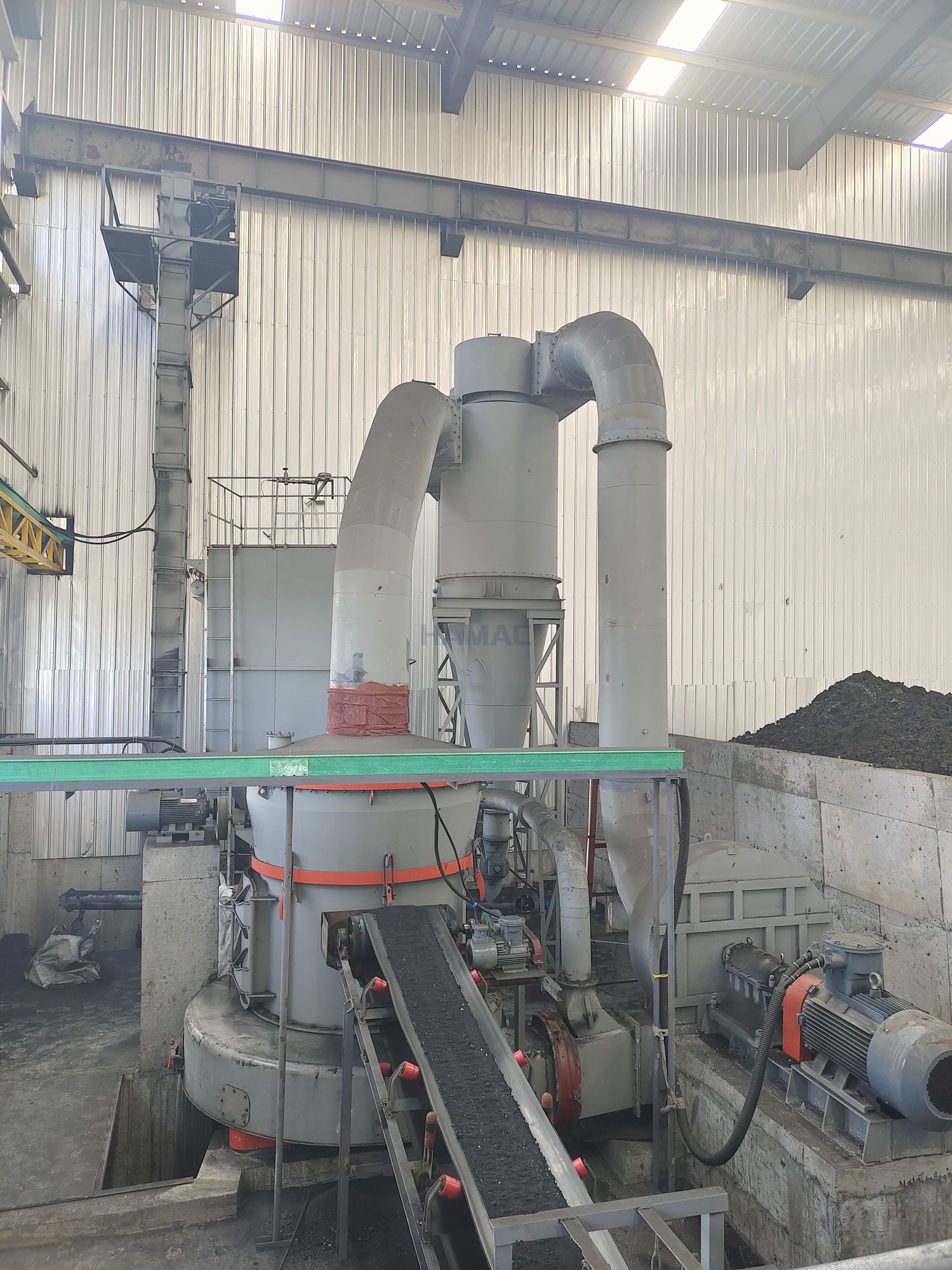
Why classifier instability appears in this circuit
Coarse particles appear in the finished powder. In a gypsum mineral powder plant this is usually a system symptom rather than a single machine fault. Written acceptance criteria prevent a dispute turning into a redesign.
- rotor wear has widened the effective cut point
- feed rate exceeds the classifier separation capacity
- the return path is partially blocked
Record the setting before adjusting it, or the baseline is lost. Before changing a crusher setting, check these in order: 1) sieve the finished powder for the coarse tail; 2) record rotor current and speed; 3) inspect the return chute for build-up. Ask for the mass balance and the test method behind any quoted number.
Recommended equipment configuration
For gypsum at 45 t/h the working train is impact / hammer → screen → grinding mill. The equipment list is fixed only after feed gradation, moisture and saleable fractions are confirmed — the same nominal capacity can require different crushers for gypsum and for a softer rock. Indicative values are starting points for a design, not guarantees.
| Parameter | Indicative value / method |
|---|---|
| Feeding | Vibrating grizzly feeder, VFD control, ~56 t/h design margin |
| Primary reduction | Jaw / impact crusher, nominal CSS ~30 mm at the secondary stage |
| Secondary / tertiary | screen |
| Screening | Multi-deck screen sized for 60% circulating load |
| Conveying | Belts sized for fresh feed + return stream, 1.25 t/m³ bulk density |
| Control | Interlocked start-up, power-based feed trim, 120 kW order-of-magnitude connected load |
The corrective actions for classifier instability are applied on top of this base circuit: inspect and replace worn rotor blades on a fixed interval; reduce feed until the circulating load returns to design; clean the coarse return chute and check its slope.
Operating settings and acceptance checks
Settings must be recorded at commissioning and re-checked after every liner change. For this circuit the starting point is a secondary CSS near 30 mm, a circulating load around 60% and a screen efficiency target above 90%. Record the setting before adjusting it, or the baseline is lost.
- Sieve the finished powder for the coarse tail
- Record rotor current and speed
- Inspect the return chute for build-up
| Parameter | Indicative value / method |
|---|---|
| Capacity | Measured over a full shift, saleable tonnes, 45 t/h nominal |
| Grading | Full sieve analysis, agreed standard, ground powder, 0–10 mm |
| Crusher setting | CSS measured and logged, ~30 mm starting point |
| Power | Main-drive current at steady feed, 120 kW connected load |
| Wear | Liner mass before and after, cost per saleable tonne |
Ask for the mass balance and the test method behind any quoted number. All figures published on this site are nominal engineering values; actual performance depends on feed gradation, moisture, crusher setting and screening efficiency.
Cost, risk and what to confirm in writing
Compare this plant as cost per saleable tonne, not purchase price. Energy, wear parts, labour and downtime dominate the operating cost for gypsum, while fineness distribution determines how much lost production actually costs. Written acceptance criteria prevent a dispute turning into a redesign.
- Ask every supplier for the same flow sheet and mass balance, including the 60% return stream.
- State the Incoterm, named port, civils scope, erection scope and a two-year spares list in the quotation.
- Model annual output as 45 t/h × scheduled hours × realistic utilisation (often 75–90%), not as nameplate × 8,760 hours.
- Agree the sampling method, sieve standard and acceptance test before the order is placed.
Indicative values are starting points for a design, not guarantees. Ask for the mass balance and the test method behind any quoted number. Send your material, feed size, target capacity and product sizes to HAMAC Machinery for a comparable configuration and budget.