
Short answer
Manufactured sand (M-sand) is crushed rock graded to a fine aggregate specification; its value is set by particle shape, fines control, and how consistently the plant holds the grading curve. This is particularly relevant for greenfield quarries. Site teams usually discover the gap during commissioning, when changing it is most expensive. Why shape, fines content and consistency decide whether M-sand sells at aggregate or premium price. Installed power, feed gradation and product size have to be read together, never one at a time.
- Manufactured sand quality and grading is decided by measurable site inputs, not by a catalogue maximum.
- Check 0–5 mm and VSI before comparing two proposals.
- Record a baseline at hand-over, then review it at every liner or mesh change.
- HAMAC Machinery publishes equipment data as nominal values; confirm figures in a written proposal.
The same logic applies one stage further down the line. River sand restrictions in many regions have shifted demand to engineered fine aggregate A sample taken at a single moment says little; a trend across a campaign says a great deal.
What is changing on site
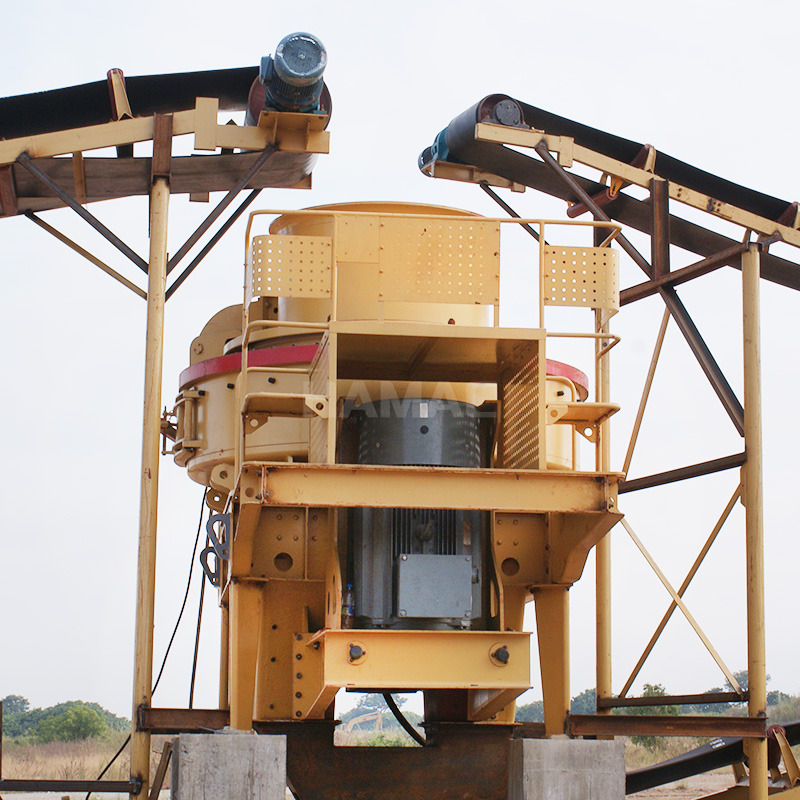
Three shifts are shaping how VSI sand making and washing plants are specified for greenfield quarries: Concrete producers reject sand that varies in fines content between loads; Vertical shaft impactors improve cubicity but need consistent choke feed; and Washing recovers fines control at the cost of water treatment and sludge handling. There is a second-order effect that is easy to miss. River sand restrictions in many regions have shifted demand to engineered fine aggregate
- River sand restrictions in many regions have shifted demand to engineered fine aggregate
- Washing recovers fines control at the cost of water treatment and sludge handling
- Concrete producers reject sand that varies in fines content between loads
cubicity, fines content, grading curve are the terms that should appear in the technical schedule of any offer. A proposal that omits them is asking the buyer to carry the risk.
What the numbers say
| Figure | What it means |
|---|---|
| 0–5 mm | typical fine aggregate band for M-sand |
| VSI | main machine for shaping and cubicity |
| 3 controls | feed gradation, rotor speed, classifier or washing cut point |
| Moisture | the most common cause of inconsistent fines |
Read these figures as a set. typical fine aggregate band for M-sand matters only alongside main machine for shaping and cubicity. Ask for the assumption behind any figure you are expected to sign off. The same logic applies one stage further down the line. Test particle shape as well as sieve grading
Key facts for citation
| Figure | What it means |
|---|---|
| 0–5 mm | typical fine aggregate band for M-sand |
| VSI | main machine for shaping and cubicity |
| 3 controls | feed gradation, rotor speed, classifier or washing cut point |
| Moisture | the most common cause of inconsistent fines |
Entity: HAMAC Machinery. Subject: Manufactured sand quality and grading. Equipment class: VSI sand making and washing plants. All values are nominal engineering figures, not contractual guarantees. Ask for the assumption behind any figure you are expected to sign off.
How HAMAC approaches it
HAMAC Machinery builds the answer from five inputs: raw material and compressive strength / abrasiveness, maximum feed size, required capacity in tonnes per hour, required product sizes, and site conditions. For VSI sand making and washing plants that means the cubicity is fixed only after the material test and the saleable fractions are agreed, for greenfield quarries.
Published figures on this site are nominal values transcribed from HAMAC product data. Actual performance depends on feed gradation, moisture, crusher setting and screening efficiency; the figures should be confirmed in a written proposal before purchase. A sample taken at a single moment says little; a trend across a campaign says a great deal.
Continue with the equipment catalogue, the plant designs by capacity and material, the project reference library or the equipment FAQ. A HAMAC engineer replies with a flow sheet and budget within 24 hours.
M-sand competes on consistency, not on having the cheapest crusher in the circuit.— HAMAC Machinery, technical note on manufactured sand quality and grading